
Attic Mold Removal in Denver, NC
Mold removal in Denver is priced after an on-site assessment. The affected area, access, moisture source, testing needs and materials that must be removed determine the scope. Published ranges on this site are planning examples carried over from the reference site, not verified local quotes. Ask for a written estimate that separates inspection, containment, removal, drying and any repairs. Compare the same scope of work before choosing a contractor.
Get a call back
Fill in the form or call (980) 250-4059. Calls are answered day and night.
§ 01 / 06
What does attic mold removal in Denver involve?
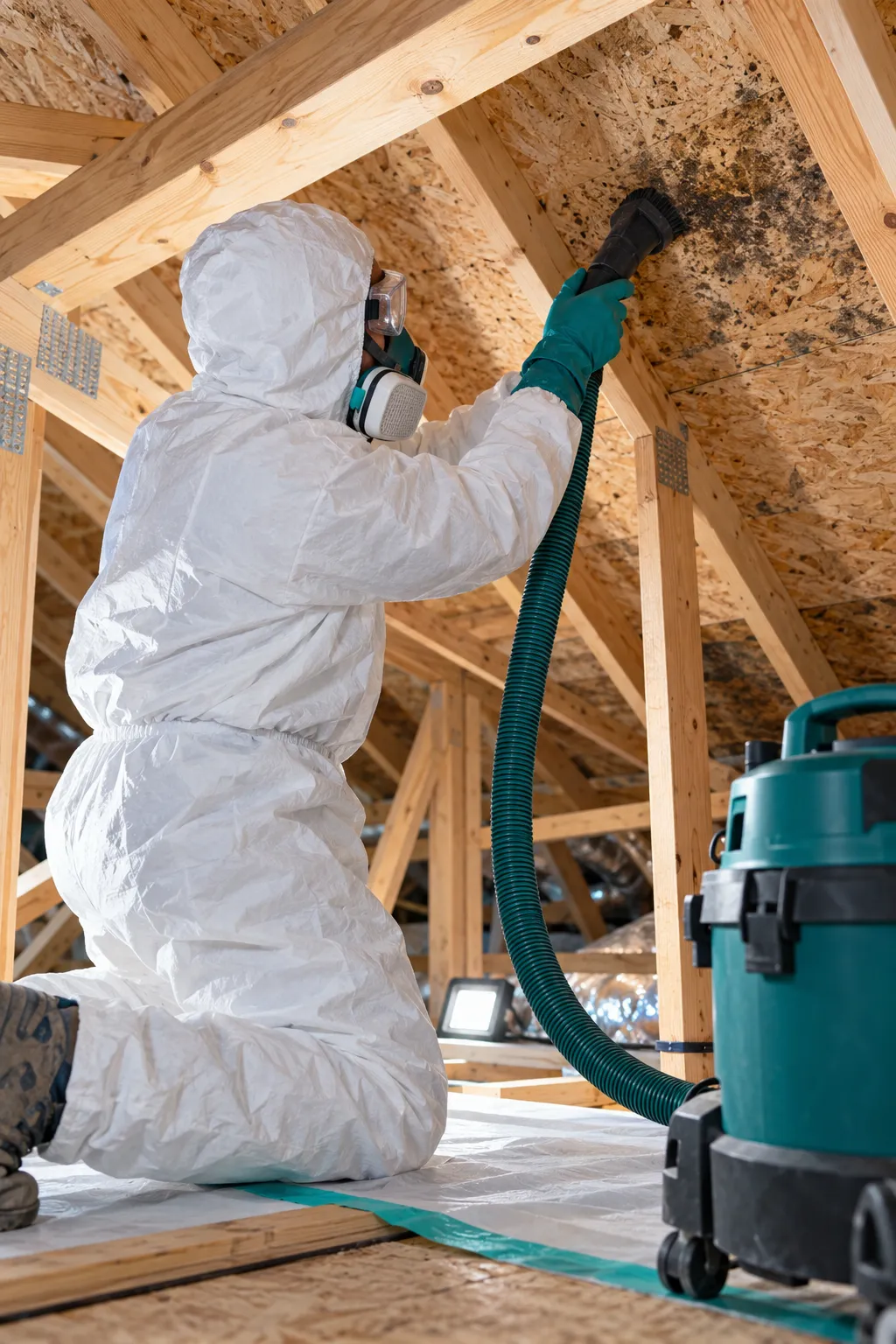
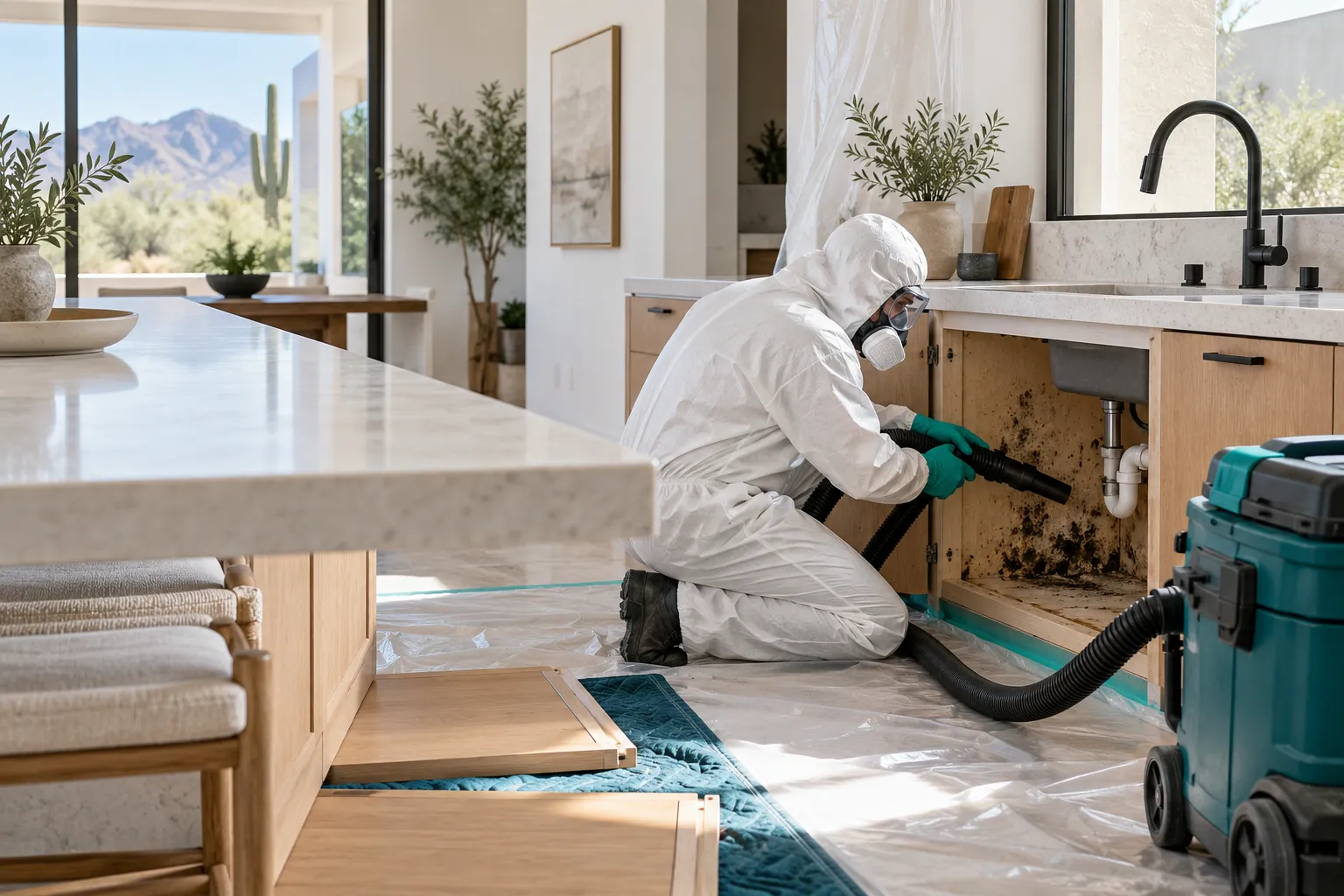
Removal here runs in a set order: find the leak, isolate the attic, take out what the water ruined, then clean, dry, and repair. The EPA's Mold Course (opens in a new tab) starts from the plain fact the job rests on, that mold needs moisture to grow, and indoors that moisture has a source. So the first task is finding it: a lifted shingle, a failed vent boot, or a condensate line, since older homes rarely point to the source. Once the water is stopped, a containment barrier keeps spores out of bedrooms while wet insulation and crumbling sheathing boards come out in sealed bags. The framing then gets HEPA vacuuming and air scrubbing, and drying runs until the meter shows dry. Repair closes the loop: new insulation, replacement boards, a fixed roof detail.
§ 02 / 06
Why can older Denver homes develop attic mold?
In Denver, roof leaks, blocked drainage and AC condensate can leave attic materials damp. Inspect flashing, roof penetrations and the insulation below a new ceiling stain. Wind-driven rain may reach a gap that does not leak in light weather. A moisture reading helps distinguish an old mark from an active leak. Fix the water source before removing damaged materials, and inspect the same location again after rain. Keep gutters and downspouts clear and have a qualified contractor assess roof repairs and safe attic access. For current weather hazards, consult the National Weather Service.
§ 03 / 06
How do you know the attic has mold?
Ask 3 questions about the house. Does a ceiling or upper wall carry a stain that was not there last year, or one that darkened after the last big storm? Does a bedroom or hall closet smell of wet paper and earth even with the door closed? Does the attic hatch, when someone opens it, reveal boards gone dark gray along their edges or beneath a vent? A yes to any of those earns a moisture check, because in homes from the 1980s and 1990s the insulation may have been wet before and forgotten. Old water marks that stay dry for years are usually inactive, but a mark that grows with each storm is live. None of those checks needs more than a flashlight and 5 minutes, and if a sign is there, call (980) 250-4059.
§ 04 / 06
What does attic mold removal cost in Denver?
Cost tracks 2 things: how much of the old insulation has to go, and how hard it is to reach. In this stock, a leak can soak the full run over a room. A national guide lists attic remediation at $1,000 to $4,000 (This Old House), and reference-market data for 2026 puts the attic band at $1,050 to $4,150 (Masters' Guild). Published ranges are for planning only, not a quote. The final number comes out of an on-site assessment, driven by the affected area, its location, and the materials involved. Attics with several leak points can land toward the top of the band. See the Huntersville mold removal price guide for every range.
Line open now
Mold in a Denver home?
Describe what you see or smell. You do not need to diagnose anything yourself.
§ 05 / 064 questions
Questions people ask
01Are 1990s roofs in Denver more likely to leak than newer ones?
In Denver, roof leaks, blocked drainage and AC condensate can leave attic materials damp. Inspect flashing, roof penetrations and the insulation below a new ceiling stain. Wind-driven rain may reach a gap that does not leak in light weather. A moisture reading helps distinguish an old mark from an active leak. Fix the water source before removing damaged materials, and inspect the same location again after rain. Keep gutters and downspouts clear and have a qualified contractor assess roof repairs and safe attic access. For current weather hazards, consult the National Weather Service.
02How should I read the 2018 and 2019 storm seasons for my house?
Moisture problems in Denver can come from plumbing leaks, AC condensate, storm runoff or persistent indoor humidity. A closed room or a concealed wall cavity may remain damp even after the visible surface feels dry. Check the water source, document the affected area and arrange a moisture assessment when the cause is unclear. The EPA recommends drying water-damaged materials within 24 to 48 hours. Keep drainage working, monitor indoor humidity and inspect a previously wet area after the next rain. The condition of the individual home matters more than a neighborhood average.
03Can wind-driven rain contribute to roof leaks?
Moisture problems in Denver can come from plumbing leaks, AC condensate, storm runoff or persistent indoor humidity. A closed room or a concealed wall cavity may remain damp even after the visible surface feels dry. Check the water source, document the affected area and arrange a moisture assessment when the cause is unclear. The EPA recommends drying water-damaged materials within 24 to 48 hours. Keep drainage working, monitor indoor humidity and inspect a previously wet area after the next rain. The condition of the individual home matters more than a neighborhood average.
04Does attic mold affect the rest of a Denver home?
Left alone, it can. Air moves from the attic into the house, and growth there stays fed by the leak above. Moisture also works on the framing below. Any health worry belongs with a doctor.
Price ranges are reference-market and national planning examples, not verified Huntersville prices or a quote. Your contractor sets the price after assessing your property.