
Black Mold Removal in Denver, NC
Moisture problems in Denver can come from plumbing leaks, AC condensate, storm runoff or persistent indoor humidity. A closed room or a concealed wall cavity may remain damp even after the visible surface feels dry. Check the water source, document the affected area and arrange a moisture assessment when the cause is unclear. The EPA recommends drying water-damaged materials within 24 to 48 hours. Keep drainage working, monitor indoor humidity and inspect a previously wet area after the next rain. The condition of the individual home matters more than a neighborhood average.
Get a call back
Fill in the form or call (980) 250-4059. Calls are answered day and night.
§ 01 / 06
What does black mold removal in Denver involve?
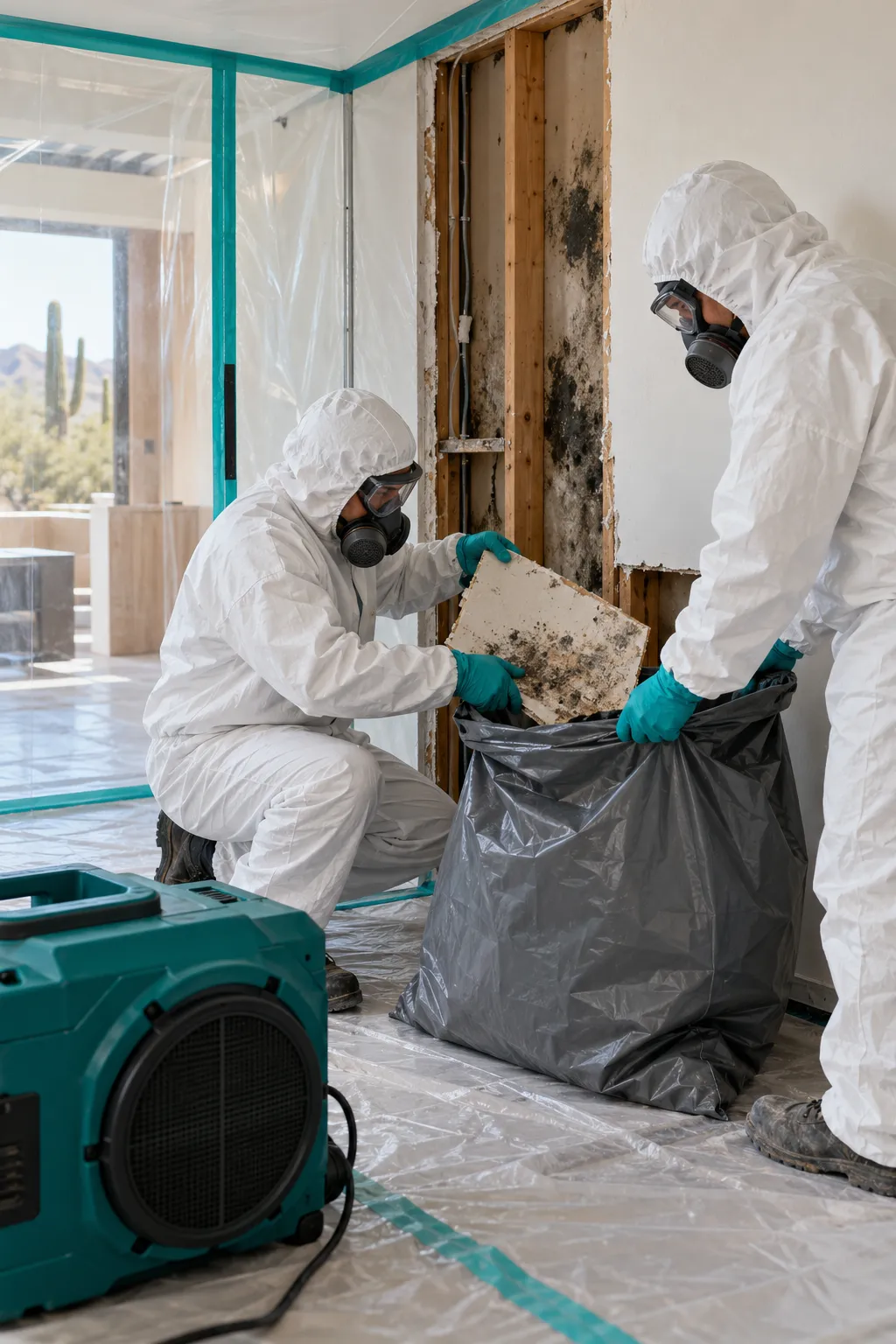
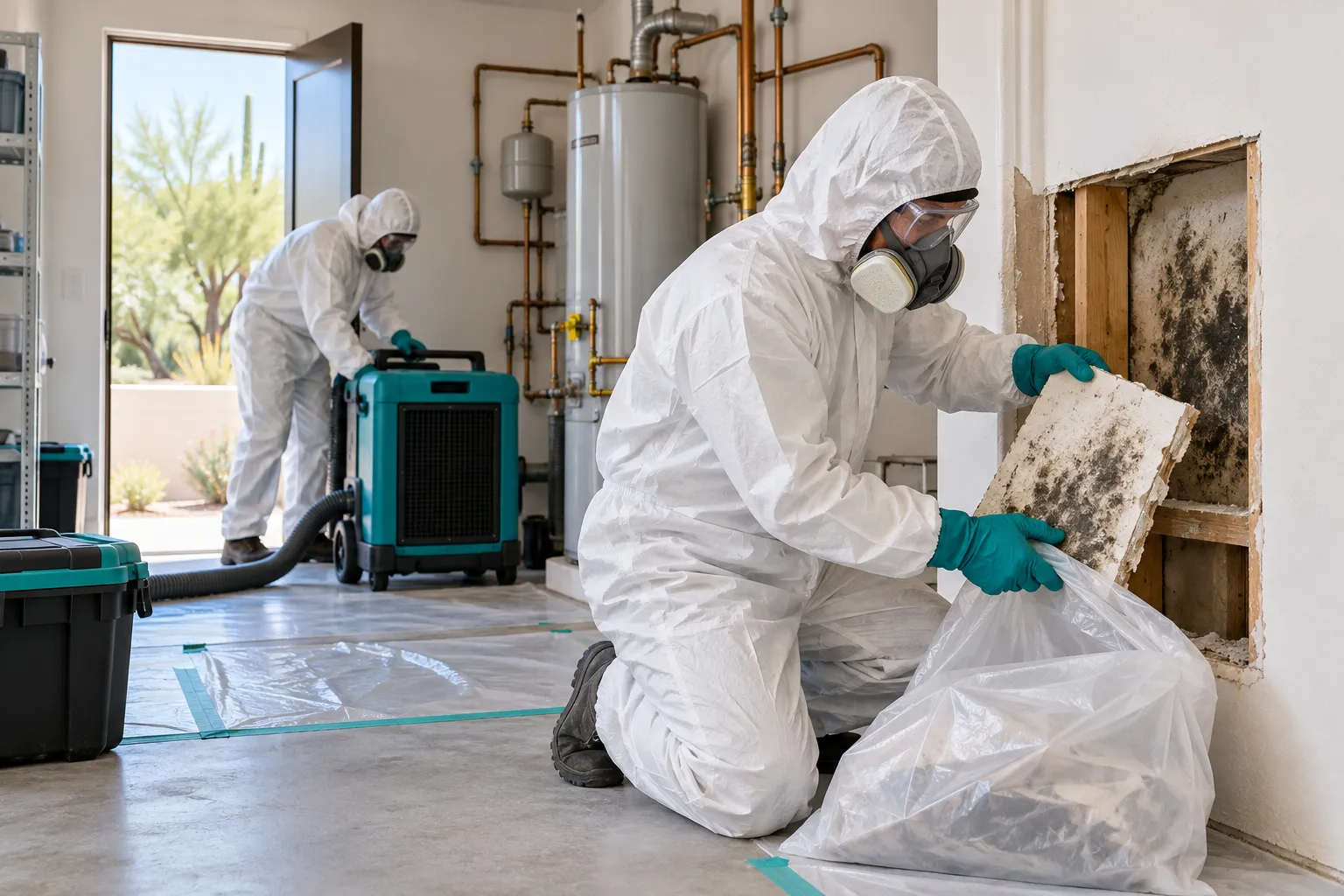
The short version: the growth comes out, the water problem gets fixed, and the space is cleaned before it is closed up. In practice that means sealing off the work area with plastic sheeting, cutting and scraping out the material that has molded, and HEPA vacuuming plus wet wiping everything that remains. Porous material is the sticking point. Cabinet boxes, drywall, insulation and ceiling tiles do not come clean once growth has moved in, so they are removed and bagged. Sprays that claim to kill mold do not change the math; the EPA's position is that treated growth still has to come out of the building. Anything less leaves the growth in place for the next leak to feed on.
§ 02 / 06
Why do Denver leaks stay hidden behind cabinets and vanities?
Moisture problems in Denver can come from plumbing leaks, AC condensate, storm runoff or persistent indoor humidity. A closed room or a concealed wall cavity may remain damp even after the visible surface feels dry. Check the water source, document the affected area and arrange a moisture assessment when the cause is unclear. The EPA recommends drying water-damaged materials within 24 to 48 hours. Keep drainage working, monitor indoor humidity and inspect a previously wet area after the next rain. The condition of the individual home matters more than a neighborhood average.
§ 03 / 06
What should I do first?
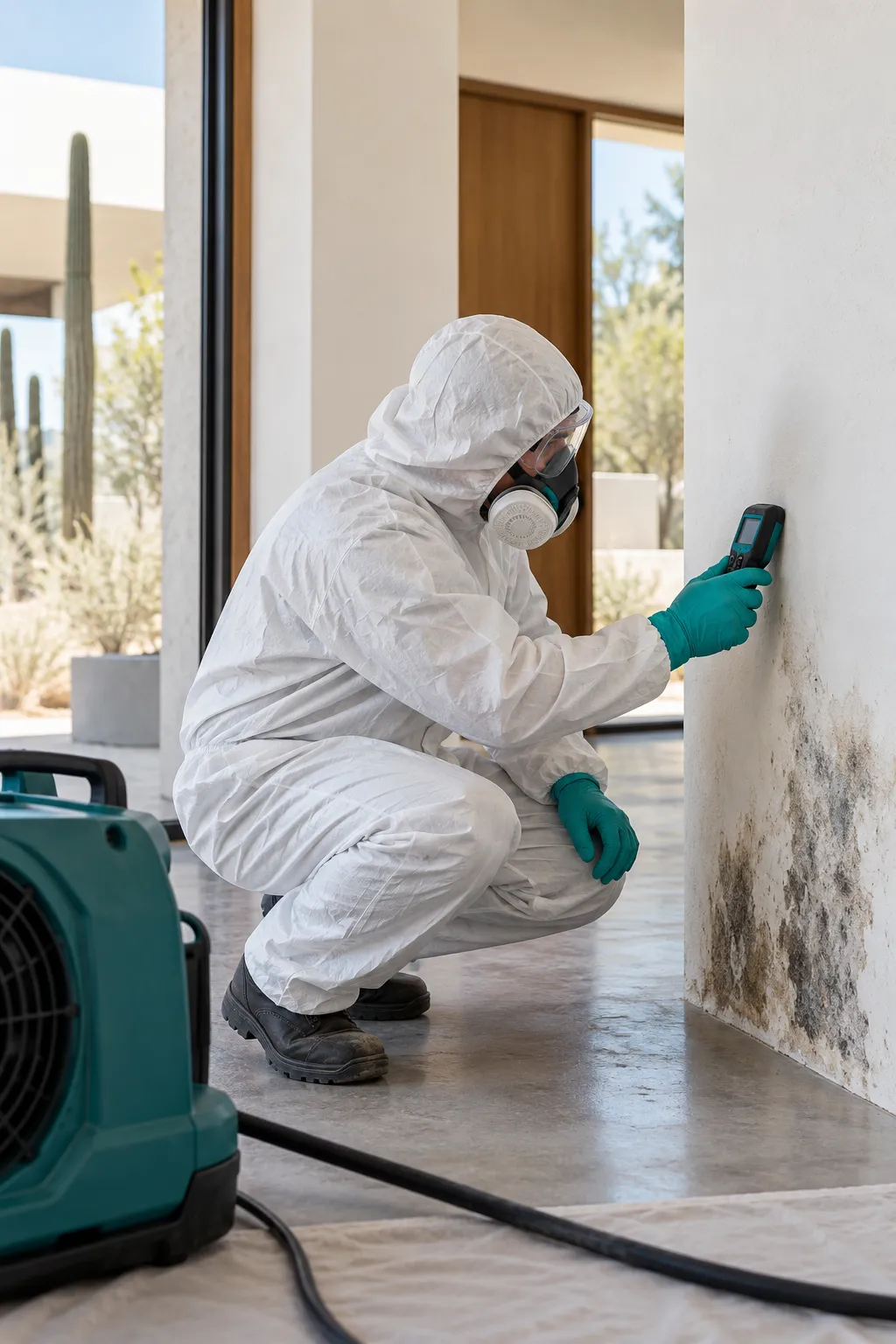
Treat the first hours as containment. Keep children and pets out of the room, and close the door behind you when you leave it. Do not peel the drywall, scrub the stain or set a fan in front of it; moving air carries spores into other rooms. Find the water. In a 1990s home, check under every sink, behind the fridge and at the water heater pan first. Photograph the stain, the wet cabinet and any failed part; adjusters work from pictures, and anything discarded is gone. If growth sits near a return vent or the air handler, keep the HVAC system off, per EPA guidance on systems that may be contaminated with mold. Then bring in a professional rather than guessing at the extent of the growth.
§ 04 / 06
What does black mold removal cost in Denver?
Published reference-market ranges, attributed to the cost guides and market data sites that put them out (checked October 2026), are on our pricing page. In Denver, the swing items are how far moisture traveled behind the cabinets and whether storm water was involved; most homeowners policies do not cover flood, which is separate coverage (FloodSmart (opens in a new tab)). Your policy decides what is covered. Treat the published ranges as market data, not as a bid. The actual price is set after an on-site assessment.
Line open now
Mold in a Denver home?
Describe what you see or smell. You do not need to diagnose anything yourself.
§ 05 / 064 questions
Questions people ask
01The vanity base has been damp for months. Does the whole cabinet go?
Usually the base and the drywall behind it, yes. Cabinet board and drywall paper are porous, and they do not come clean once growth has moved in. The upside: a vanity wall is smaller than a whole room.
02Is storm water really a mold risk this far from the drainage channels?
Moisture problems in Denver can come from plumbing leaks, AC condensate, storm runoff or persistent indoor humidity. A closed room or a concealed wall cavity may remain damp even after the visible surface feels dry. Check the water source, document the affected area and arrange a moisture assessment when the cause is unclear. The EPA recommends drying water-damaged materials within 24 to 48 hours. Keep drainage working, monitor indoor humidity and inspect a previously wet area after the next rain. The condition of the individual home matters more than a neighborhood average.
03Who handles sewer emergencies in Denver?
The Denver Sanitary District, at 480-837-9444, answers public sewer line emergencies 24 hours a day. Call them first if a public sewer line may be involved, then bring in a removal crew for the affected space.
04How can I tell black mold from ordinary discoloration?
Color is not a test, and nobody can identify growth from a photo. What matters is the size and location; past roughly 10 square feet, the EPA points to its guidance for larger jobs.
Price ranges are reference-market and national planning examples, not verified Huntersville prices or a quote. Your contractor sets the price after assessing your property.