
Mold Remediation and Removal in Huntersville, NC
You have mold on a wall, a ceiling or a cabinet, and it keeps growing until the water behind it is fixed. Call day or night or send the form, and someone from our team will call you back soon.
Get a call back
Fill in the form or call (980) 250-4059. Calls are answered day and night.
§ 01 / 13
Mold removed, leak fixed, room dry
Mold remediation removes the mold and fixes the moisture problem behind it, then returns the space to a dry, normal condition. Cleaning wipes a surface. Remediation deals with the source. If mold is growing right now, call (980) 250-4059.
- The water source is found and fixed before any cleanup starts.
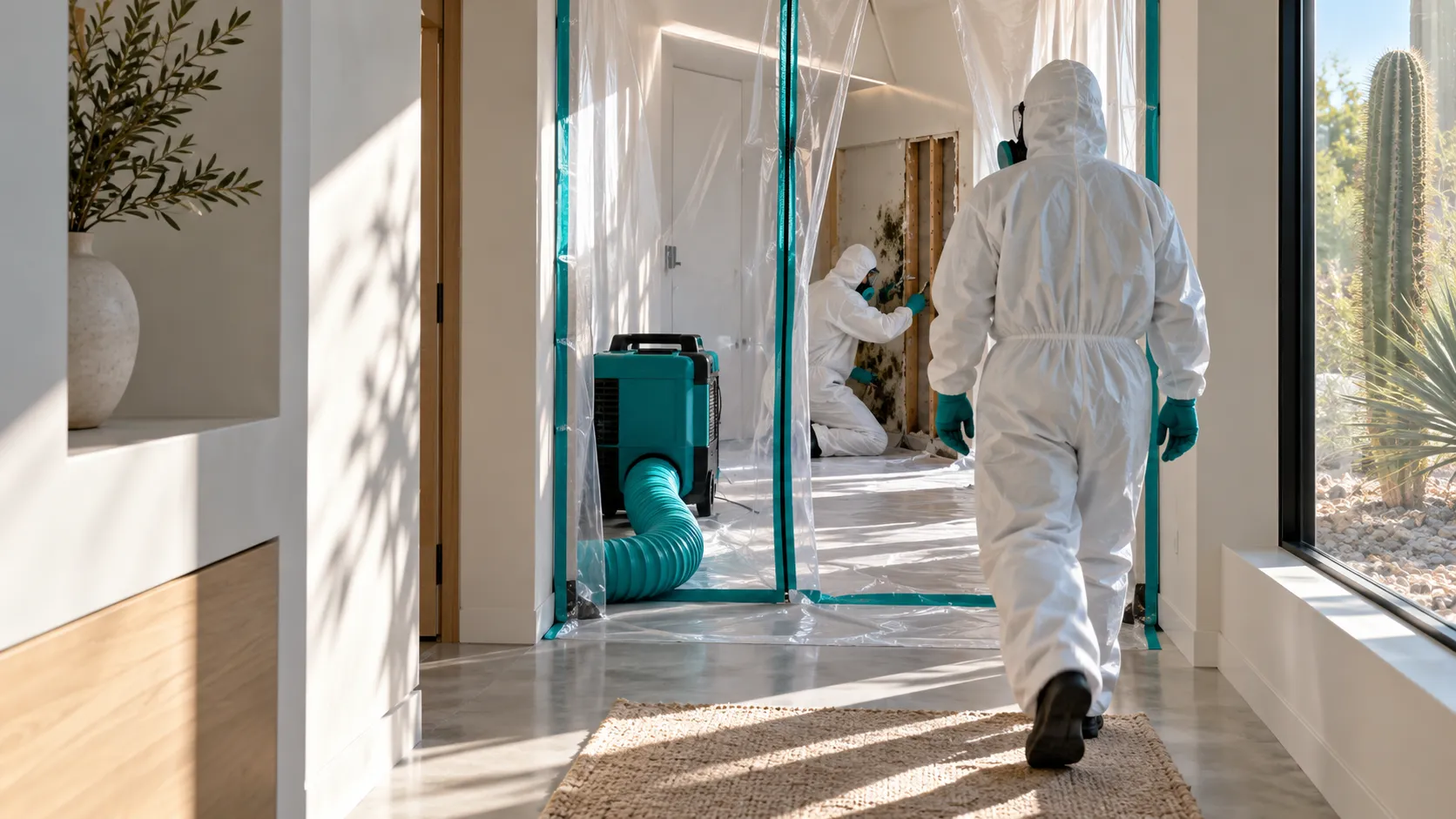
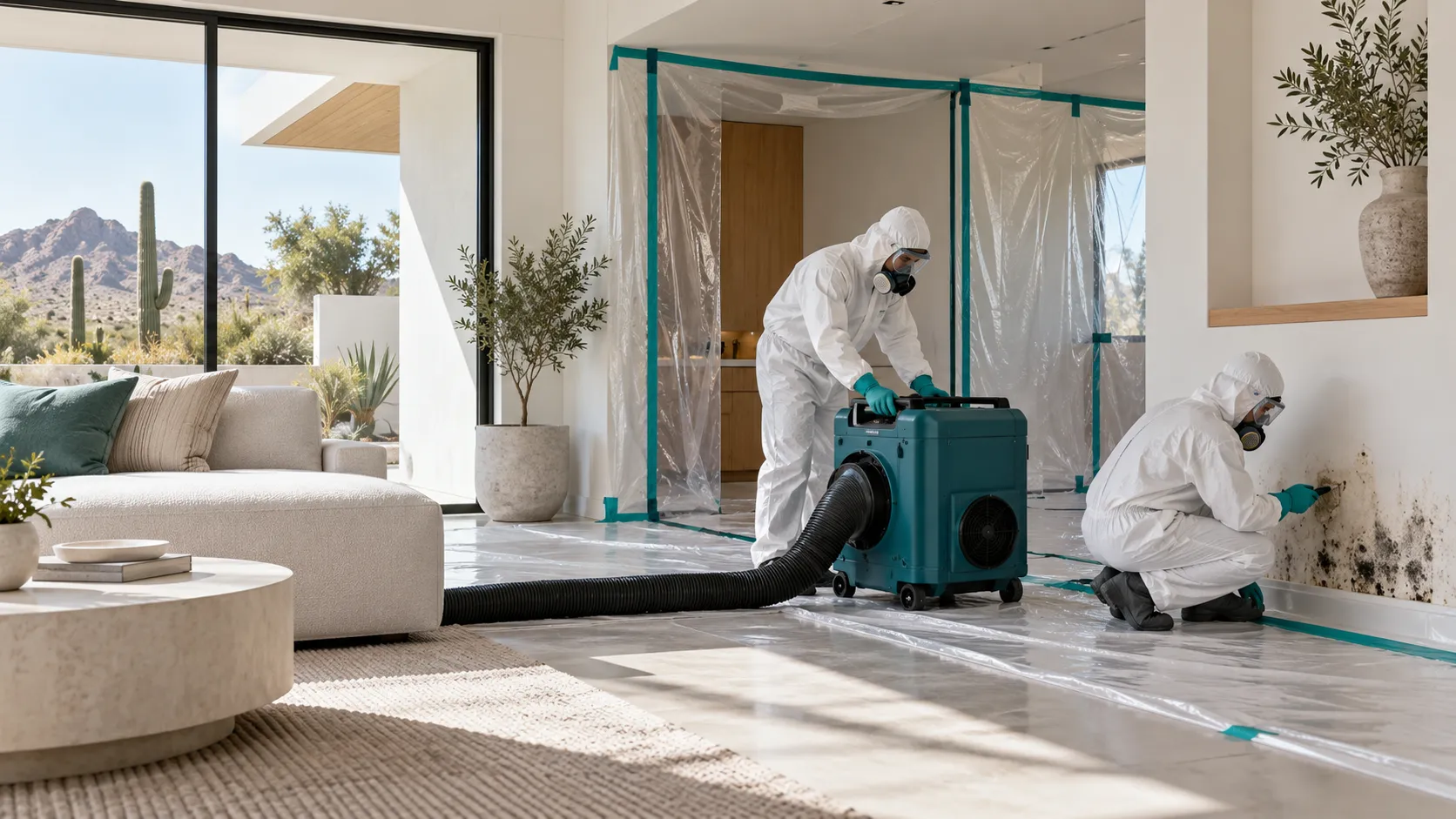
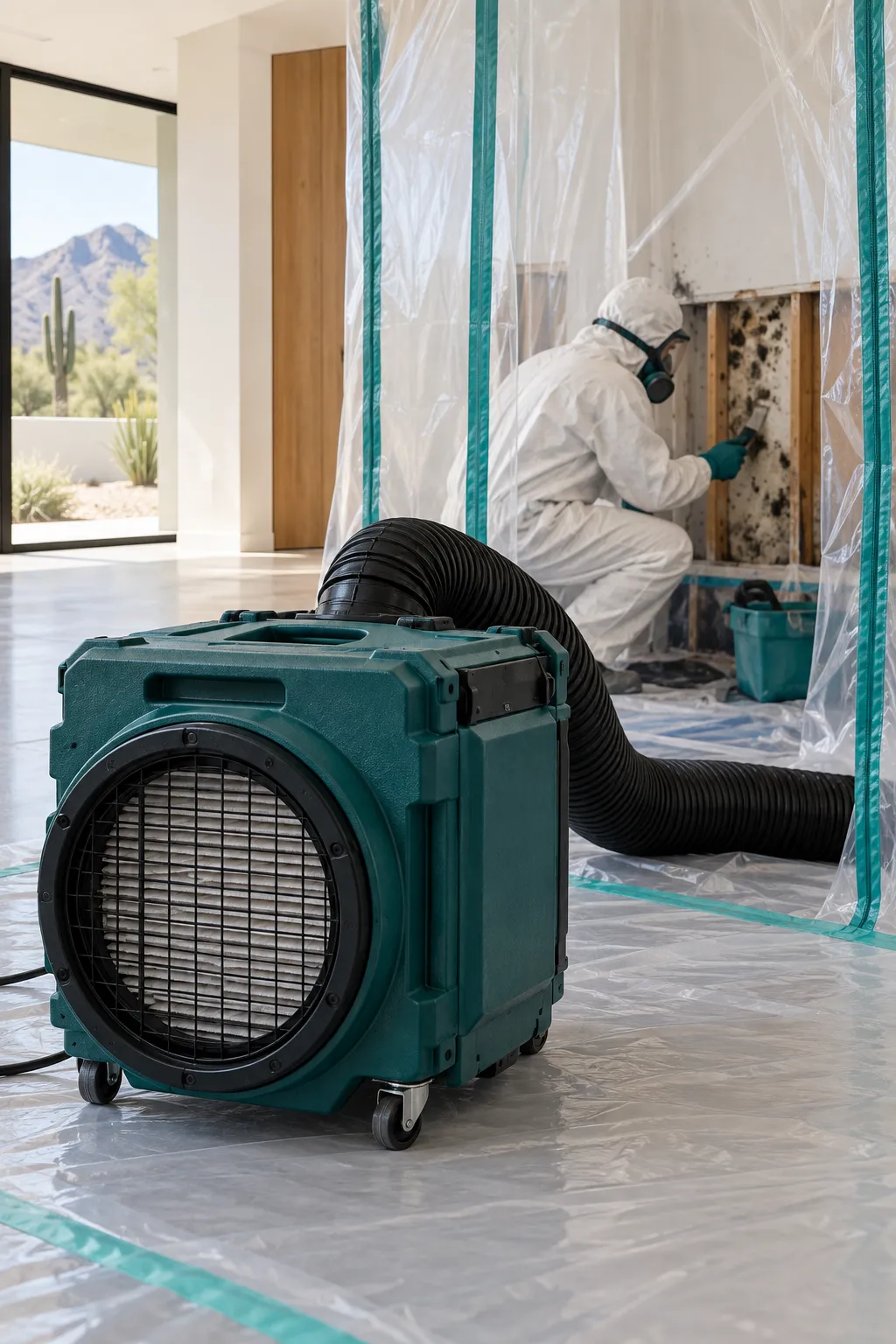
- Plastic barriers and negative air pressure keep spores out of the clean rooms.
- Moldy drywall, insulation and carpet come out. They are not just sprayed.
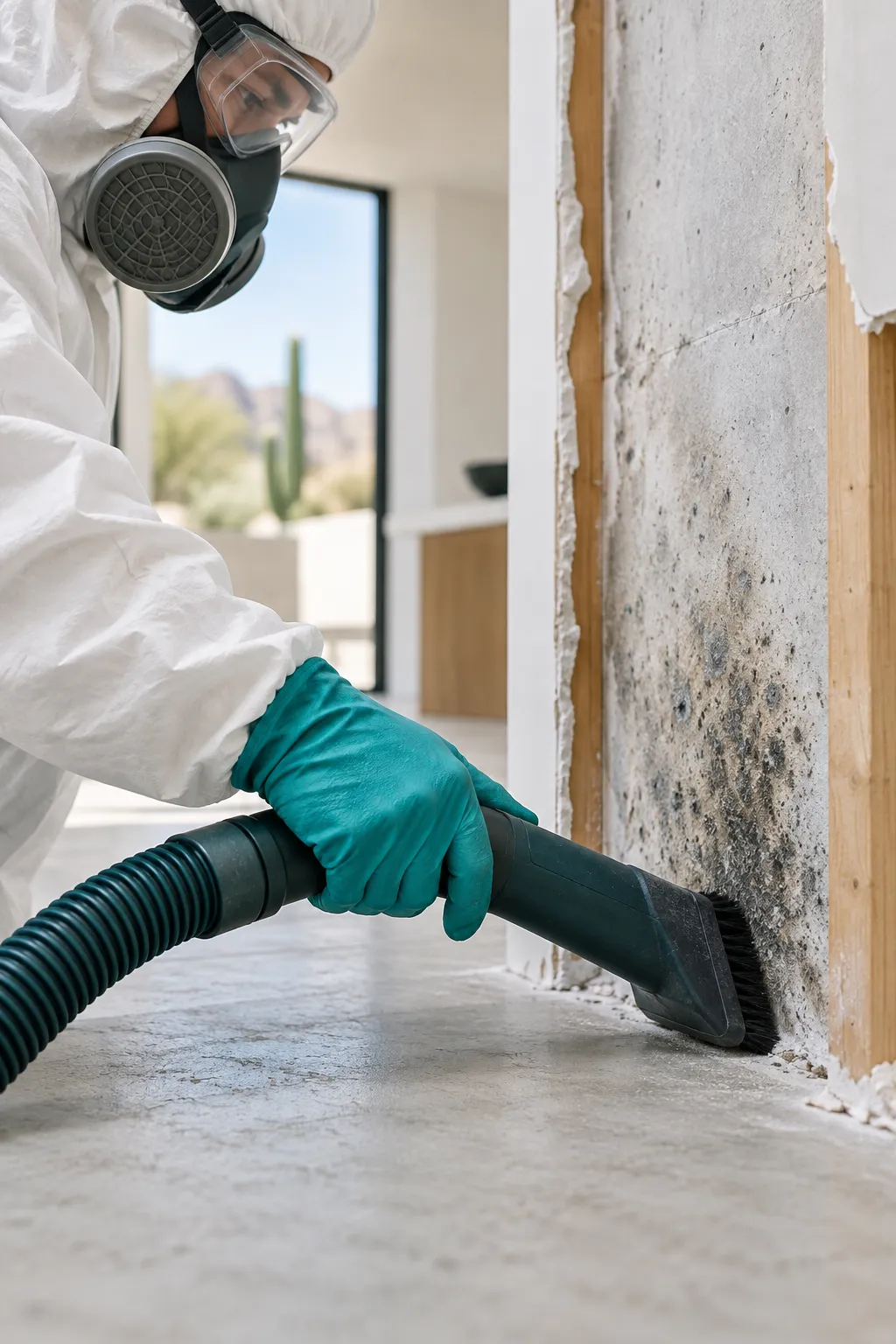
- HEPA vacuuming and damp wiping clean what stays.
- The structure dries until moisture readings at the mapped points say it is dry.
§ 02 / 135 signs
5 signs you need mold remediation, not a wipe-down
Mold keeps growing as long as the water behind it stays. The EPA says moldy carpet and ceiling tiles may have to be thrown away, and if someone in the home is sensitive to mold, calling sooner makes sense.
- 01
The musty smell keeps coming back
You cleaned, and it returned. That means an active moisture source.
- 02
The spot returns within weeks
Cleaning alone will not fix it while the water is still there.
- 03
It covers more than about 10 square feet
The EPA draws the line there. Larger areas call for a professional.
- 04
It sits behind a wall, above a ceiling tile or inside an AC air handler
That is past surface cleaning.
- 05
Carpet or ceiling tiles are moldy
The EPA says they may have to be thrown away, not cleaned.
§ 03 / 133 steps
How mold remediation works, in 3 steps
- 01
Call or send the form, day or nightTell us what you see or smell, and where.
- 02
Someone from our team calls you backWe go over what you found.
- 03
Containment, mold removal and drying followThe leak is fixed first.
§ 04 / 13
What does mold removal cost in Huntersville?
Published reference ranges give a frame. Masters' Guild, which publishes reference-market figures, lists $520 to $1,550 for a small surface area under 10 sq ft, $520 to $1,050 for a bathroom or single room, $1,050 to $4,150 for an attic, and $10,300 to $31,000 for whole-home or post-flood work. The reference price guide puts a typical remediation job at $1,100 to $3,400. National guides land in the same territory: This Old House reports $1,200 to $3,750 typical, an average of $2,300, and $10 to $25 per square foot, while Fixr lists $1,500 to $9,000 nationally.
Ranges are published by cost guides and market data sites on their websites (checked October 2026). They are market figures, not a quote. The actual price is set after an on-site assessment, and it depends on the affected area, where it is, and what has to come out. The pricing page has the full tables, or call (980) 250-4059 to set up an assessment.
§ 05 / 13
What is mold remediation?
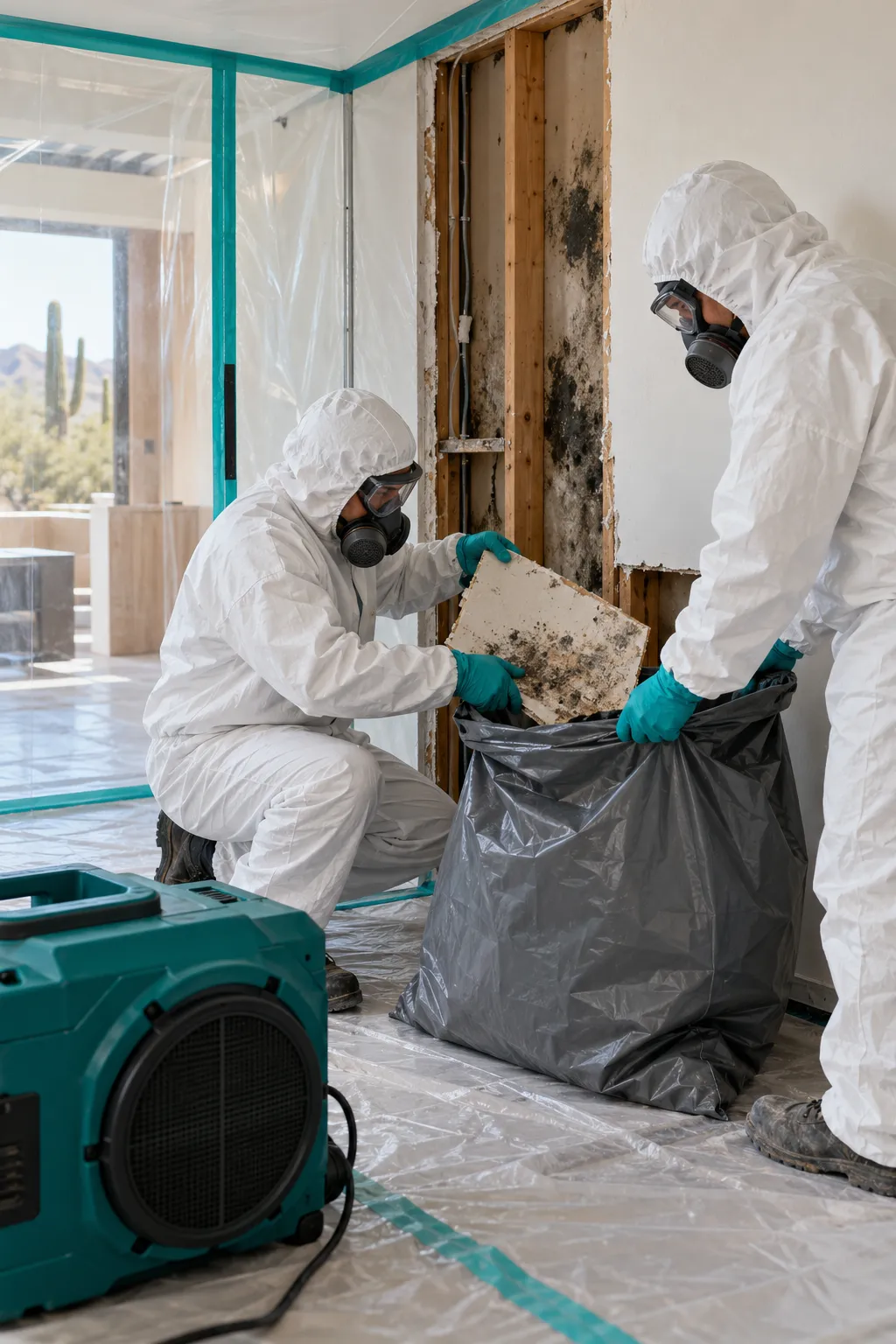
Mold remediation is the work of removing mold growth and fixing the moisture problem behind it, then returning the space to a dry, normal condition. It is more than cleaning. Cleaning wipes a surface. Remediation deals with the source, and the order of operations matters: fix the water problem first, because mold comes back until the moisture stops. The full chain runs from locating the water source to stopping it, containing the affected area, removing moldy materials that cannot be cleaned, drying the structure, and confirming with readings that the space is dry and stays dry.
That chain matters in a Piedmont town as much as anywhere. A roof leak during wet weather (throughout the year, per the National Weather Service (opens in a new tab)), or a slow supply line drip behind a cabinet, gives mold what it needs. The job is finished only when both the growth and the water behind it are handled.
§ 06 / 13
How do you know if you need mold remediation, or just cleaning?
The EPA draws a practical line at about 10 square feet. Under about 10 square feet, in most cases you can handle the cleanup yourself, if the surface is hard and non-porous and the area is not soaked. Larger areas call for a professional, and so do moldy carpet and ceiling tiles, which EPA guidance (opens in a new tab) says may have to be thrown away rather than cleaned.
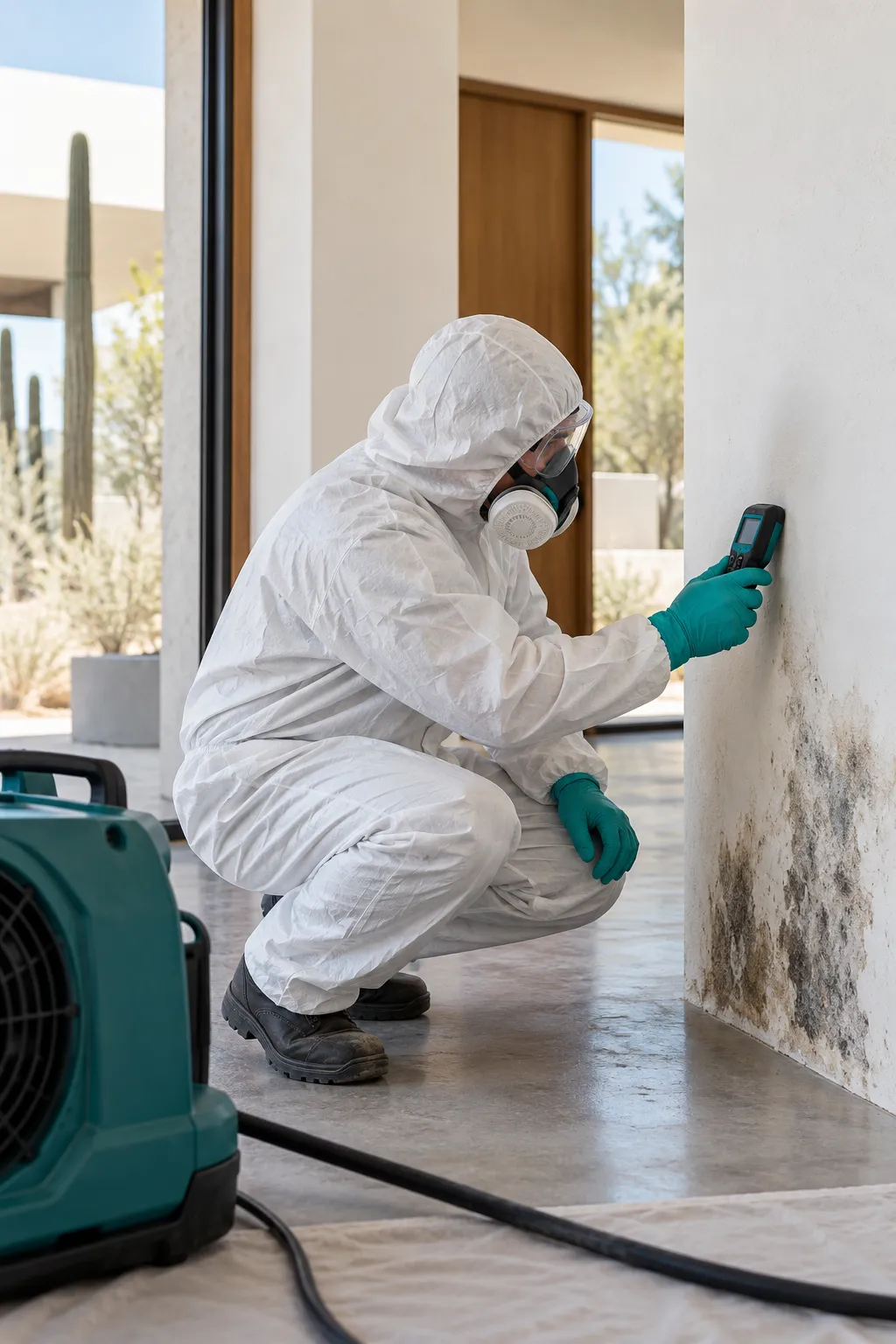
Size is not the only test. If the musty smell keeps coming back after you clean, or the spot returns within weeks, there is an active moisture source and cleaning alone will not fix it. Growth behind a wall, above a ceiling tile, or inside an AC air handler is past surface cleaning. Anything inside the HVAC system is past a DIY wipe down, because a running system can spread spores around the home, and the EPA says keep it off if it may be contaminated. If someone in the home is sensitive to mold, bringing in help sooner makes sense.
§ 07 / 137 steps
What does the mold remediation process involve?
Most jobs move through the same steps.
Map the moisture
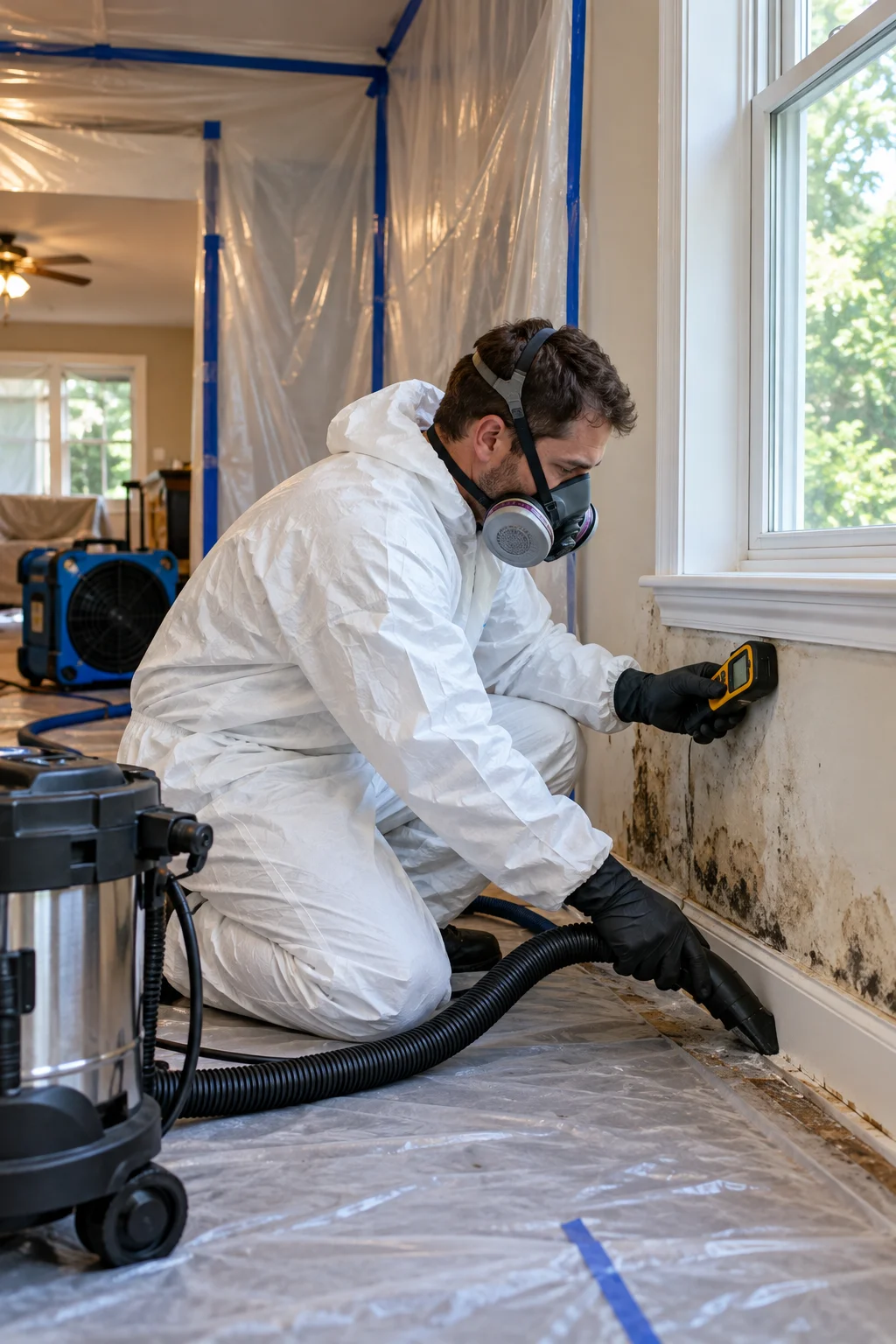
Find the water source, take readings in walls, ceilings and floors, and outline the affected area.
Fix the water
The leak, overflow or clogged condensate line gets repaired before any cleanup starts.
Contain the area
Plastic barriers and negative air pressure keep spores from drifting into clean rooms.
Remove moldy material
Killing mold is not enough, the EPA says (opens in a new tab); the mold itself has to be removed. Porous items like drywall, insulation and carpet come out when they are moldy.
Clean what stays
HEPA vacuuming and damp wiping on hard surfaces, with treatment where it is needed.
Dry the structure
Air movers and dehumidifiers bring materials back to dry standard, checked with a meter.
Verify
Moisture readings at the original map points, and clearance testing on larger jobs.
Step 4 is the one people skip. A sprayed surface with the water still running is a redo waiting to happen.
Line open now
Visible growth after a leak?
Describe what you see or smell. You do not need to diagnose anything yourself.
§ 08 / 13
Why do Huntersville homes get mold?
Seasonal weather does not keep mold out of houses. Huntersville gets its moisture in bursts. The wet weather can occur throughout the year, per the National Weather Service (opens in a new tab), and storms drive rain through roof edges, flashings and window frames. When attic decking or ceiling drywall gets wet, mold can take hold quickly, which is why the EPA says water-damaged areas and items should be dried within 24 to 48 hours (EPA mold guidance (opens in a new tab)).
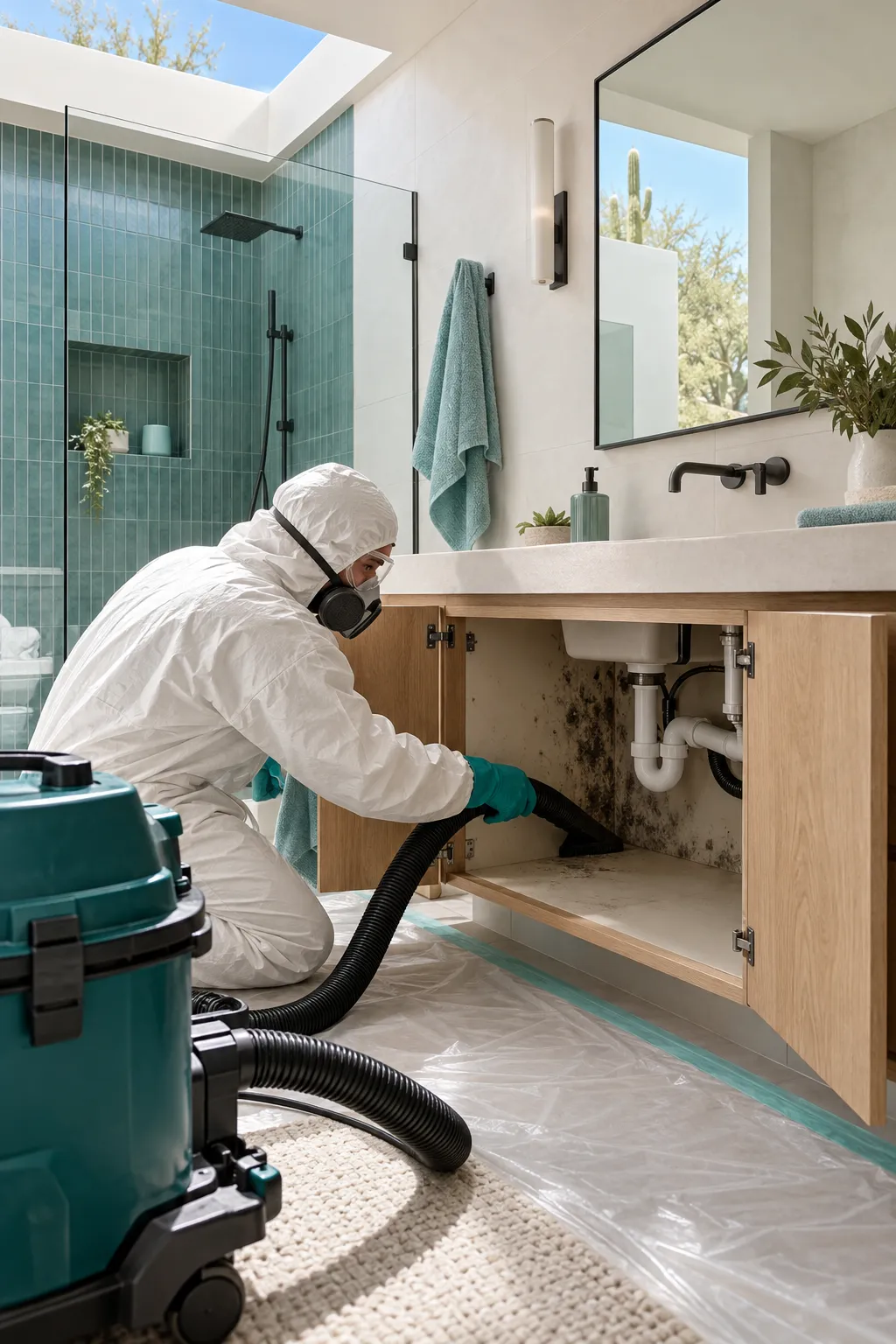
The other sources are quieter. AC condensate lines clog, and the drain pan overflows into a closet or hallway. Supply lines and drains under sinks and behind washing machines drip for months. Slab leaks push water up into flooring. Evaporative cooler supply lines drip, and larger homes often run several AC units and air handlers, in attics and in closets, adding more pans and lines that can fail. And closed-up homes hide all of it: a leak that starts in June may not be found until October, with weeks of growth in between.
§ 09 / 13
How long does mold remediation take?
The timeline depends on 3 things: the size of the affected area, which materials got wet, and how fast the water source is fixed. A small patch on a hard surface can be handled in a single visit. Once drywall, insulation or carpet is involved, the work splits into phases: removal, then drying, then verification. Drying is not an overnight step. Air movers and dehumidifiers run while meters decide when materials are back to a dry standard, and that phase can run several days, longer for tile over wet substrate or a soaked exterior wall.
Attic work runs longer than a closet because access is slow and every bay has to be checked. Jobs tied to a slab leak or a bigger water loss wait on repairs, then restart. A finish date can only be set once the moisture map is done.
§ 10 / 13
Does homeowners insurance cover mold remediation?
Sometimes, and your policy decides. Most mold claims follow the water event behind them. Triple-I (opens in a new tab) explains that an HO-3 homeowners policy covers accidental discharge of water from a plumbing system, which is the basis for many mold claims, while seepage from the ground is excluded. Mold coverage terms and limits vary by policy, so the number that matters is in your own paperwork.
What you can control is the record. Photograph the growth and the water source before anything gets torn out, keep dates and receipts, keep any inspection or testing report, and hold onto removed materials until the adjuster has seen them, unless health or the timeline says otherwise. A simple note file, room by room, with dates and photos, covers most of what an adjuster asks for. If you are not sure what your policy says, ask your agent with the details before you authorize work. Adjusters work from documentation, and building that file is much harder after cleanup.
§ 11 / 13
How do you know the mold is gone?
2 things have to be true at the end: no active moisture, and no remaining growth. The job closes with moisture readings at the same points mapped at the start, inside wall cavities, along baseboards, at ceiling lines and around the air handler. When the readings match the dry standard for those materials, the water story is closed. On larger jobs, and any job where a paper record matters, clearance testing is worth considering before reconstruction: samples taken after the work ends and analyzed by a lab, so you have documentation for an insurance file or a future home sale. If a smell or stain comes back later, the same spots can be checked again against the moisture map.
What nobody can do is call the job done from a visual once-over. Mold spores exist everywhere, so looks alone prove little. Dry readings, and on bigger jobs a passed clearance test, are the finish line.
§ 12 / 135 questions
Questions people ask
01Can I stay home during mold remediation?
In many cases, yes. If the work is contained to 1 room, you can usually stay in the rest of the house. For whole-home or post-flood jobs, or if someone in the home is sensitive to mold, staying elsewhere during demolition and drying can make sense. Ask what the containment allows when you call.
02Does bleach kill mold?
On a hard surface, bleach can knock down what you can see, but killing mold is not enough. The EPA's guidance is that mold has to be removed, and the water problem fixed first, or the growth returns. On porous materials like drywall, insulation and carpet, removal is the answer, not a stronger cleaner.
03Is the mold in my attic from my AC?
Often it is involved. In larger Huntersville homes, air handlers and duct runs often sit in the attic, and a clogged condensate line or an overflowing drain pan wets the wood around it. Summer storm roof leaks land in the same space. If the attic smells musty, an inspection is the next step.
04Will my homeowners insurance pay for mold removal?
It depends on your policy and on the water event behind the mold. Many claims follow accidental discharge from plumbing, which HO-3 policies typically cover, while seepage from the ground is excluded. Triple-I (opens in a new tab) describes seepage as a maintenance issue that insurance does not cover. Your insurer decides. Document the damage early with photos and dates, and keep any inspection report.
05Can I clean small mold myself?
Under about 10 square feet, in most cases you can handle it yourself, once the water source is fixed, working on hard, non-porous surfaces with protection. Keep the HVAC system off if it may be contaminated. If the area is bigger, the smell comes back, or porous materials are involved, it is time to call a professional.
§ 13 / 13Keep reading
- All mold services: our mold services in the Huntersville area, from inspection to HVAC.
- Mold inspection and testing: how hidden moisture is found and a problem is confirmed before work starts.
- Black mold removal: what changes when the growth may be black mold.
- Pricing: published ranges by job type, with every source listed.
- North Huntersville: mold work in Birkdale, Northstone, Skybrook, and the 28078, 28078 and 28078 ZIP codes.
Price ranges are reference-market and national planning examples, not verified Huntersville prices or a quote. Your contractor sets the price after assessing your property.