
Black Mold Removal in Huntersville, NC
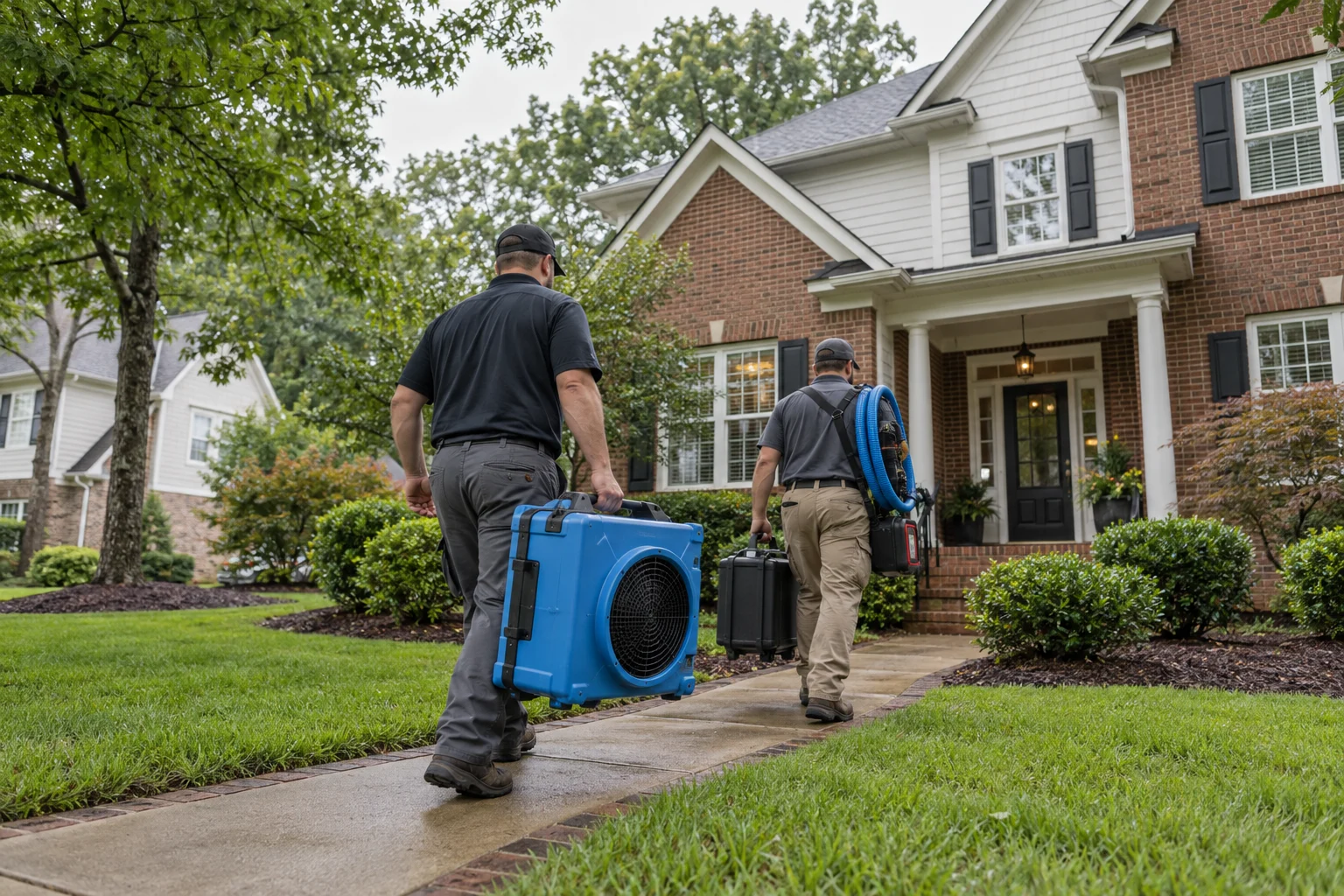
You found dark, slimy growth in a closet, a corner or under a sink. Call day or night or send the form, and someone from our team will call you back soon.
Get a call back
Fill in the form or call (980) 250-4059. Calls are answered day and night.
§ 01 / 12
Black mold removed, moisture fixed
Black mold is the name people give the dark, slimy growth they find in a closet, a corner, or under a sink. Color cannot tell you what it is, and the fix is the same whatever the color: remove the growth, dry the structure and fix the water source. What to do next: call (980) 250-4059.
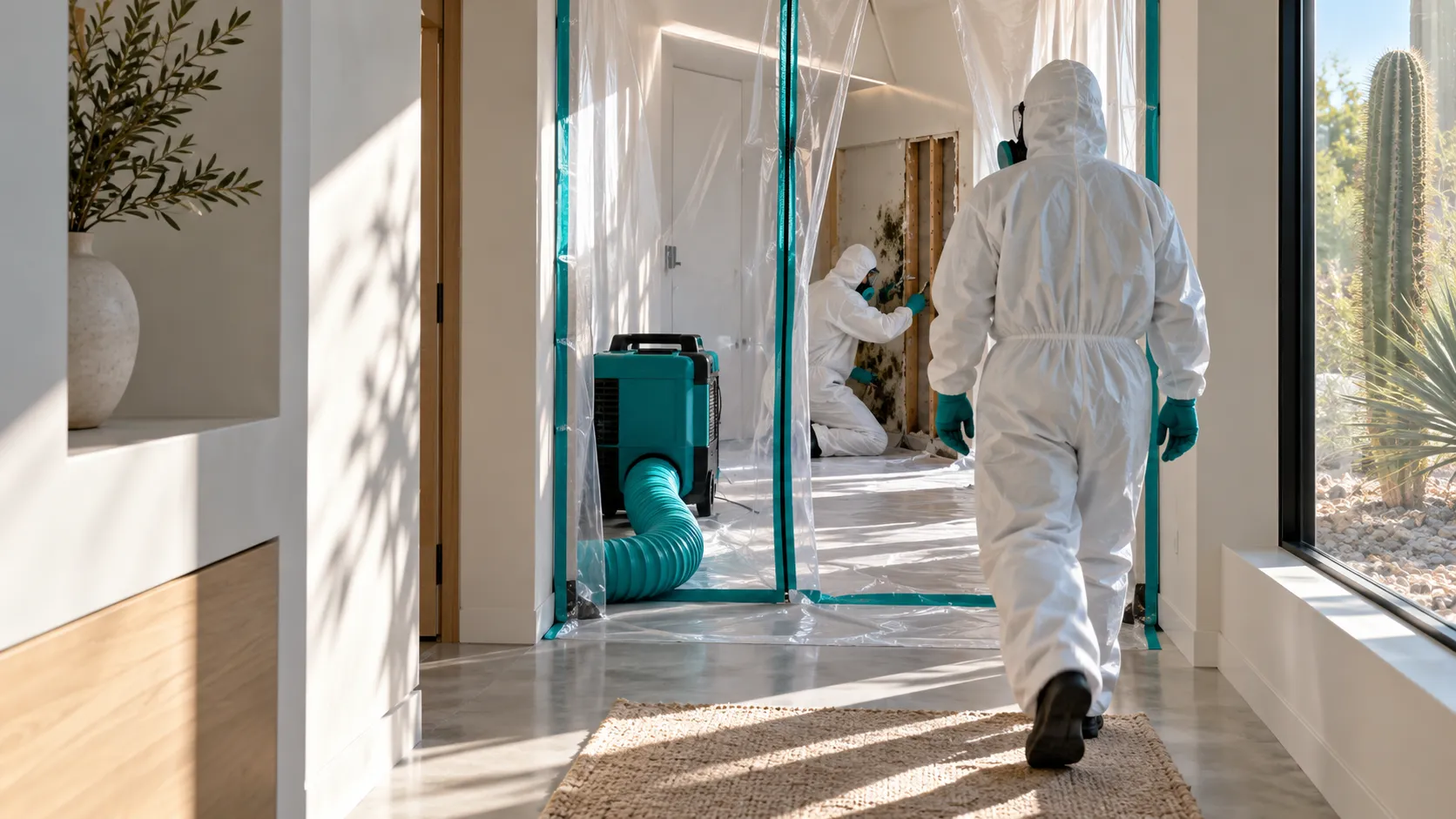
- Sealed plastic sheeting, negative air pressure and HEPA filtration keep spores inside the work zone.
- The growth is removed, not just treated. The EPA says killing mold is not enough.
- Drywall, insulation and ceiling tiles that cannot be cleaned are bagged inside the containment.
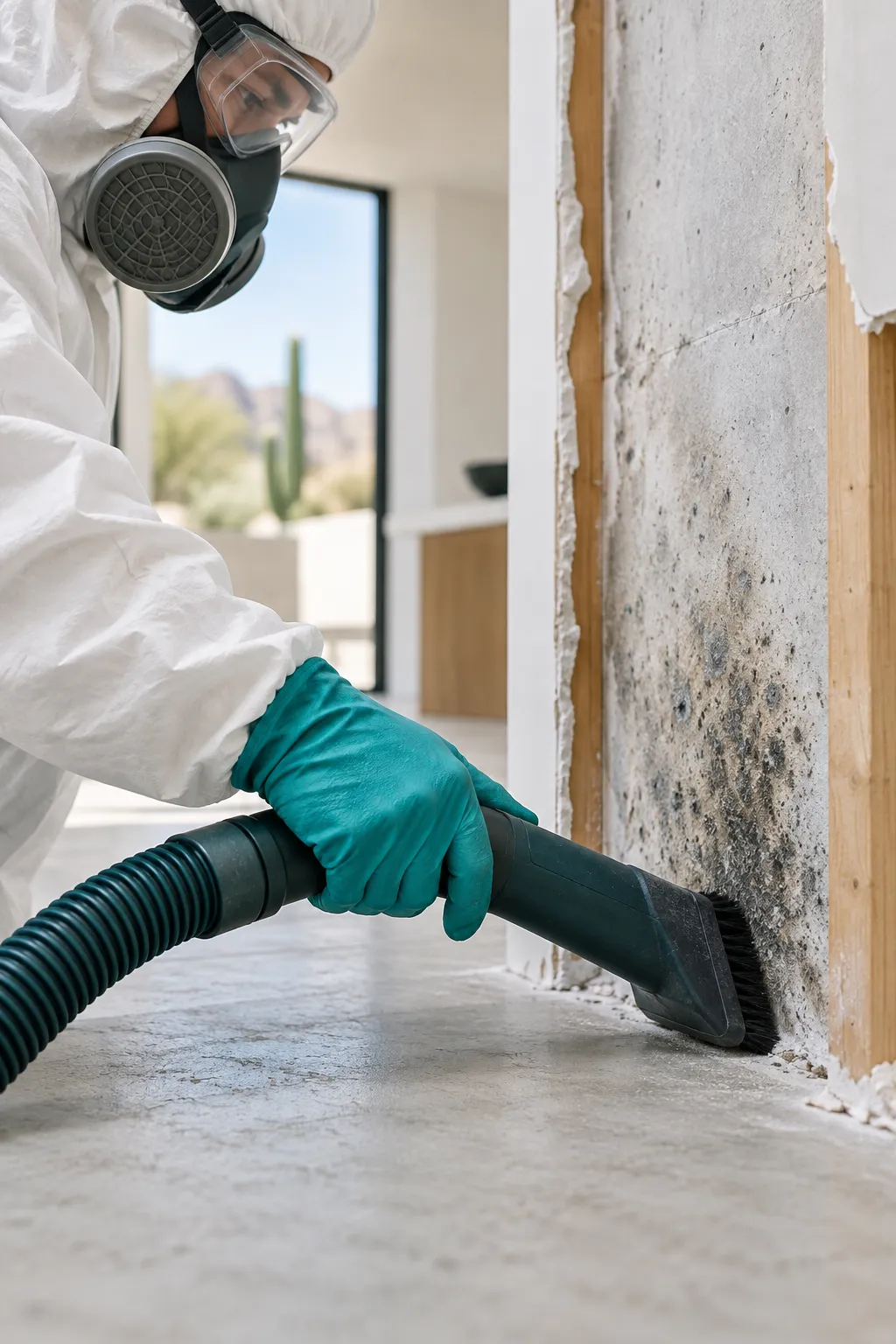
- Hard surfaces get HEPA vacuuming and damp wiping.
- The structure is dried and the water source is confirmed fixed.
§ 02 / 126 signs
6 signs you need black mold removal
The CDC says all molds should be treated the same for health risks and removal. The EPA notes that mold can cause allergic reactions and other health effects in some people, and growth keeps spreading across whatever stays wet.
- 01
Dark, greenish-black growth in a closet, a corner or under a sink
Color alone cannot confirm what it is.
- 02
A stain on drywall below the AC air handler
A clogged condensate line drips through a closet ceiling or a hallway wall.
- 03
Dark baseboards after a slab leak
Moisture wicks up out of the floor into the bottom of the drywall.
- 04
Dark staining on the attic roof sheathing
A slow roof leak keeps the deck damp long enough to grow mold, even in Piedmont heat.
- 05
A spot that was cleaned and came back
The water source is still open.
- 06
A smell that tracks through the house
That needs a professional assessment.
§ 03 / 123 steps
How black mold removal works, in 3 steps
- 01
Call or send the form, day or nightTell us what you see or smell, and where.
- 02
Someone from our team calls you backWe go over what you found.
- 03
Containment, mold removal and drying followThe water source is fixed first.
§ 04 / 12
What does black mold removal cost in Huntersville?
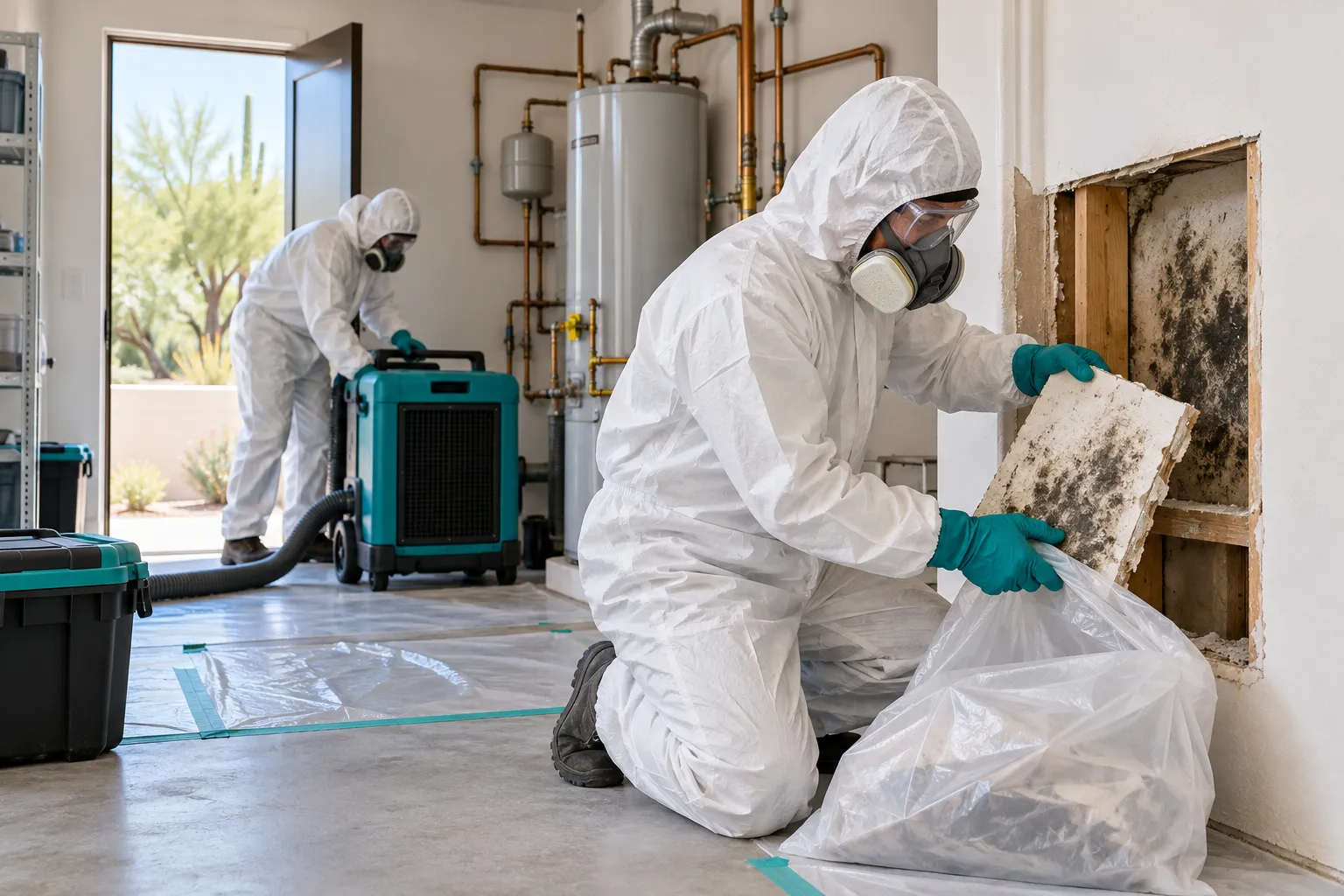
Published ranges put most jobs in the low thousands. reference-market figures from Masters' Guild (2026) list $520 to $1,550 for a small surface under 10 square feet, $520 to $1,050 for a bathroom or single room, and $10,300 to $31,000 for whole-home or post-flood work. The reference price guide puts a typical remediation job at $1,100 to $3,400. Suspicion of black mold can add to the cost of a job, because porous material with heavy growth is more often cut out and replaced than cleaned. An inspection is priced separately, published at $450 to $800 (Fixr). Ranges are published by cost guides and market data sites on their websites (checked October 2026). They are market figures, not a quote. The actual price is set after an on-site assessment, and it depends on the affected area, where it is, and what has to come out. The full table is on our pricing page. The written scope, not the published range, is what a price gets built from.
§ 05 / 12
What is black mold?
Black mold usually means Stachybotrys chartarum, a greenish-black mold that grows on materials that stay wet for days at a time. The name is a shortcut, not an identification. Many molds are black or dark gray, and color alone cannot tell you what you are looking at. What every mold shares is moisture: spores are everywhere, indoors and outdoors, and they settle in and grow only when water shows up. In a Huntersville home, that water is usually a slow leak, a clogged AC condensate line, or rain finding a weak roof detail. The tell is never the color; it is the wet material behind or under the growth. Names matter mostly for the lab report, not for how the removal is done. The EPA approaches mold as a moisture problem first and a cleanup problem second. Left alone, growth keeps spreading across whatever surface stays wet, which is why the first question in any assessment is about water, not about species.
§ 06 / 12
Is black mold more dangerous than other mold?
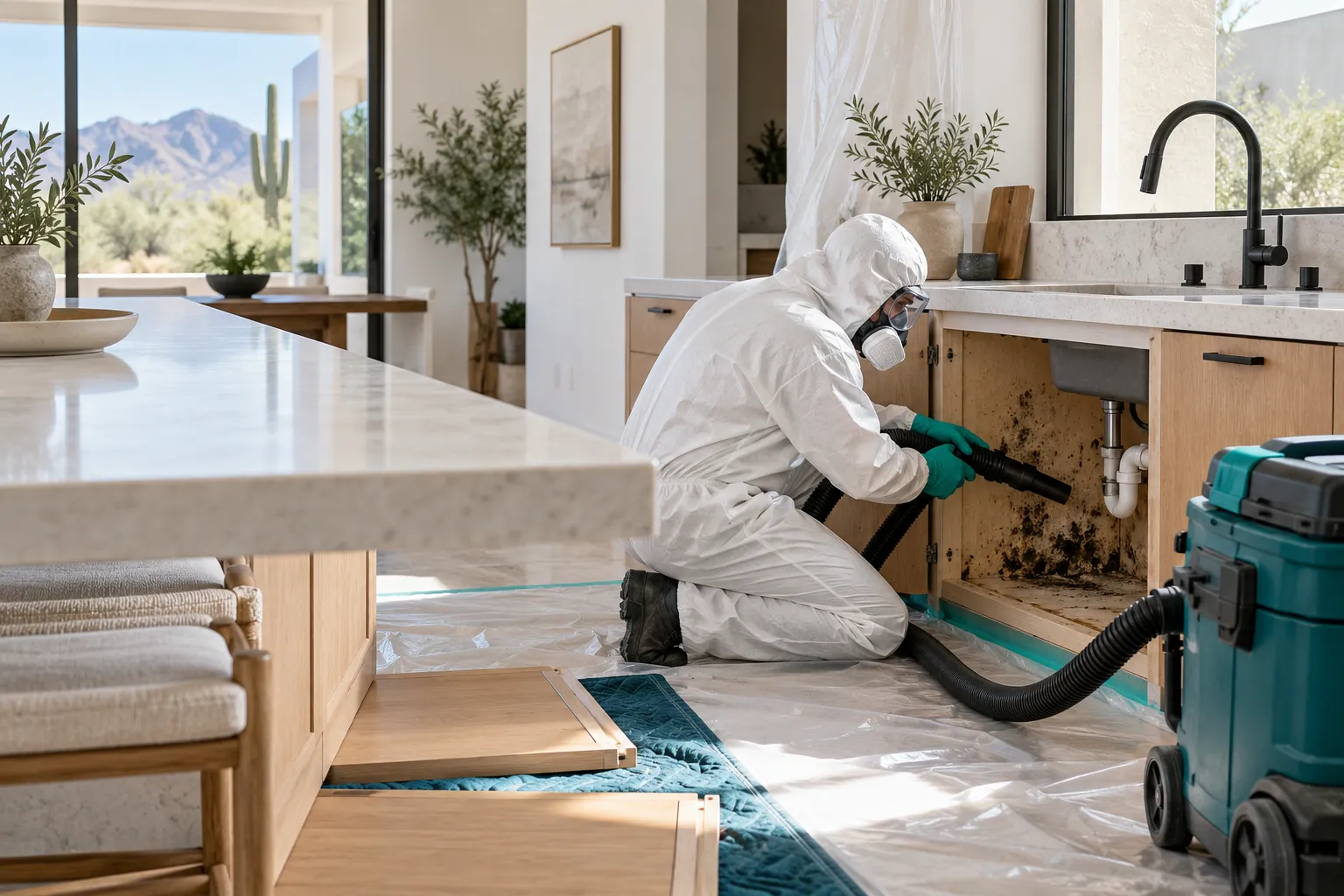
For most purposes, no. The CDC (opens in a new tab) says all molds should be treated the same for health risks and removal: remove the growth, fix the moisture, and the problem is handled. Stachybotrys gets outsized attention because of the name, but the cleanup it needs is no different. That said, some people are more sensitive than others. Mold can cause allergic reactions and other health effects in some people, the EPA (opens in a new tab) notes, and reactions vary widely from person to person. People can walk into the same room and disagree about the smell. If you think mold is making someone sick, talk to a doctor; health questions belong with a medical professional, not a cleanup crew. Testing, if you want it, is about documenting what is present, not about settling the danger or medical questions. For the house itself, the answer is the same whatever the color: remove the growth, dry the structure, and fix the water source.
§ 07 / 12
Where does black mold grow in Huntersville homes?
Wherever water has been allowed to sit. The 3 most common spots are drywall below a leaking AC air handler, where a clogged condensate line drips through a closet ceiling or a hallway wall; baseboards and the bottom of the drywall after a slab leak, where moisture wicks up out of the floor; and attic roof sheathing under a slow roof leak, where the deck stays damp long enough to grow mold even in Piedmont heat. Huntersville and North Huntersville homes often run several AC units and air handlers, so an ordinary summer can clog several condensate lines. The first sign is a stain, not a smell. The hardest cases are homes that sit empty through the hot months: a line overflows in June, and nobody walks in until fall. If you know where the water has been, you already know where to look. It is also worth checking under the kitchen sink, behind the washer, and around any water heater in a closet, where supply lines fail quietly.
Line open now
Dark growth you are worried about?
Describe what you see or smell. You do not need to diagnose anything yourself.
§ 08 / 12
What should I do if I find black mold?
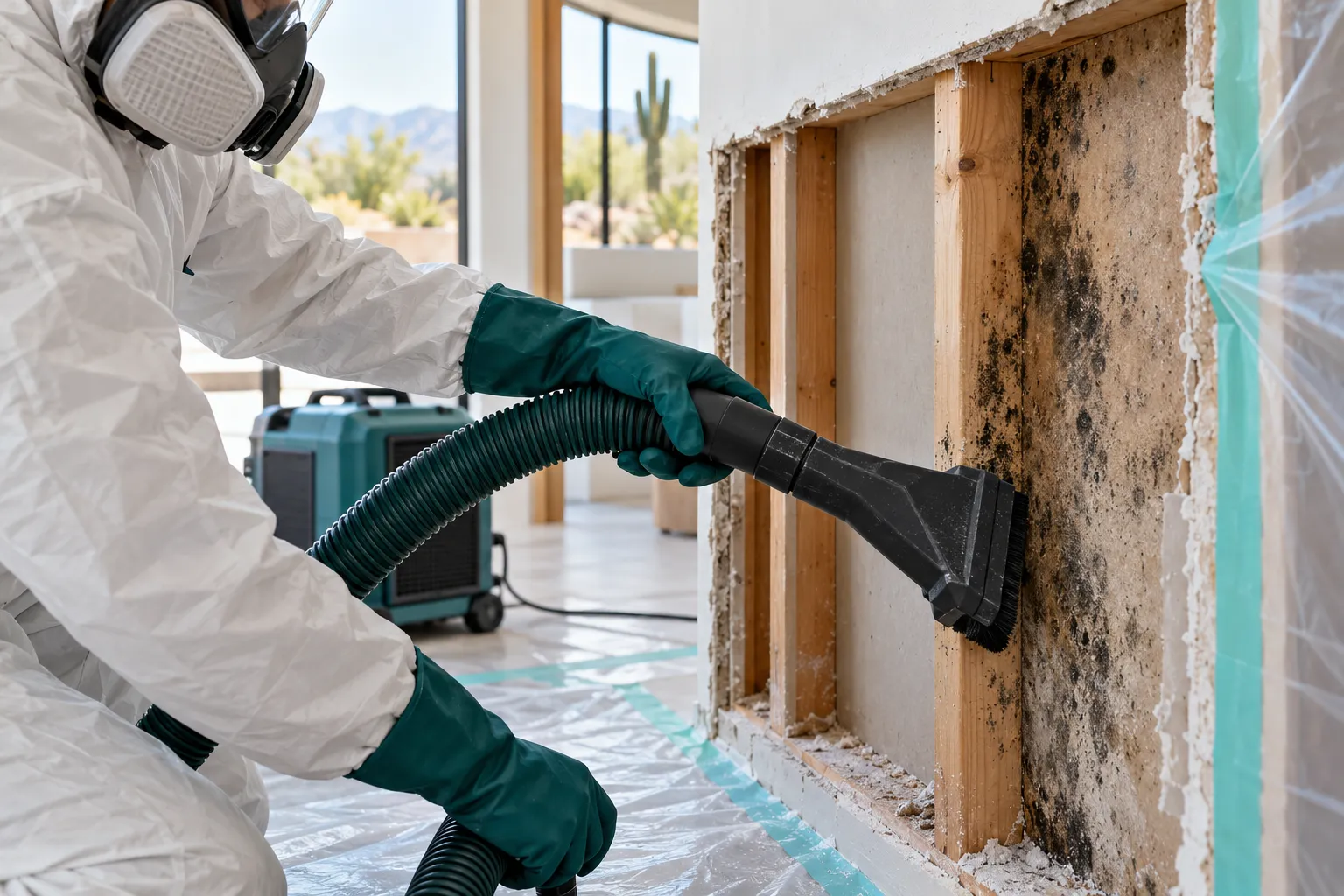
Leave it alone and keep people out of the room. Rubbing, scrubbing, or vacuuming a dry patch sends spores and dust into the air, which is the opposite of what you want. Do not run the HVAC if the system or nearby ducts could be part of the growth; the EPA's guidance is to shut it off rather than spread mold through the house. Close the door, turn off any window unit in the room, and take photos from a distance for your records. If the patch is small, under about 10 square feet on a hard surface, most people can clean it themselves once the water problem is fixed, according to the EPA. Anything larger, anything inside a wall, ceiling, or attic, and anything with a smell that tracks through the house needs a professional assessment. To set that up, call (980) 250-4059. Calls are answered day and night. If all lines are busy, leave a message or send the form and someone will call you back.
§ 09 / 12
How is black mold removed?
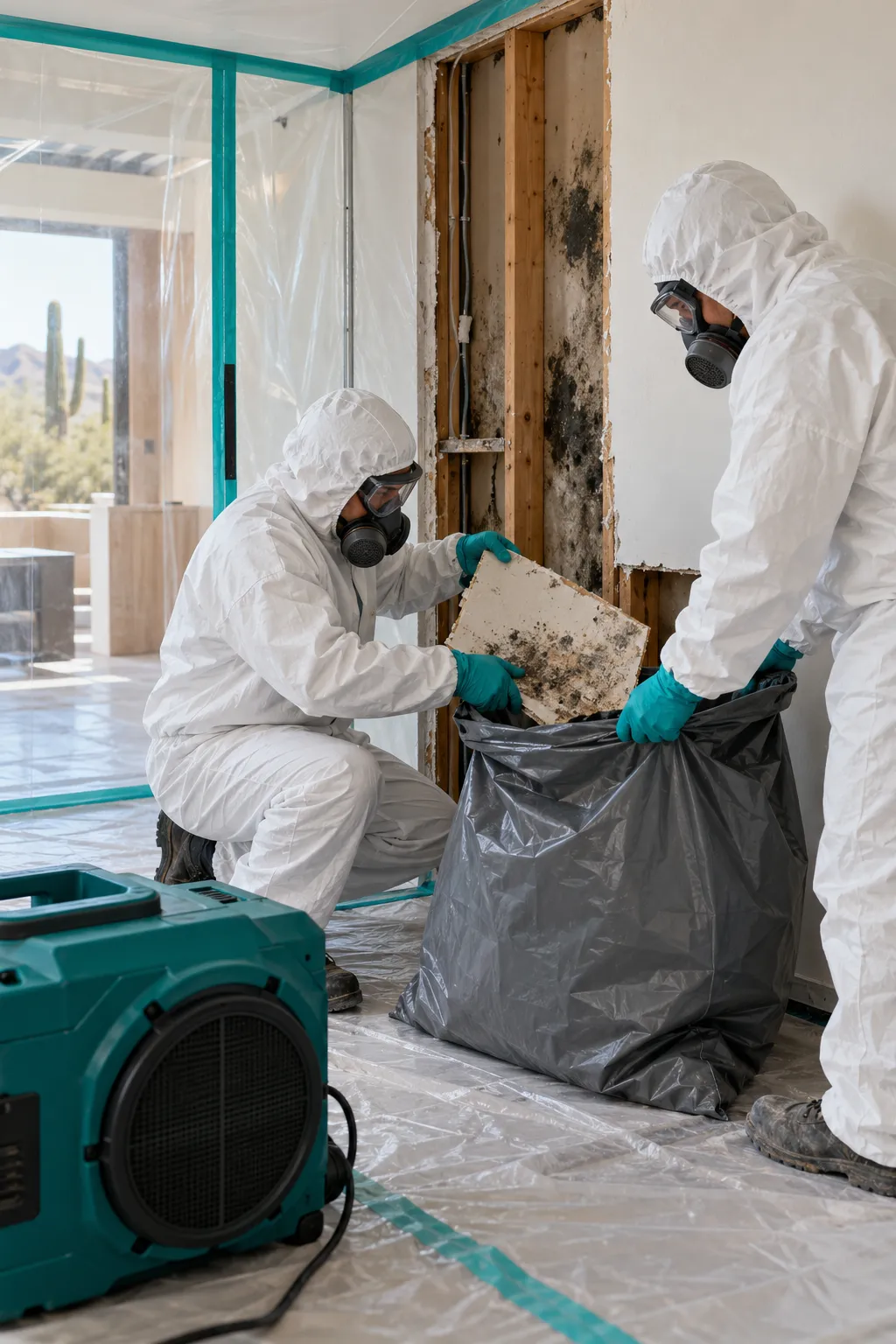
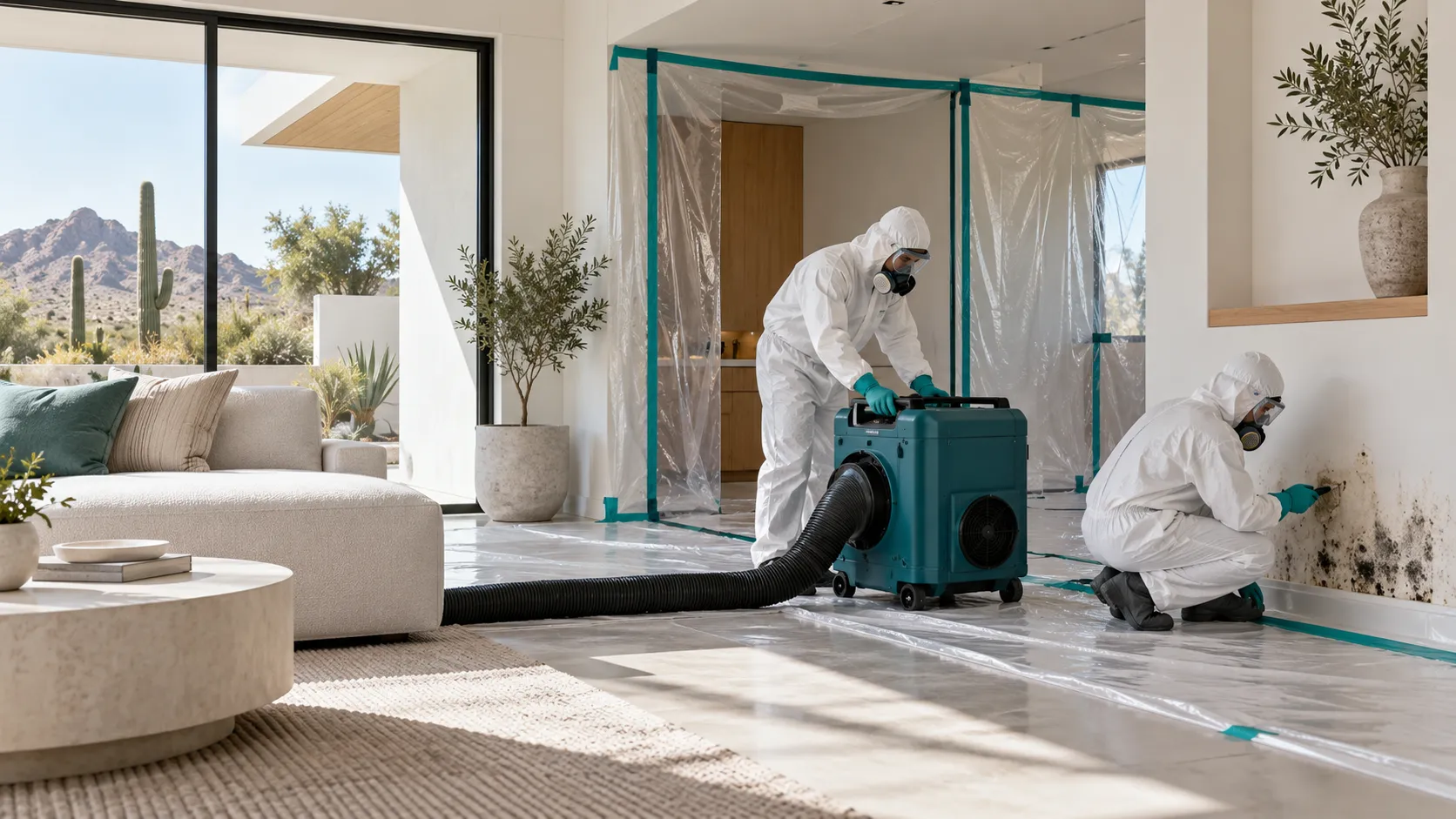
Removal starts with containment: sealed plastic sheeting keeps spores and dust inside the work zone, and negative air pressure and HEPA filtration keep the air moving in the right direction. From there, the rule is removal, not treatment. Killing mold is not enough; it has to be removed, the EPA's guidance (opens in a new tab) states, because dead mold can still trigger reactions. Porous materials, including drywall, insulation, and ceiling tiles, usually cannot be cleaned back to clean; they are bagged inside the containment and disposed of. Hard surfaces get HEPA vacuuming and damp wiping. The job finishes with drying the structure and confirming that the water source, whether it is a condensate line, a supply line, or a roof detail, is actually fixed. If the same spot was cleaned before and the growth returned, the water source is still open.
§ 10 / 12
Will insurance cover black mold removal?
That depends on the cause and your policy, and your insurer decides, not any cleanup company. Standard policies cover certain water events: an HO-3 policy, the most common form, covers accidental discharge from a plumbing system, such as a burst supply line, according to Triple-I (opens in a new tab), the Insurance Information Institute. Seepage from the ground is excluded, and flood damage is not covered by most homeowners policies at all; flood coverage is separate and typically comes through the NFIP. Mold claims usually come down to 2 questions: did the mold come from a covered event, and how quickly was the water handled once it was known. Your job is the paper trail. Photograph everything before anything is moved, keep receipts for repairs and equipment, and report the loss promptly. Then ask your adjuster, in writing, what your policy covers for mold. The assessment report and written scope support a claim, but only your insurer answers the coverage question.
§ 11 / 125 questions
Questions people ask
01How do I know if the mold is black mold?
You cannot tell by color, and neither can a photo. Many species look black; Stachybotrys is 1 of them. Confirming what you have takes samples and lab analysis. Published inspection prices run $450 to $800 nationally (Fixr, checked October 2026), typically about $500 for a 2,500 square foot home with 2 samples and lab testing. The actual price is set after an on-site assessment.
02Is black mold dangerous to live around?
For some people, yes. Mold can cause allergic reactions and other health effects in some people, according to the EPA, and sensitivity varies a lot from person to person. If you think mold is making someone sick, talk to a doctor. Until the growth is removed, keep the affected room closed off and limit time spent in it. Keeping the door closed buys time, not a fix.
03Can I kill black mold with bleach instead of removing it?
No, and the EPA is direct about this: killing mold is not enough, it has to be removed, and the water problem has to be fixed or growth comes back. Bleach can lighten a stain while spores and mold fragments stay in the material, and it does not reach the water feeding growth inside a wall or ceiling. Porous items like drywall and insulation are usually removed outright.
04Will black mold come back after removal?
Only if moisture comes back first. Mold needs water, so the removal is only as durable as the repair behind it. If a condensate line clogs again or a roof leak keeps dripping, growth restarts in the same area. That is why drying and the leak repair matter as much as the cleaning itself.
05How do I keep black mold from coming back?
Fix water fast and dry the area fast. The EPA's rule of thumb is to dry water-damaged areas and items within 24 to 48 hours, the window before mold growth starts. In practice, that means clearing a clogged AC condensate line the day you notice it, running fans and a dehumidifier on a wet closet, and repairing roof leaks before the next storm. Check the attic after storms.
§ 12 / 12Keep reading
- Mold services: the full rundown of inspection, remediation, black mold, attic and HVAC work across the Huntersville area.
- Mold remediation: the removal process when growth is more than a small patch, from containment to drying.
- Mold inspection and testing: samples, lab results, and a written scope before work begins.
- Attic mold removal: growth on roof sheathing and framing, usually fed by a slow roof leak.
- Pricing: published Huntersville ranges on remediation, inspections, and attic work, with sources for each range.
- North Huntersville: how water and mold problems play out in 28078, 28078, and 28078.
Price ranges are reference-market and national planning examples, not verified Huntersville prices or a quote. Your contractor sets the price after assessing your property.