
Huntersville Mold Removal Guide: Causes, Cleanup and Prevention
Mold in a Huntersville home almost always starts with water: a summer storm roof leak, a clogged AC drain line, or a slow plumbing drip that ran for weeks. Fix the water, remove the mold, dry the structure. When you need Huntersville mold removal, call (980) 250-4059.
Get a call back
Fill in the form or call (980) 250-4059. Calls are answered day and night.
§ 01 / 16
Why do Huntersville homes get mold if it is so dry here?
Indoor mold follows moisture, including leaks and persistent humidity. The EPA's message (opens in a new tab) is simple: control the moisture and you control the mold. In Huntersville, the moisture comes from a few regular sources. Summer storms can occur throughout the year, per the National Weather Service (opens in a new tab), and a single storm can push rain through a roof leak, a window seal, or a stucco crack. Air conditioners pull water out of the air all summer, and a plugged condensate line sends it into a ceiling instead of outside, an issue the EPA flags as a cause of indoor water damage. Supply lines, water heaters, and slab leaks add their own drips. When a house sits closed for the summer, nobody notices the wet spot until it smells. Keep wet materials dry and mold rarely gets a start.
§ 02 / 16
What should you do in the first 10 minutes?
Keep people out of the affected room, especially anyone with asthma or allergies, since the EPA says mold can cause allergic reactions in sensitive people. Do not scrub or poke at the growth: disturbing it sends spores into the air, and the EPA notes that killing mold is not enough, the mold has to be removed. If water is still running, close the main valve or the fixture shutoff. If you know or suspect the air handler or ductwork has mold in it, the EPA says do not run the HVAC system. Photograph everything, the growth, the stain, and the source, before anything moves. Those photos matter later if you file a claim. Then call (980) 250-4059 and describe what you found.
§ 03 / 16
What happens in the first 24 to 48 hours?
The EPA says (opens in a new tab) to dry water-damaged areas and items within 24 to 48 hours to prevent mold growth. That window is why speed matters: drywall, insulation, and carpet pad that stay wet can grow mold and often have to be removed rather than dried. If you had a leak and the area is already dry but smells musty, the moisture is probably still inside a wall or under a floor, where a fan cannot reach it. A moisture meter finds it.
For a patch smaller than about 10 square feet on a hard surface with no sewage involved, EPA cleanup guidance (opens in a new tab) says you can usually handle it yourself once the water problem is fixed. Anything bigger, or hidden, or after a sewage or flood event points to professional help; for sewage or other contaminated water, the EPA says to call in a professional.
§ 04 / 16
Is it mold, mildew, or an old water stain?
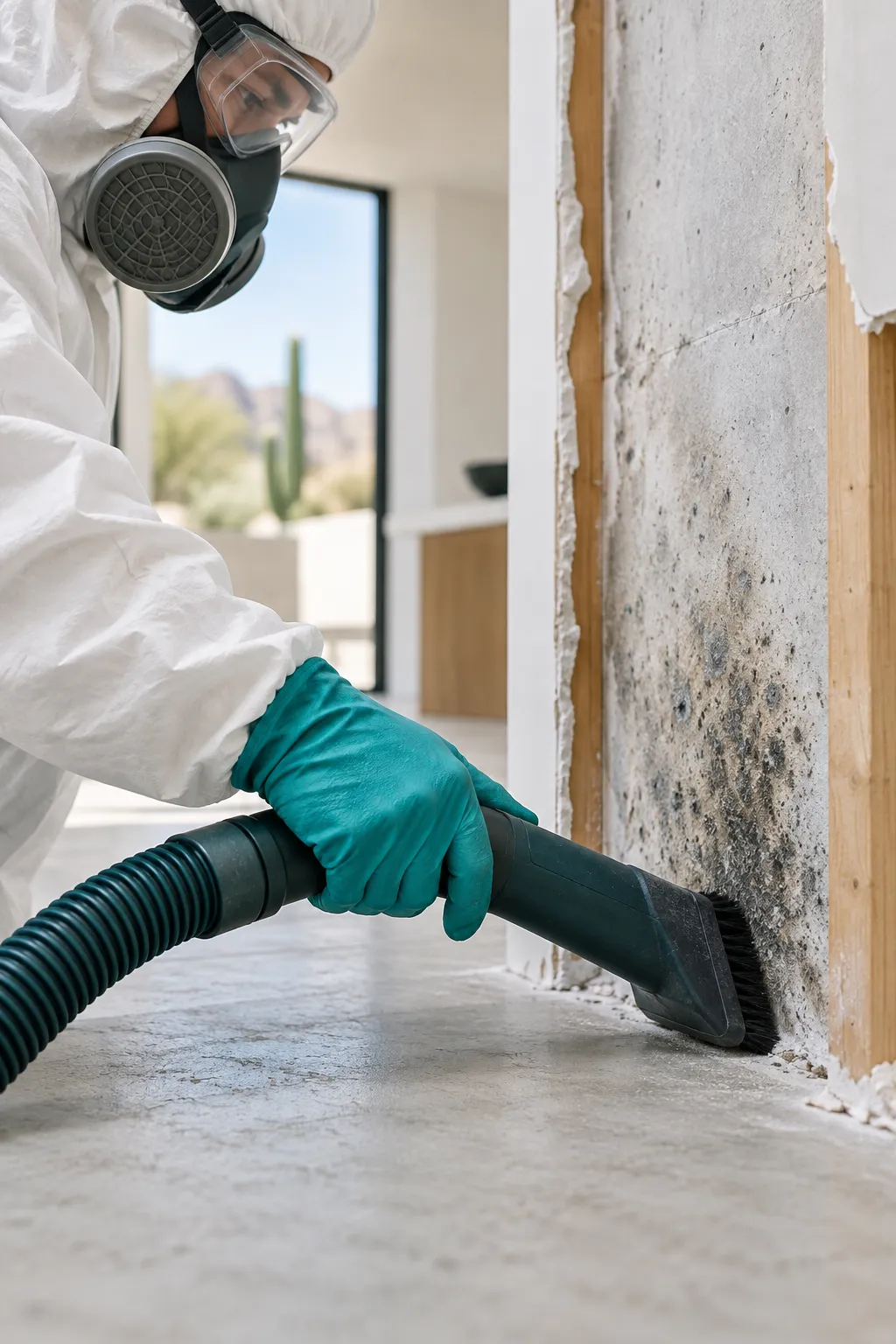
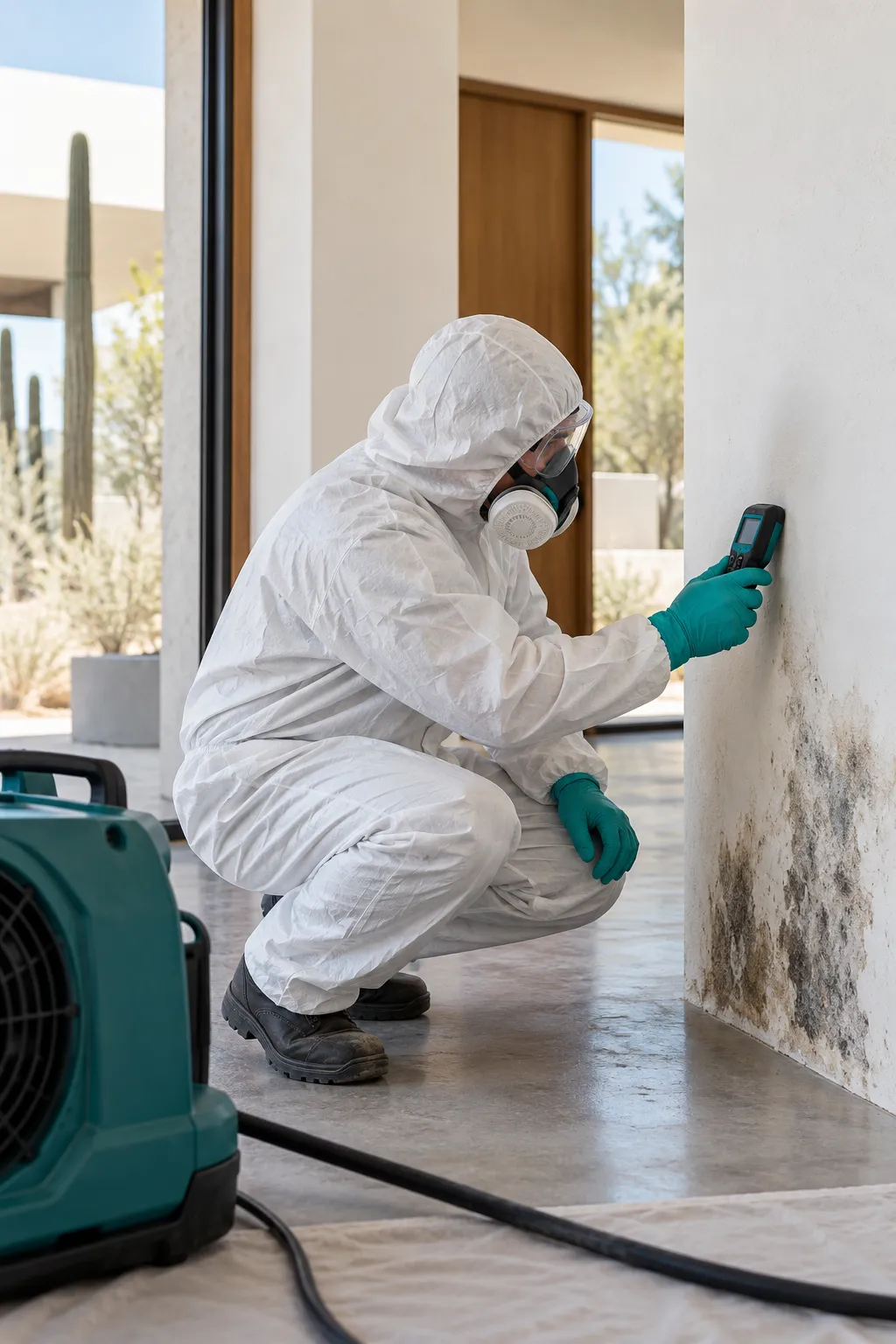
Mildew is the flat, powdery growth on shower grout, window tracks and bathroom ceilings. It stays on the surface and usually comes off with ordinary cleaning. Mold that has grown into drywall, wood or carpet backing looks fuzzy or blotchy, often dark, and it shows up near a leak, a window or an AC vent. A plain water stain is a tan or yellow ring that does not smell and does not spread: it is a record that water came through. The useful clues are smell and time. A dry stain that never changes is old; a spot that spreads, or a room that stays musty, points to moisture inside the material. For certainty instead of a guess, the mold inspection and testing page explains when sampling is worth it, and the guide to the signs of mold in your home covers the early clues.
Line open now
Mold growing right now?
Describe what you see or smell. You do not need to diagnose anything yourself.
§ 05 / 16
Where does mold hide in a Huntersville house?
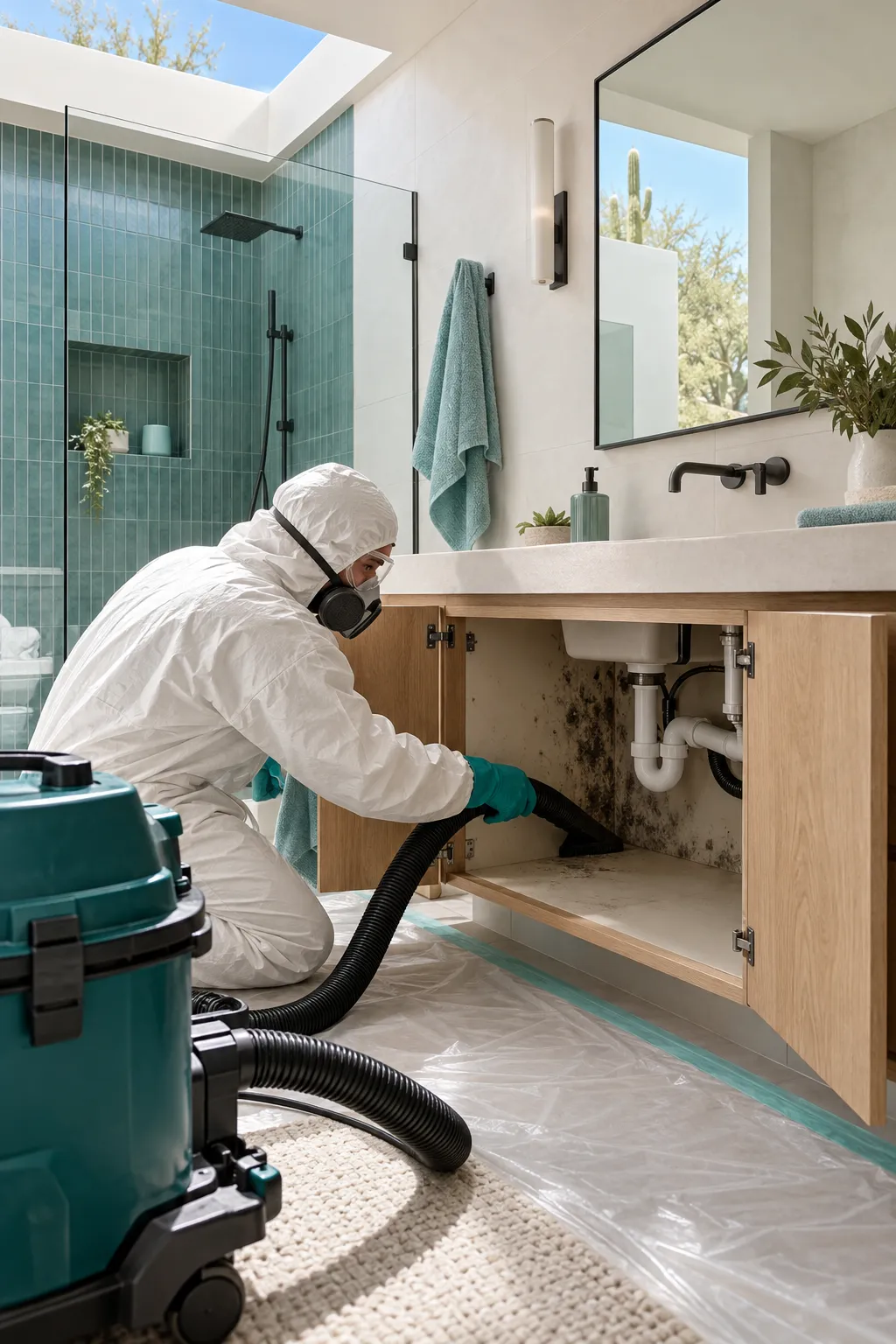
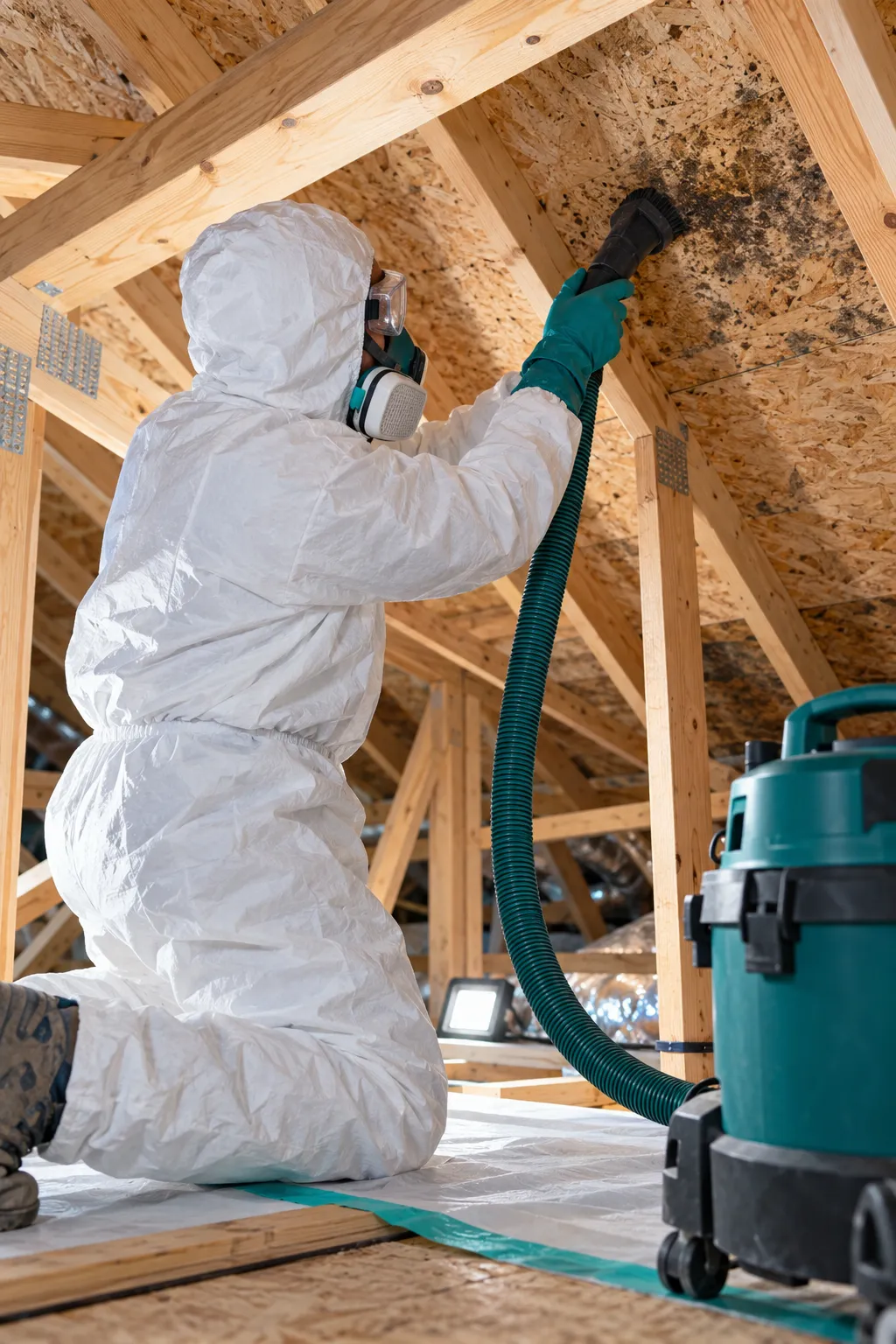
Behind baseboards and inside wall cavities, under sinks and behind toilets, around the AC air handler and its drain pan, on attic decking below a roof leak, at window sills and door frames after summer storm rain, and under flooring that got wet slowly. Local homes add their own spots: a condensate line that clogs in summer, a laundry closet that stays humid, and guest rooms closed up for months with no air moving. Mold does not need a wet climate, only a wet spot. Attic growth after a roof leak and growth around ductwork each have their own page: attic mold removal and HVAC and air duct mold removal. The guide on why mold grows in Huntersville homes walks through each source.
§ 06 / 16
Does bleach kill mold, or just hide it?
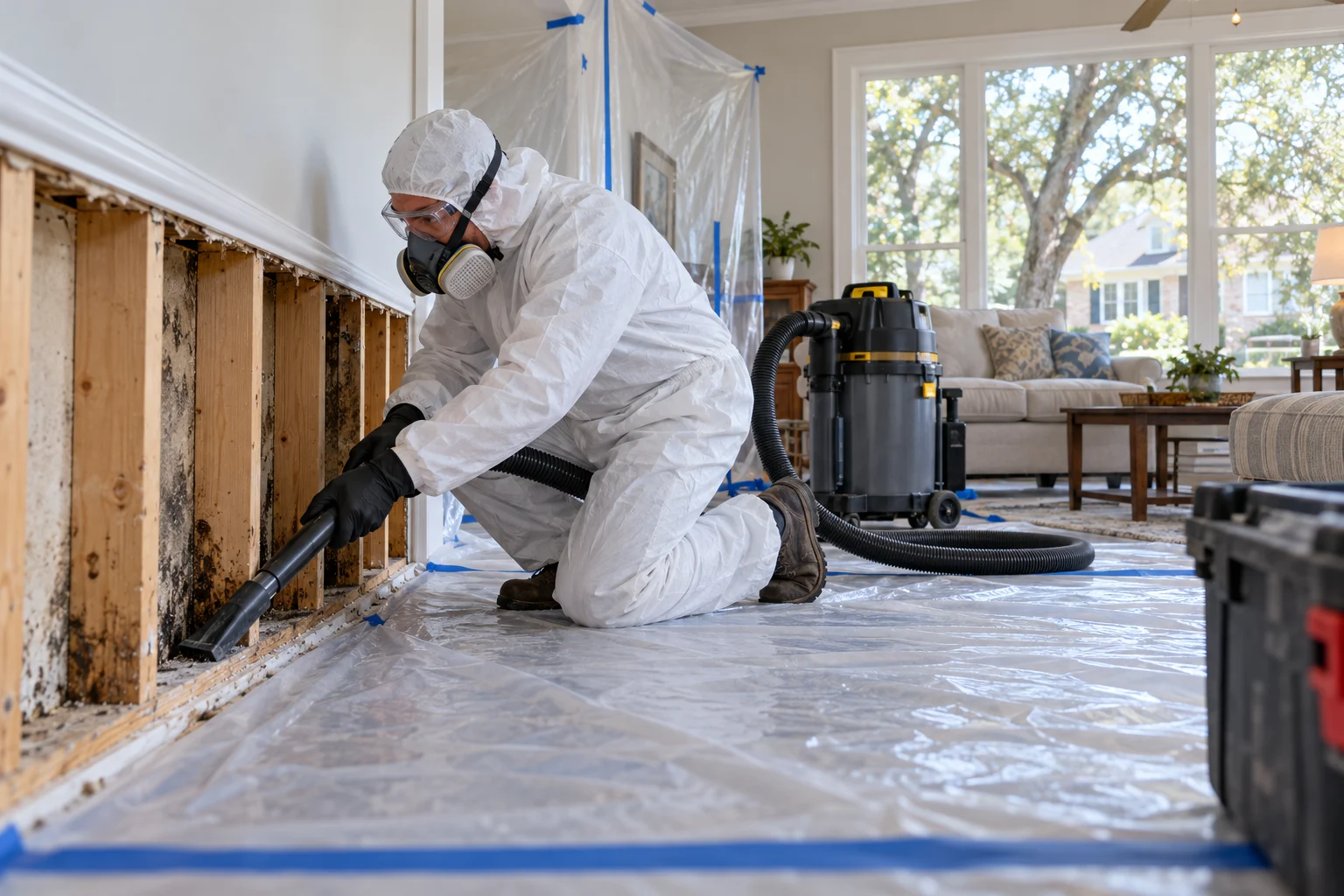
Killing mold is not the same as removing it. The EPA's mold guide (opens in a new tab) notes that dead mold may still cause allergic reactions in some people, so it has to be removed, and it says a biocide such as chlorine bleach is not recommended as a routine part of mold cleanup. Mold can fill the small spaces inside porous materials, which is why the EPA says it may be difficult or impossible to remove completely from them. Bleach can lighten the surface while that growth stays, and the spot returns when moisture does. Foggers and ozone machines aim at the air, not the material: the EPA reports (opens in a new tab) that ozone at levels within public health standards does not effectively remove mold. What works is the plain sequence: fix the water source, contain the area, remove porous materials that cannot be cleaned, clean what is left, and dry the structure. Dark growth gets the same treatment; black mold removal explains why.
§ 07 / 16
What does containment mean on a mold job?
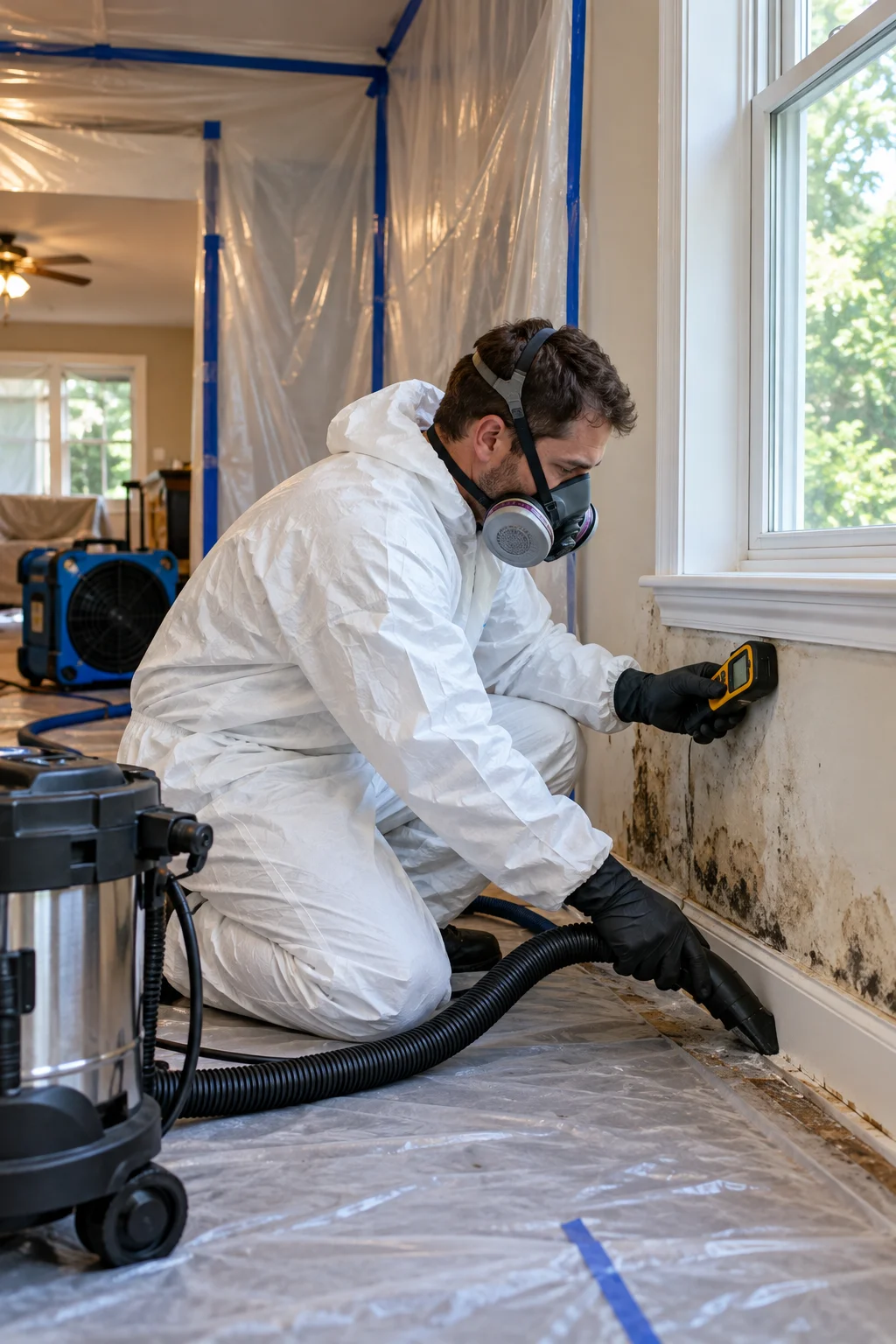
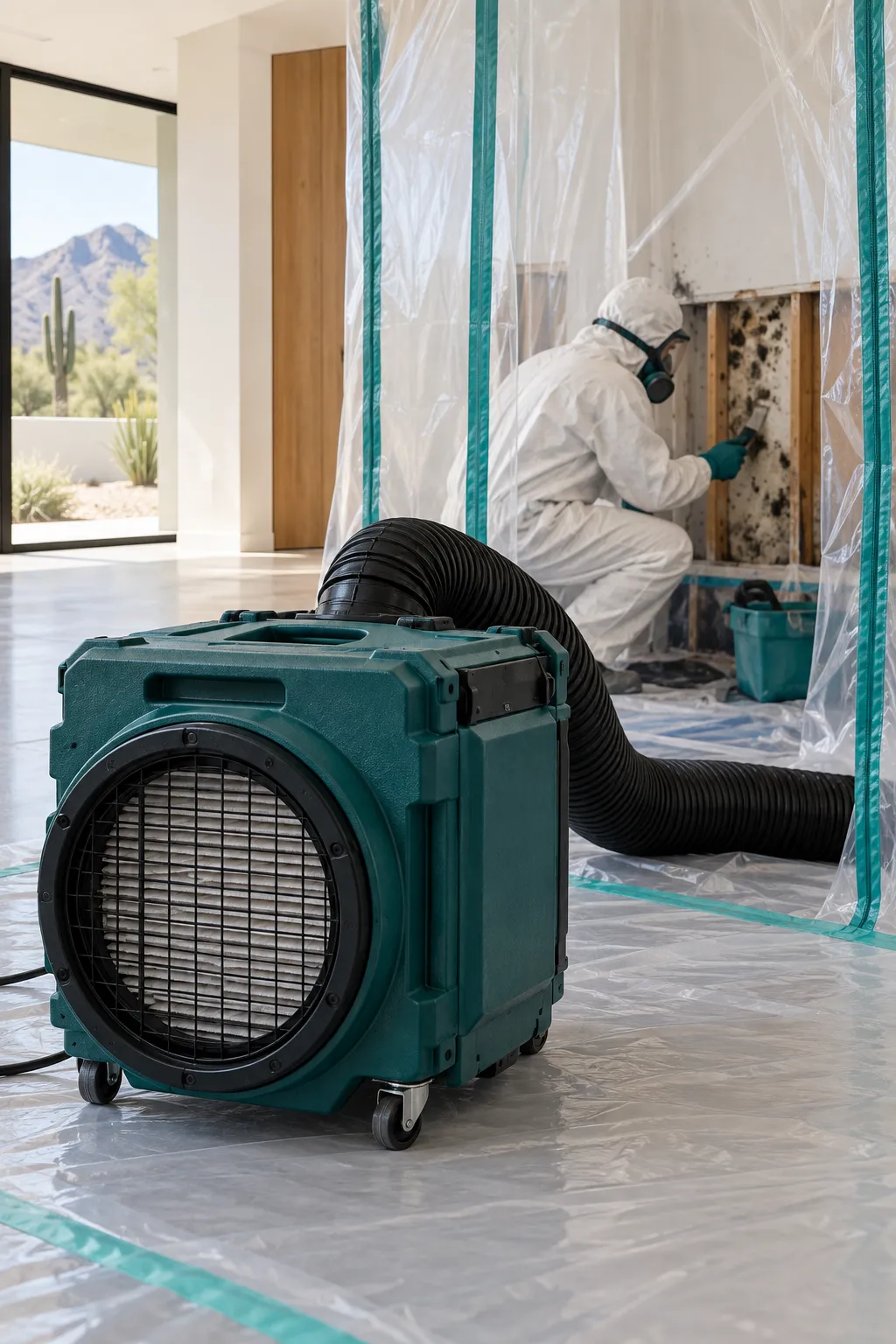
Containment is the barrier that keeps the rest of the home out of the dust path. The work area is sealed with plastic sheeting and a zip door, then put under negative air pressure with an air scrubber, so air flows in through the door and leaves through a HEPA filter instead of drifting into the next room. Belongings inside the work zone get covered or moved, HVAC vents in the area get sealed, and removed materials are bagged before they travel through the house. On a contained job you should see plastic over doorways and floors and a scrubber running. Without containment, dust from the work can travel to clean rooms; with it, the mess stays in one area. Containment is step 3 of the mold remediation process.
§ 08 / 16
What gets cleaned and what gets thrown out?
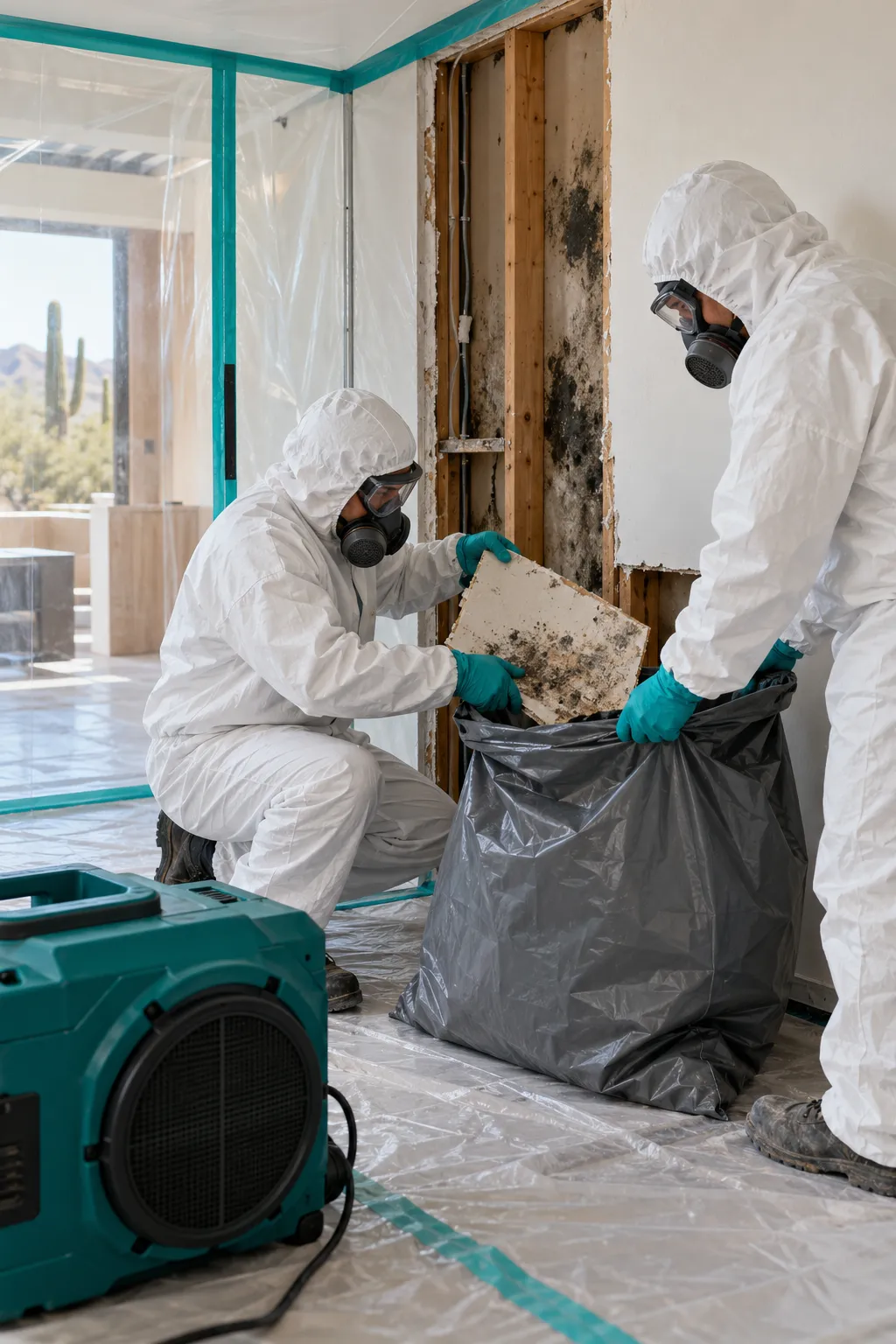
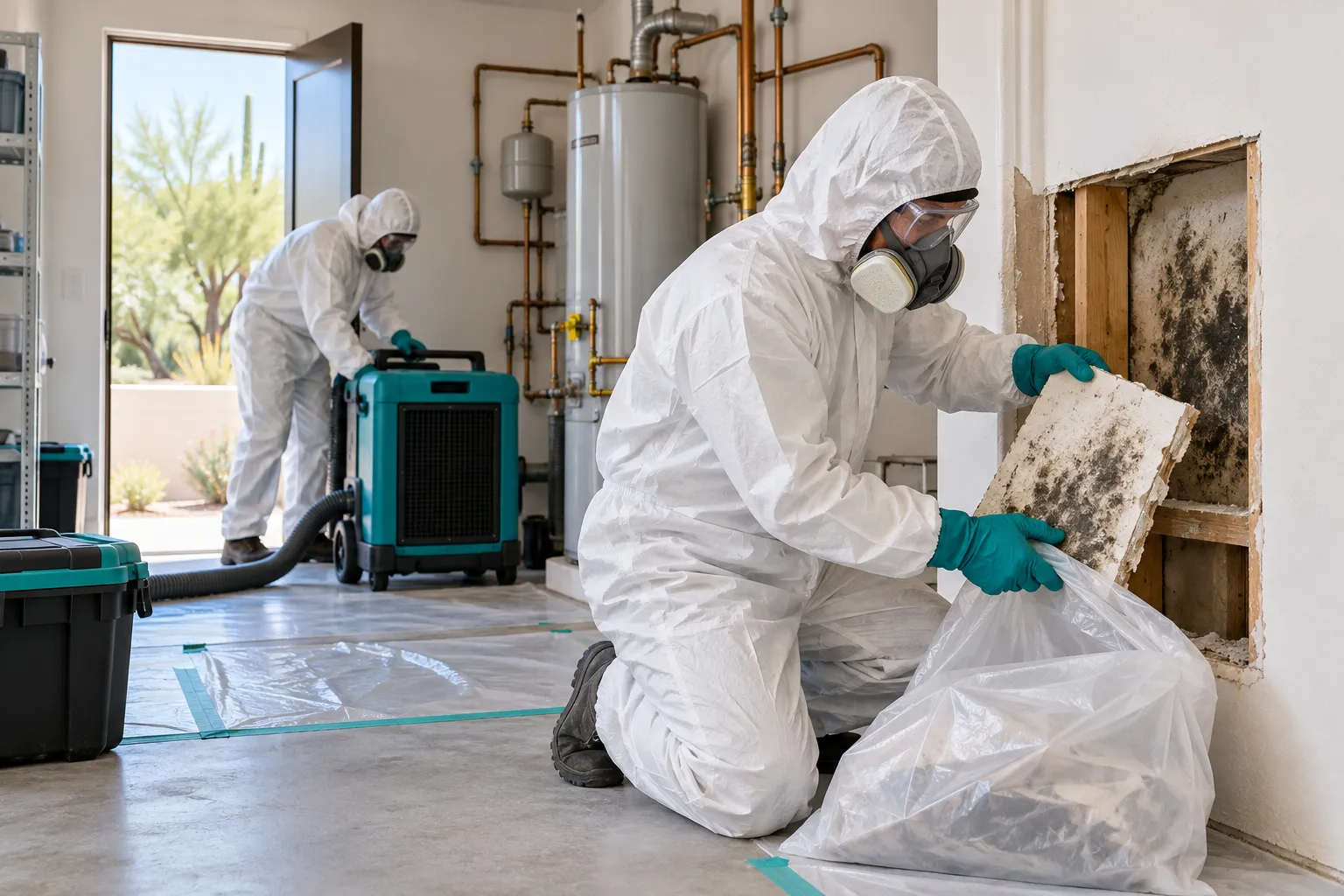
Porous materials that mold has grown into are hard to make clean, and the EPA's cleanup guidance (opens in a new tab) says items like ceiling tiles and carpet may have to be thrown away. In practice, moldy drywall, insulation, carpet and carpet pad usually come out. Non-porous surfaces, like tile, metal, glass, hard plastic and sealed wood, get cleaned and dried. Structural lumber is its own case: framing can often be HEPA-vacuumed, cleaned and sanded where needed and left in the wall, since replacing it is a much bigger job. If something valuable or sentimental is in the work area, set it aside before work starts and ask about it. What comes out also drives the price; the Huntersville mold removal cost guide shows how.
§ 09 / 16
What does a mold remediation timeline look like?
It depends on how far the growth spread and how fast the water source is fixed. A small contained area can be finished in a short visit. Once drywall, insulation or carpet is wet, the work runs in phases: removal and cleaning, then drying until meter readings reach a dry standard, then any repair work. Attic jobs and ductwork take longer because access is slow. Nothing should start while the leak is still running. Plan the practical side too: clear the work area beforehand, keep power and parking free for the equipment, and expect drying to take several days on a bigger loss. A firm finish date only makes sense once the moisture is mapped. The mold remediation page breaks down each phase.
§ 10 / 16
Do you need air testing after mold remediation?
Not always, but it helps to know the options. Verification has three layers: a visual check that affected material is gone or clean, moisture readings that prove the water source and the structure are dry, and, when you want documentation, air or surface samples taken after the work. Sample results describe what was in the air at that moment, not whether every surface is clean, so they are most useful when an independent party collects them for the record, for an insurance file or a home sale, or when someone in the home has health concerns. The most important check is the plain one: readings that show the dry standard was reached. The mold inspection and testing page covers when testing is worth the money.
§ 11 / 16
How do you prevent mold in a Huntersville home?
Mold follows water, so prevention means removing the water. Fix the source first: the roof leak, the AC condensate line, the supply line, the slow drain. Then keep the house dry on purpose. The EPA's mold guide (opens in a new tab) advises keeping indoor humidity below 60 percent, ideally between 30 and 50 percent, using air conditioners or dehumidifiers when needed, and running the bathroom fan when showering. Dry any spill within 24 to 48 hours, and give closed rooms fresh air on a schedule. After big summer storms, walk the house and look at the ceiling under the roof, the baseboards behind furniture on outside walls, and the AC drain pan. The HVAC mold page covers keeping the AC drain clear.
§ 12 / 16
Should you check for mold before buying a house?
Yes, add a mold lens to the normal walk-through. Look in the attic first, at the roof decking and rafters, then at the AC air handler closet and its drain pan, under every sink, inside the water heater closet, and along the base of the exterior walls. A strong musty smell you cannot trace is a flag, not a quirk. Ask the seller about any past water losses, then look at the walls where those losses happened. A walk-through on an empty house is easier, because furniture hides the spots you need to see. A mold inspection with moisture readings, plus sampling if you want certainty, gives you documentation to negotiate with or to plan the fix. If growth turns up, the path is the same as any other job: fix the water, remove what cannot be cleaned, dry, and verify.
§ 13 / 16
Handyman or mold remediation crew: who should do the work?
Match the job to the conditions, not only the size. A small spot on a hard surface, under the 10 square foot line above, with no sewage and no ongoing moisture, is a cleaning job. The leak itself is often a plumber's or roofer's repair, and the mold work is a separate step. Anything inside a wall or under a floor, anything growing on drywall, carpet or insulation, anything after sewage or a flood, and anything that keeps coming back calls for containment, removal of what is damaged, and drying proven with readings. Patching and painting over wet or moldy drywall covers the problem without fixing it, so it tends to come back. More answers are on the mold FAQ page.
§ 14 / 16
Will the musty smell go away after remediation?
Usually yes, and if it does not, that is information. The smell comes from active growth, so once the growth is removed and the materials are dry, the source of the smell is gone. A little dust and equipment smell can linger for a day or two while the work area airs out. If the musty smell returns, it usually means one of three things: a moisture source that was not fixed, a spot that was missed, or a porous material that was cleaned when it should have been removed. Raise it early; a return check with a moisture meter is the fastest way to settle it. If the smell appears when the AC runs, the HVAC and air duct mold page covers that case.
§ 15 / 163 questions
FAQ: mold questions people ask
01How do I know if it is actually mold?
A musty, earthy smell is the most reliable early sign, especially in closets and rooms that stay closed. Visible growth usually looks like dark spotting, staining, or a fuzzy patch, often after a leak. Not every dark stain is mold, though. If you want certainty, testing identifies what is actually there.
02Is black mold common in Huntersville?
Dark molds are common after any water event, and people usually call them black mold. The removal process does not change: contain the area, remove the affected material, fix the water source, verify it is dry. The EPA treats all mold the same way: remove it and fix the moisture.
03Do you cover attics, AC systems, and condos?
Attic growth after a roof leak, mold around an air handler or in ductwork, and shared-wall situations in condos are all part of our mold removal services. Attic and HVAC mold have their own pages, and the town pages cover local quirks like flat roofs in Kannapolis or shared lines in Concord.
§ 16 / 16Keep reading
- Mold removal price guide: published ranges by job type, with sources.
- All mold services: our mold services in one place, with what each covers.
- Mold inspection and testing: when a smell has no visible source.
- Black mold removal: what the name means and what removal involves.
- Attic mold removal: ceiling stains, roof leaks, and what comes next.
- Mold guides for Huntersville homes: plain-English answers to the common questions.