
Bleach vs Vinegar for Mold in Huntersville, NC
Neither bleach nor vinegar fixes mold inside drywall. Both kill what they can reach on a surface, and neither stops the water that made the mold grow. On a hard surface they are a drainage channel. On drywall they are a detour.
Get a call back
Fill in the form or call (980) 250-4059. Calls are answered day and night.
§ 01 / 08
The short answer
On tile, glass, or painted metal, a scrub with either one, followed by drying the surface, clears visible growth and the choice barely matters. On drywall, grout, or wood, neither product reaches the roots, and the bleach mostly just fades the stain while its water soaks in. The fix for mold in a Huntersville house is the water source, not the chemical.
Which one you use depends on the surface, and on whether you are cleaning a film or treating a colony.
§ 02 / 08
Bleach: what it actually is
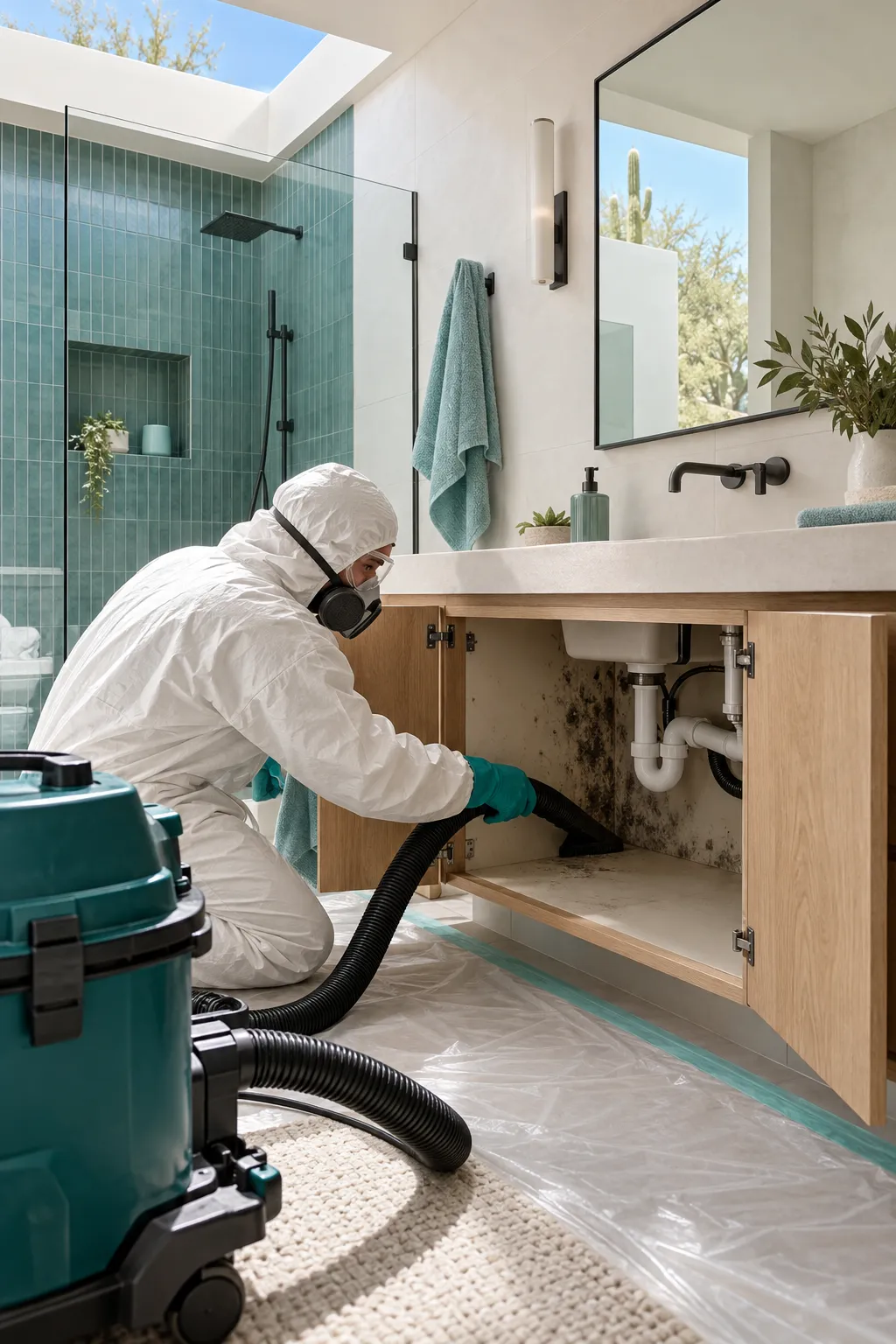
Bleach is a water solution of sodium hypochlorite. The chlorine is what kills, and it is volatile: it evaporates quickly, which is why the smell leaves a room fast. The active part sits on the surface and reacts there. Bleach does not soak into a porous material and ride down to the roots of a colony. The liquid that does soak in is mostly water.
On drywall, that is a real problem. The paper face wicks the water from the bleach into the gypsum, where the colony lives. The chlorine stays on top, kills the surface, and lightens the pigment, which is why the stain fades. The colony underneath just got a drink. The visible result is a patch that looks gone for a couple of weeks and then comes back darker than before, because the surface is now more thoroughly watered. Bleach also spends its killing power reacting with organic material on contact, so it never gets far from the surface.
§ 03 / 08
Vinegar: what it actually is
Vinegar is dilute acetic acid. It is mildly antimicrobial, cheap, and does not off-gas the way bleach does. On hard surfaces with light growth, it does roughly what any acid cleaner does: it makes the surface inhospitable to a fresh film of mildew.
It has the same structural limit as bleach. Vinegar is a contact liquid on a surface, not a treatment that penetrates drywall to a colony inside it. And it leaves water behind, which is the last thing a damp cavity needs. The honest summary: on tile and glass, vinegar works fine and smells less. On drywall and wood, it is a rinse, not a remedy. If the growth is in drywall, the material question matters more than the chemical question, and that is the removal vs remediation line.
§ 04 / 08
Where bleach fails here
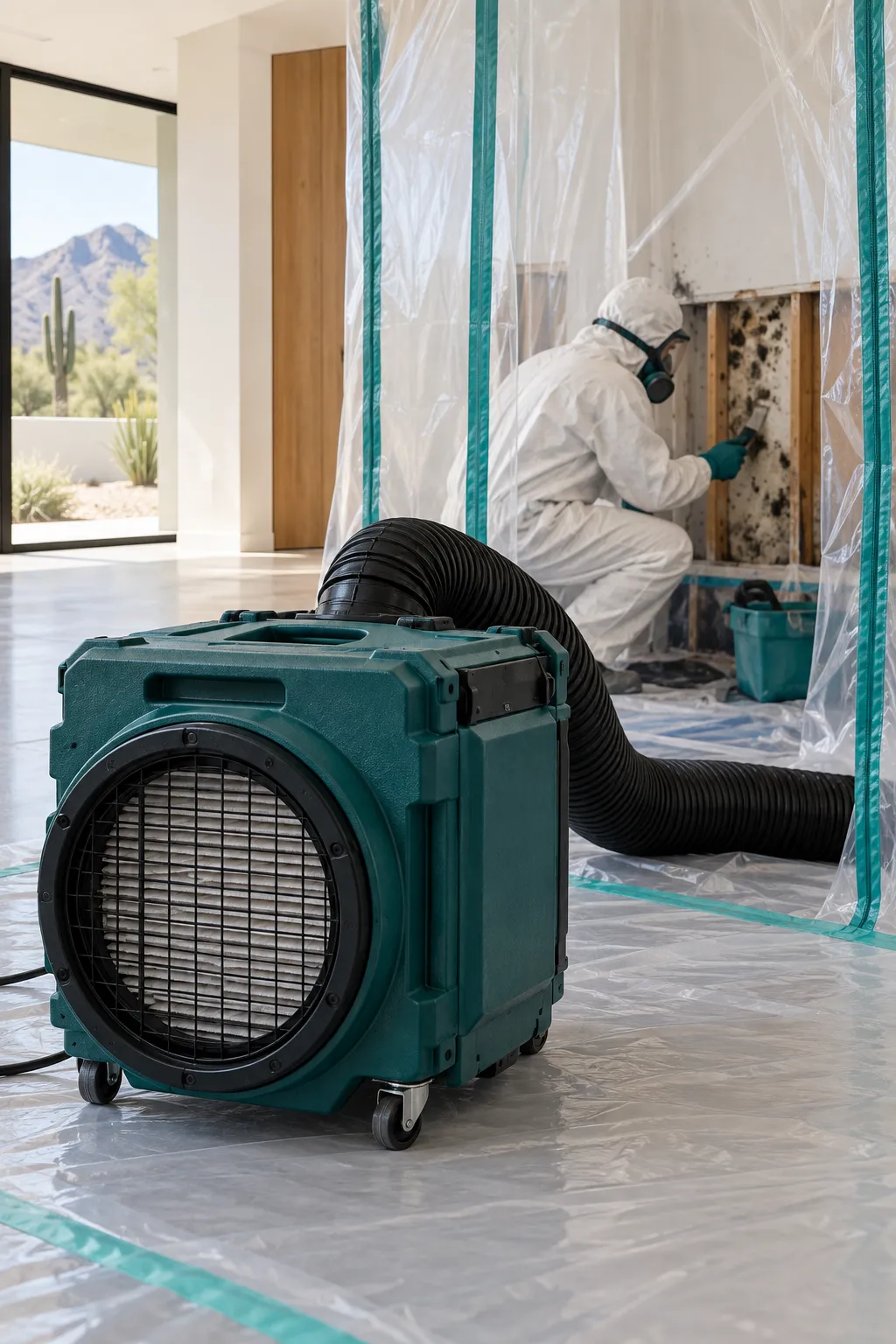
The classic Huntersville version goes like this. A second home gets opened in spring. There is a dark patch on the ceiling below a condensate line. The homeowner wipes it with bleach, the stain fades, the house gets closed again for summer, and the drip keeps dripping onto the same ceiling for three more months. The chlorine did its work in May. The water undid it by June.
What the bleach actually did was remove the evidence, not the mold. By October there is a bigger, wetter patch where the small one was, and the colony has had a full summer of water. In a closed house, nobody is around to catch the first sign that the wipe failed, so the failure gets a whole season to grow before anyone sees it. Bleach has another local failure, the hard-water interaction. The mineral film Huntersville water leaves on shower surfaces gives mildew a foothold that a one-time bleach wipe does not remove. The scale comes off, or the mildew comes back. If the patch is above a ceiling, the AC and duct mold page explains what is really dripping up there.
Line open now
Mold growing right now?
Describe what you see or smell. You do not need to diagnose anything yourself.
§ 05 / 08
Where vinegar fails here
Vinegar fails on the summer storm cycle. July and August push condensation onto window tracks, sills, and tile grout. A vinegar wipe clears the film, and then the next storm pushes the humidity back, and the film regrows. The vinegar was never going to win that fight, because the surface keeps getting wet. In a house that sits closed with the AC in setback, there is no air movement to dry the sills, and the growth returns on a weekly cycle until the house is occupied and ventilated again.
On drywall, vinegar fails the same way bleach does, just slower and with less staining. The acid reacts with the surface film, the colony underneath is untouched, and the wall keeps its water problem. Neither product is the answer to a ceiling patch. The answer is finding the drip above it, which is where the closed-up house guide starts.
§ 06 / 08
What it costs and what drives the number
A jug of either costs a few dollars, and for surface mildew that is the whole budget. The real number appears when the patch returns, because the cost of the retry is not the second jug. It is the weeks the colony spent growing while the stain looked gone. In a closed-up Huntersville house, those weeks are a whole summer. The comparison that matters is not between the two products. It is between the jug and the job, and the job is the only one of the two that answers where the water came from. What drives the real number is the water source: a caulk joint is a small fix, a condensate line in a ceiling is a bigger one, a summer storm roof leak bigger still. The pricing page shows how those jobs scale.
§ 07 / 08
What good work looks like in Huntersville
- Sometimes a wipe is the whole job. Hard surface, water stopped, small film: use whatever is under the sink and dry it.
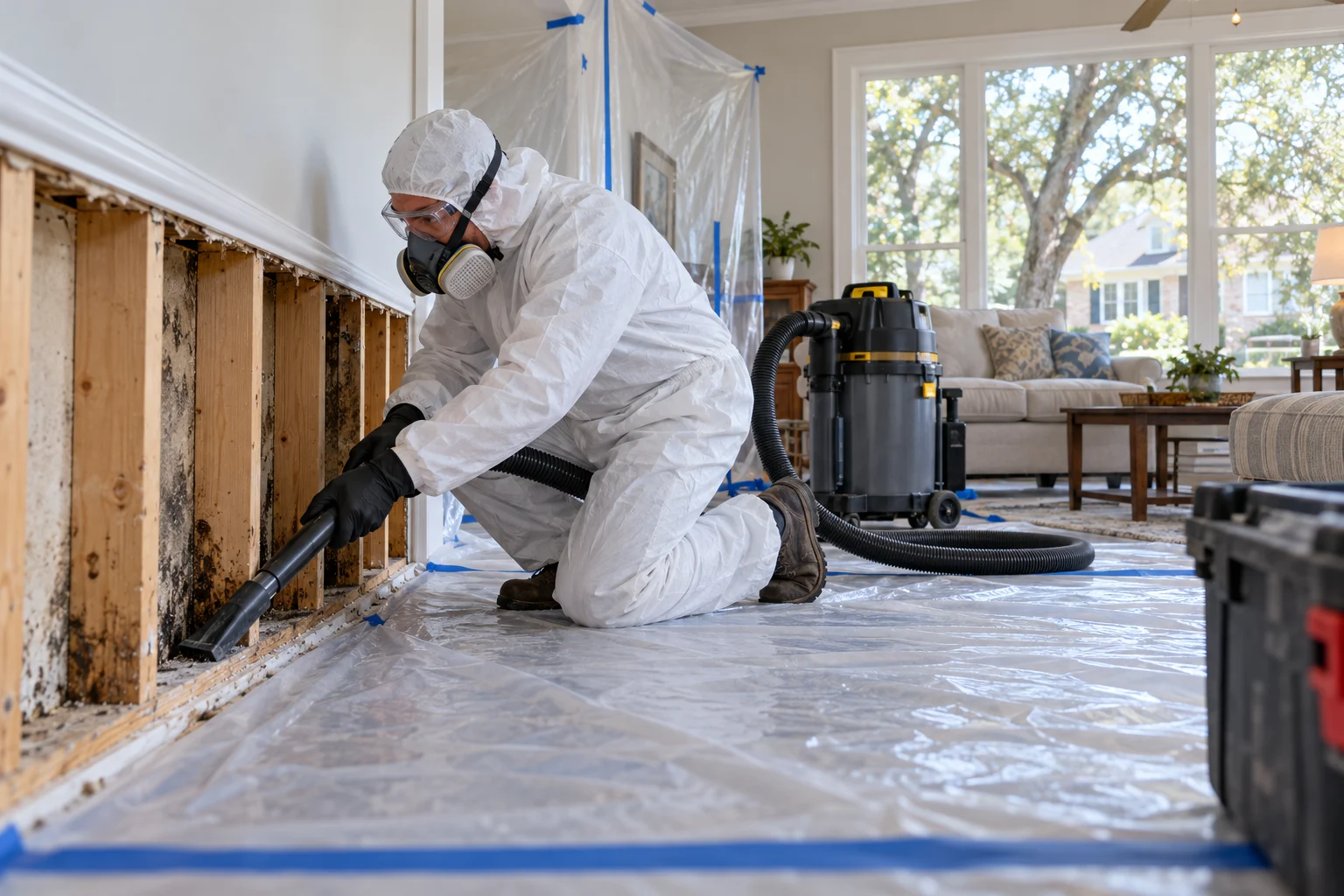
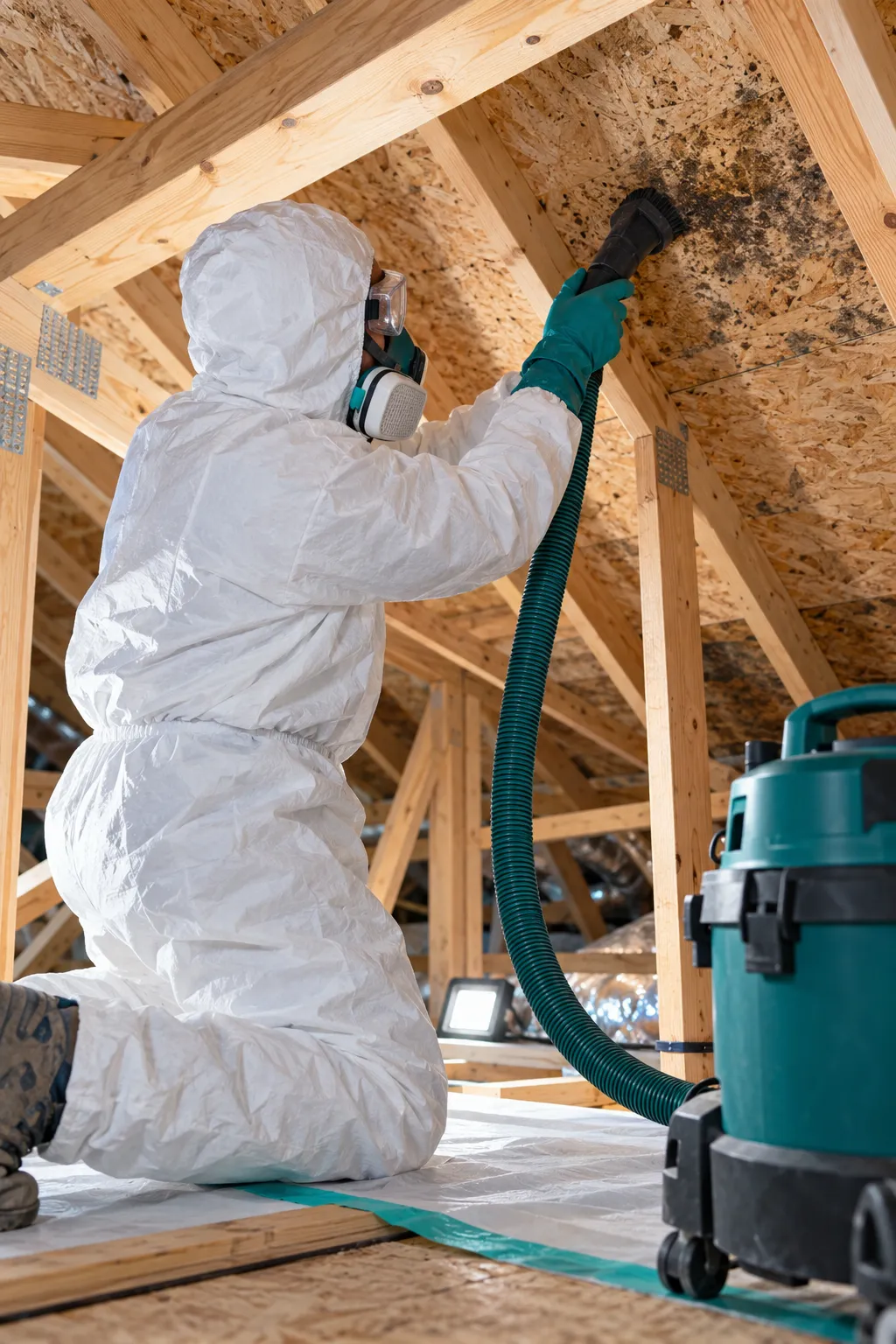
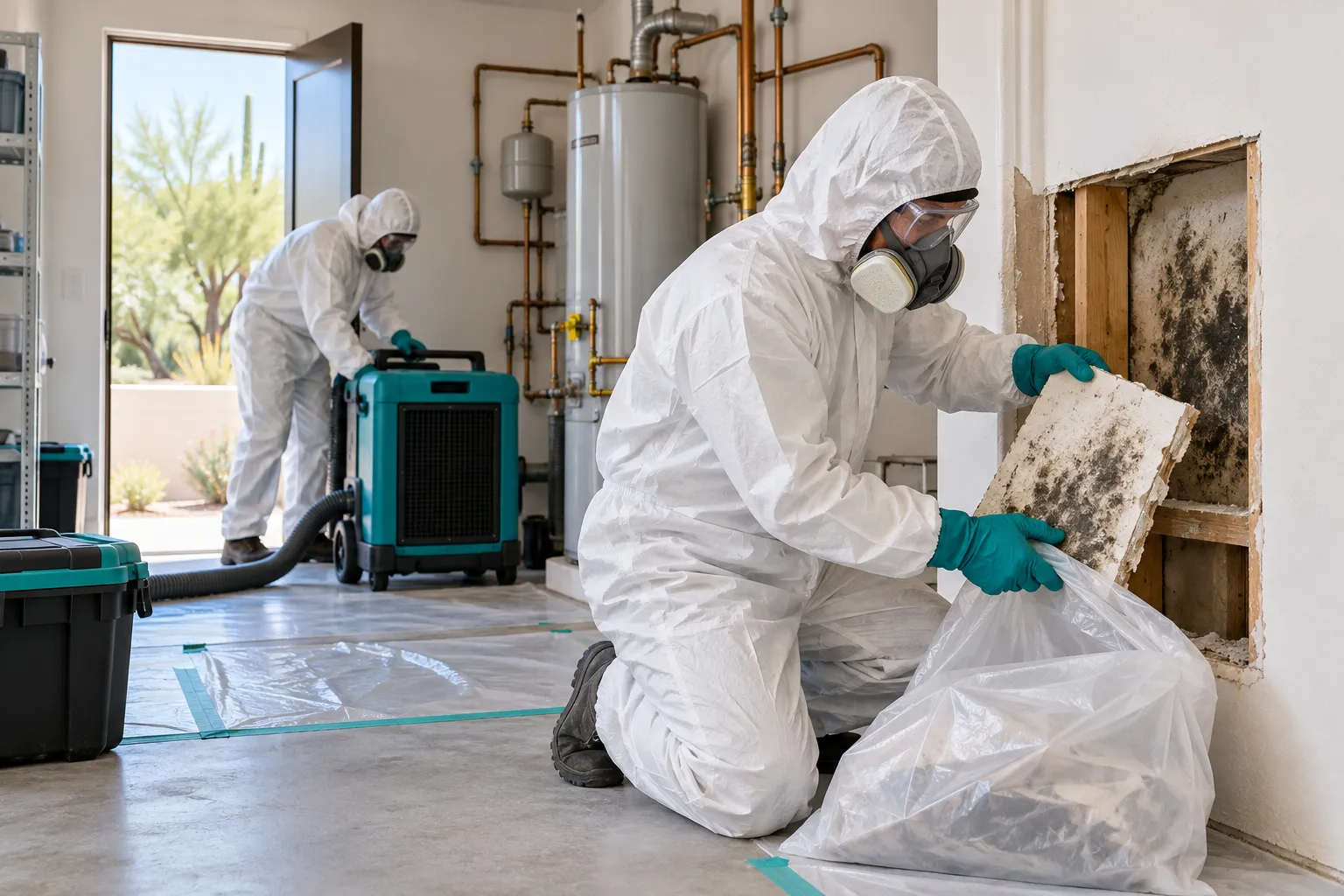
- A chemical is not remediation. No product fixes a colony inside drywall, and anyone who says otherwise is selling the wrong thing.
- The water comes first every time. The question is what wet the surface, not what to spray on it.
- The closed-house summer counts. A patch that sat unseen from May to October is not a stain. It is a water event.
§ 08 / 086 questions
Bleach vs Vinegar: your questions
01Does bleach kill black mold?
On a hard surface, it kills what it touches. On drywall, it kills the surface and fades the stain while the colony underneath survives. The roots are the problem, and bleach never reaches them.
02Is vinegar better than bleach for mold?
On hard surfaces they are close, and vinegar smells less and does not off-gas. On porous material, neither one works, so the question does not matter.
03Can I mix bleach and vinegar?
No. Acid and bleach react to release chlorine gas, which you do not want in a closed bathroom. Use one or the other, never both, and never in the same hour on the same surface.
04What should I use on shower grout?
Any household cleaner or the vinegar, then dry the surface. The durable fix is ventilation, because grout mildew is a condensation problem, not a chemical problem.
05Why did the stain come back after I bleached it?
Because the water came back, or it never left. The bleach faded the surface while the drip or the humidity kept feeding the colony.
06When do I stop trying household products?
When the growth is on drywall or wood, when there is an active leak, or when the smell stays after you clean. That is a call, not a wipe.