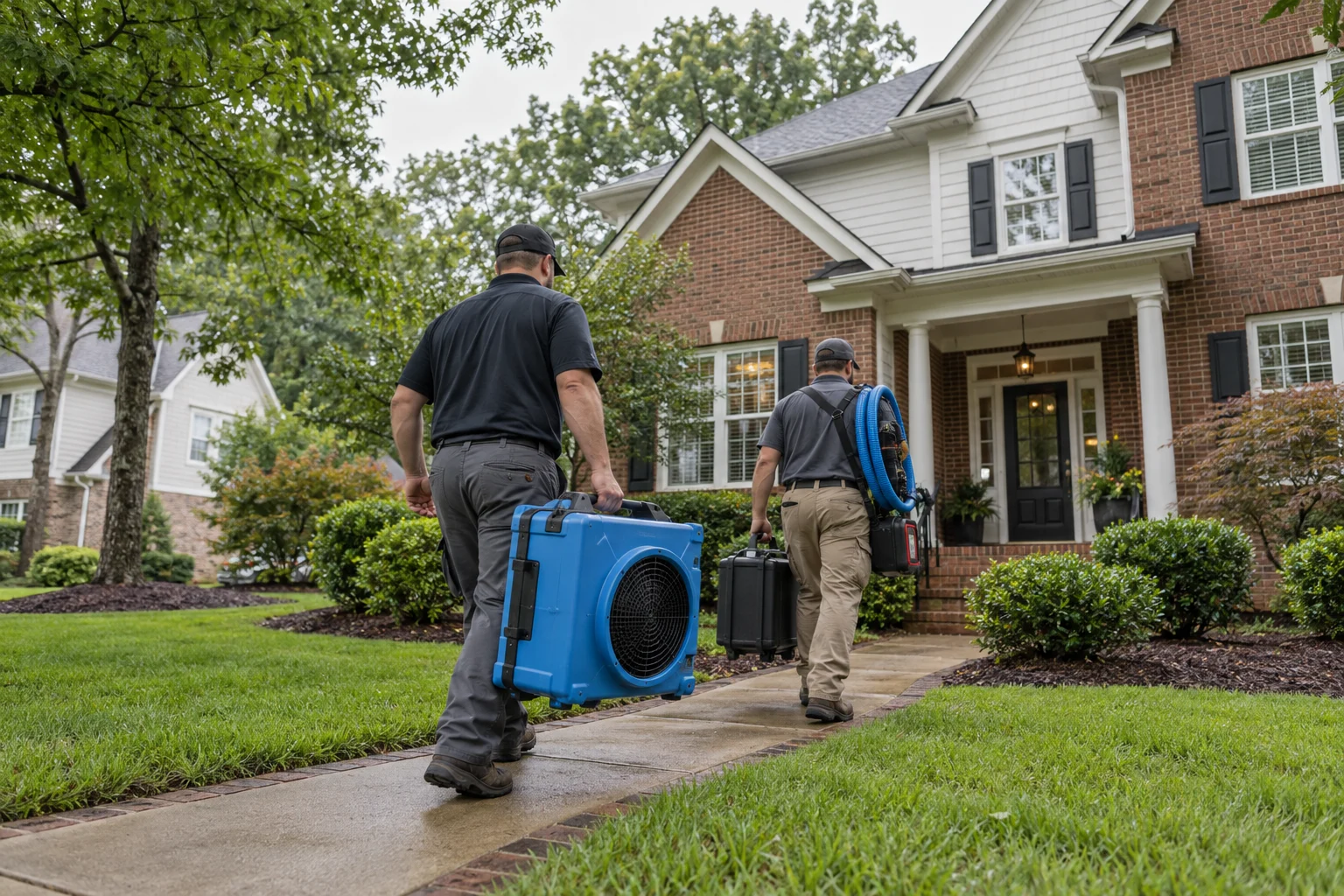

Mold Removal in Macaulay, Huntersville, NC
Macaulay is part of our Huntersville-area coverage. The first visit focuses on the property itself: how the rooms are used, where plumbing runs, how roof water drains, and whether the AC condensate line is working. Homes of different ages can develop the same hidden leak. Check beneath sinks, beside water heaters, behind appliances and below roof valleys after storms. If a property is unoccupied, arrange regular checks so a small drip does not continue unnoticed. Tell us the address and what you have found when you call; the inspection and written scope should reflect your home.
Get a call back
Fill in the form or call (980) 250-4059. Calls are answered day and night.
§ 01 / 10
About Macaulay
In Macaulay, roof leaks, blocked drainage and AC condensate can leave attic materials damp. Inspect flashing, roof penetrations and the insulation below a new ceiling stain. Wind-driven rain may reach a gap that does not leak in light weather. A moisture reading helps distinguish an old mark from an active leak. Fix the water source before removing damaged materials, and inspect the same location again after rain. Keep gutters and downspouts clear and have a qualified contractor assess roof repairs and safe attic access. For current weather hazards, consult the National Weather Service.
§ 02 / 10
Why do family homes in Macaulay get mold?
Because a family home moves a lot of water, and every drop is a chance. Showers run daily, so a bath fan that is weak or unused leaves moisture on the walls. Laundry runs weekly, so a washer supply line or drain leaks into a wall quietly. The AC runs for months, so a condensate line that clogs in June has all summer to overflow. Add North Carolina's storm pattern, wet weather from throughout the year, and a patio door that can pass wind-driven rain, and the sources add up. None of these announce themselves. That is the pattern: family homes rarely get mold from one disaster. They get it from small water nobody had time to chase. The fix list below is ordered by how often each source shows up on streets just like these.
§ 03 / 10
Where does mold hide in a family home here?
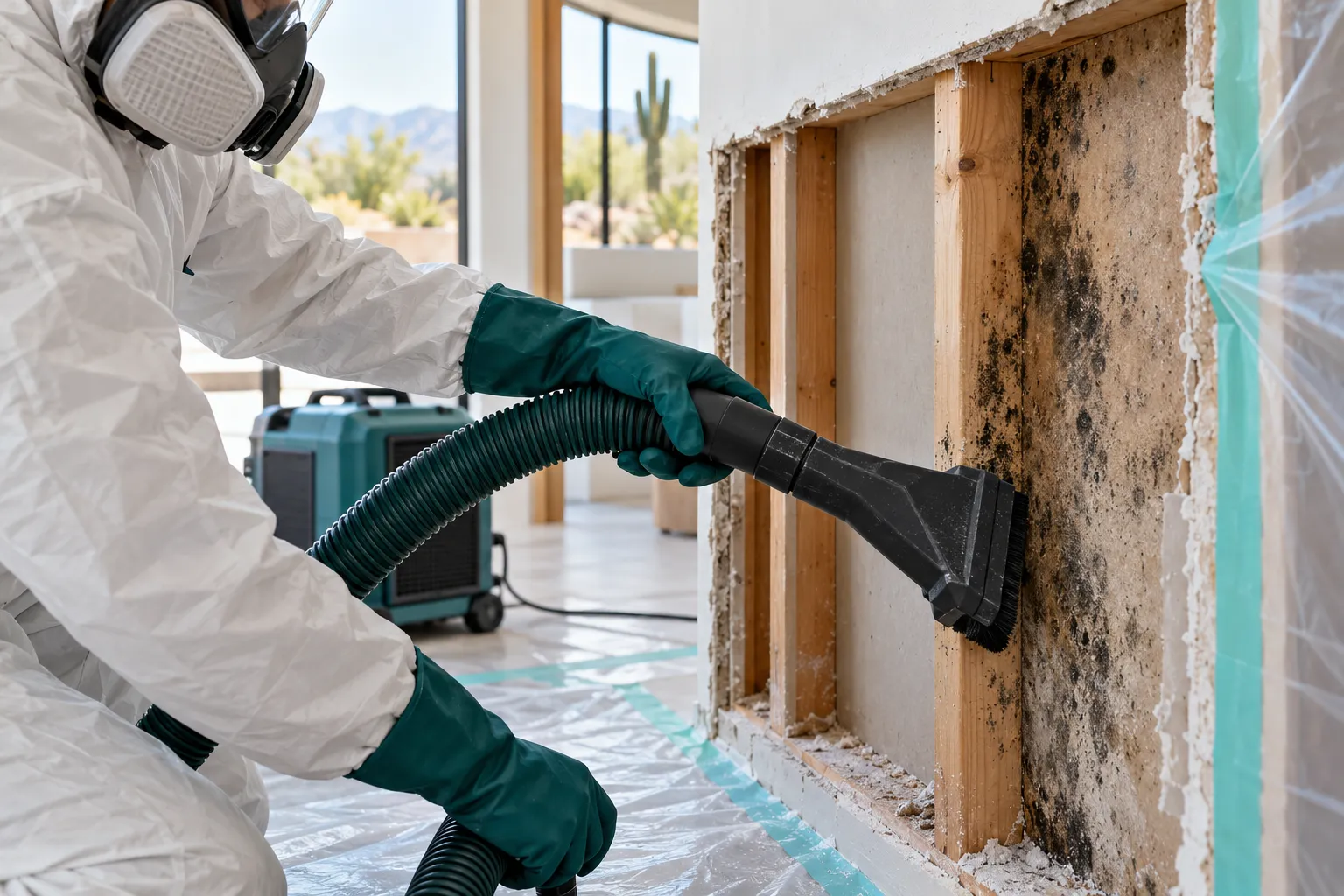
The laundry room and the kids' bathrooms come first, because that is where water runs most. After that: the AC closet and its drain pan, the kitchen sink cabinet base, the garage wall behind the water heater, and the wall under a window or patio door the storm pushes against. Rooms with stuffed closets and furniture against exterior walls hide the evidence longest, because air does not move there and nobody sees the baseboard. The tell is a smell that shows up when a room is closed, strongest near a closet or a corner, and it is usually worth a look at the baseboards and the drywall above them before it is worth a paint can. One walk with a flashlight and your nose, once a season, is enough to keep the list honest.
§ 04 / 10
What should you do in the first 10 minutes?
Shut off whatever is running, whether it is a fixture, the washer, or the main valve. Keep kids and pets out of the wet area, and do not let anyone touch outlets, cords or appliances in the water. Pull wet towels, rugs and stuffed toys out and put them somewhere dry, and photograph the room before anything gets moved. If you find a patch of growth, leave it alone; wiping it spreads spores and tells you nothing. Then call (980) 250-4059 and describe the room, the source if you know it, and how long it has been wet, because in a family home the timeline is often the hardest part to reconstruct. Even a rough guess helps: "sometime after the trip" still tells the crew where to start reading.

Line open now
Mold in a Macaulay home?
Describe what you see or smell. You do not need to diagnose anything yourself.
§ 05 / 10
What is the right seasonal routine for a home here?
Four checkpoints cover the year. Before summer: have the AC serviced and the condensate line cleared, and look under the kitchen and laundry sinks. After each summer storm storm: walk the storm-side rooms for paint bubbling and baseboard swelling, and check the ceiling under the roof's low points. Before a summer trip: shut off the washer valves, check the water heater area, and leave the AC service number where a housesitter can find it. And once a quarter: open the closets and cabinets against exterior walls and use your nose before your eyes. The EPA's 24 to 48 hour drying window is shorter than a busy week, so the routine exists to catch water on the day it shows up. Nothing on the list takes more than 15 minutes, which is the point.
§ 06 / 10
What makes remediation different in a busy home?
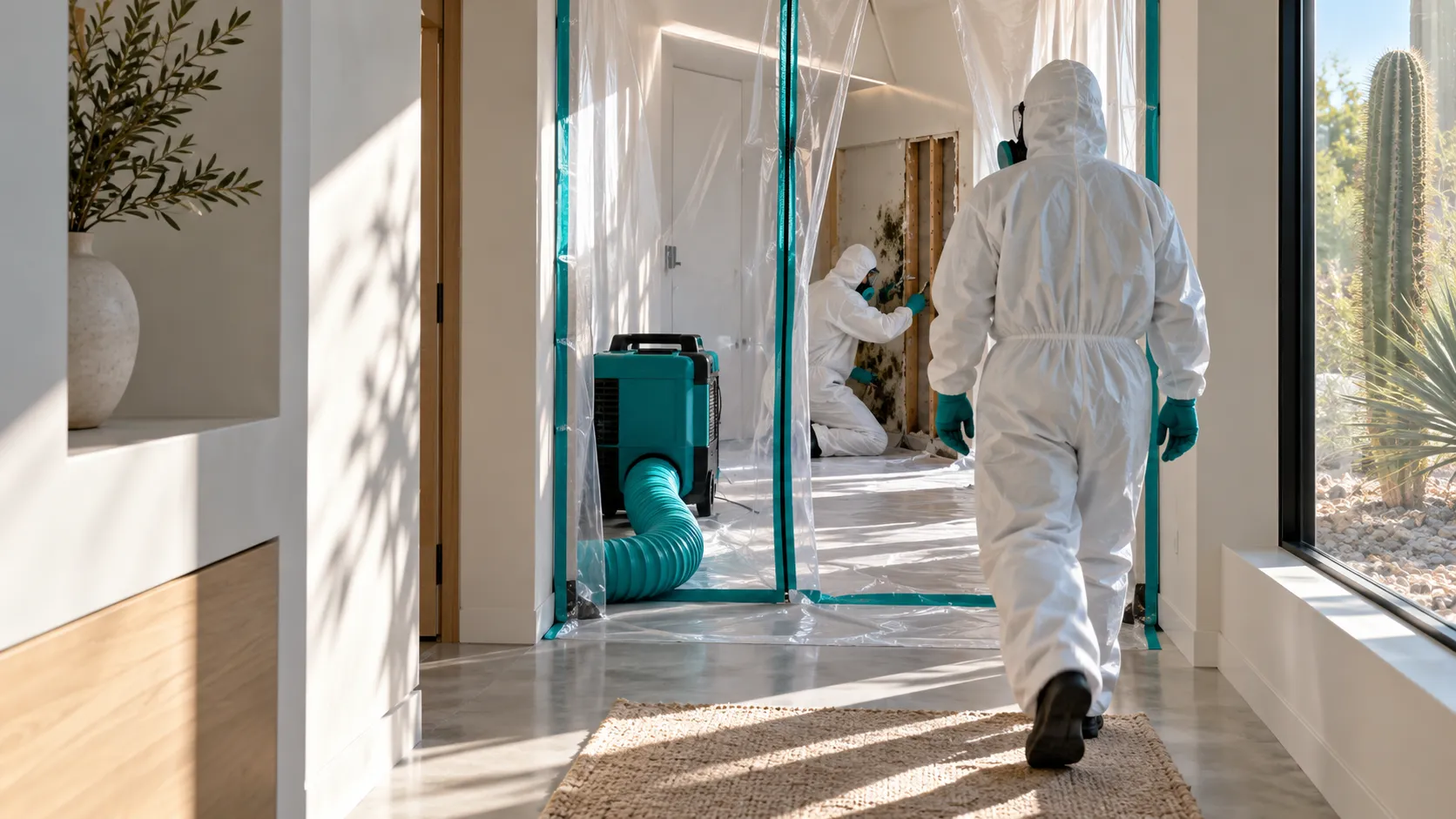
Scheduling and containment, mostly. The zone gets sealed with sheeting and kept under pressure, so bedrooms and living rooms stay usable while the equipment runs, and the loud phases can be planned around school and work hours. Toys, clothes and furniture near the work area get moved and documented before anything starts. If the affected room is a bedroom or a bathroom the family uses daily, the crew plans the order to return those spaces first. It is the same remediation process as any home, organized around the reality that the house does not stop while it happens. Expect a daily check-in on what is dry and what is next, because in a busy house the schedule is the part that fails first. Every phase gets a start time and a check. Each phase is checked before the next starts. If a phase needs an extra day, you hear it the day it happens, not after.

§ 07 / 10
When is a small patch worth a professional look?
When it is bigger than a doormat, when it came back after cleaning, or when it sits in a place you cannot reach or air out, like a closet corner, a cabinet base, or an attic. The EPA's guidance gives homeowners the small jobs: about 10 square feet or less, hard surface, clean water, and the source fixed. Past that, or anywhere inside a wall, call. There is one more trigger for family homes: if anyone in the house has asthma or allergies, the decision shifts toward professional containment earlier, because the dust from a DIY job is the part that spreads. When the call is close, ask; describing the spot takes 2 minutes and settles the question for good.
§ 08 / 10
Our mold services for Macaulay homes
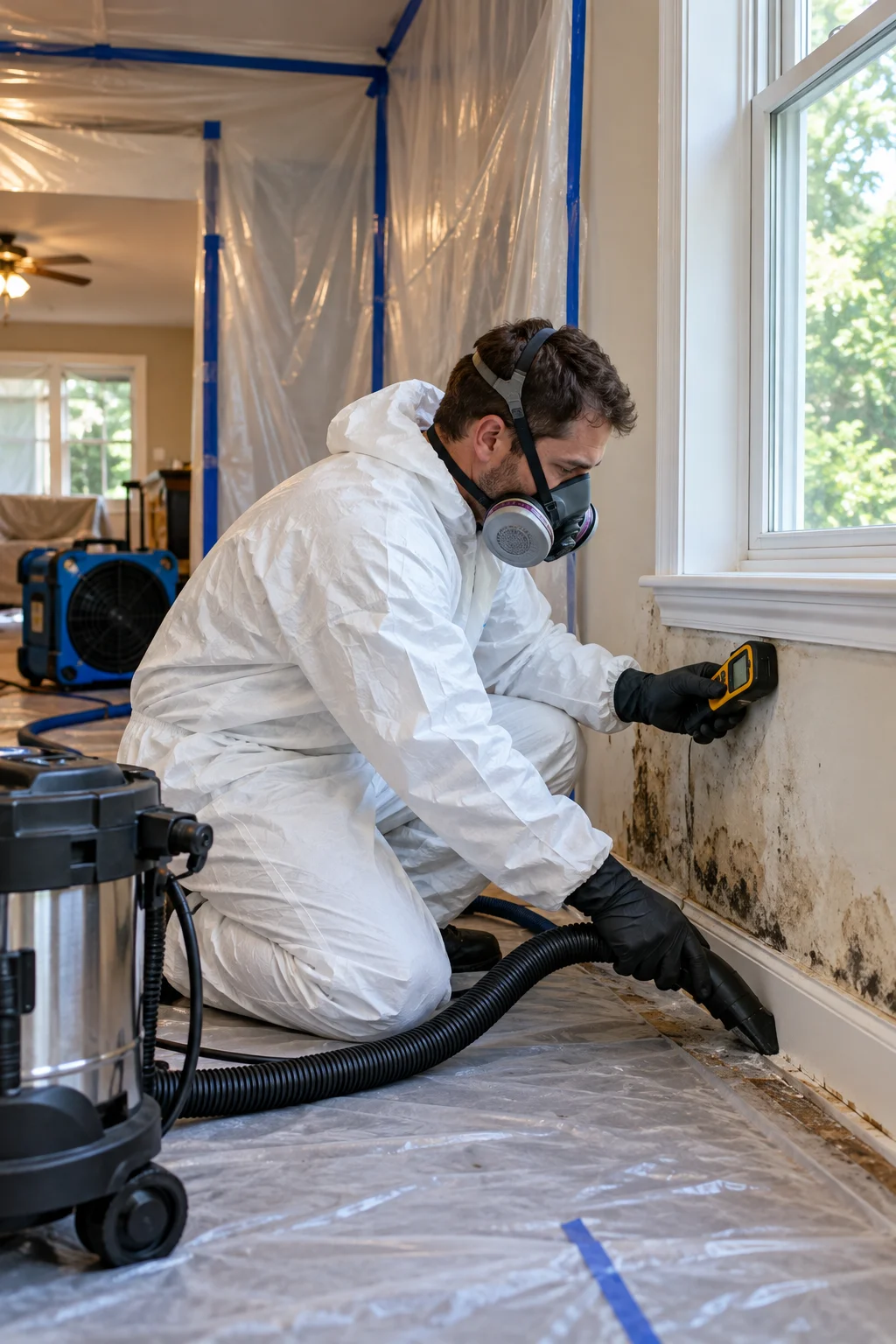
Inspection and testing is the starting point when the smell has no obvious source, and it is how the moisture map gets built. Remediation and removal handles the growth that testing confirms, and the water damage side starts the clock when the water is still active. Macaulay is served as part of the North Huntersville area, alongside the other 28078 communities. One call starts any of those paths for a home here, day or night. If the visit needs to fit around work hours or a school run, say so; the schedule is built to bend around a family. The visit itself is planned around the family's hours, from the first knock to the last reading, so the work fits the house instead of stopping it.
§ 09 / 103 questions
Questions people ask
01There is a smell in a kids' bathroom. Where do we start?
Run the fan during and after every shower for a week and see if the smell changes. If it stays, the moisture is likely behind the wall, a baseboard, or under the floor near the tub or toilet. A moisture meter finds the wet spot, and testing confirms whether growth is there.
02We travel in summer. What should we do before leaving?
Shut off the washer valves and check the water heater area, keep the AC serviced with the condensate line cleared, and leave the key with someone who will walk the house monthly and watch the water meter. A leak found in week one is a small job; the same leak found in September is a different one.
03How fast can someone come out for a family home?
Calls are answered day and night. Describe the room, the smell and the timeline when you call, and say whether the area is a bedroom or bathroom the family still needs, so the plan returns those spaces first.