
Mold Remediation vs Replacing Drywall in Huntersville, NC
Replacing drywall is demolition and rebuild. Remediation is the same demolition plus source control, containment, drying, and a clearance check. The difference is whether the job ends or starts over at the next summer storm.
Get a call back
Fill in the form or call (980) 250-4059. Calls are answered day and night.
§ 01 / 08
The short answer
If the source is fixed and the wet area is small and clean, cutting out the damaged drywall and patching can be a complete job. If water is still entering, or spores have been moving through the house, plain replacement puts new paper over an old problem, and the new board molds on the same schedule as the old one. The choice comes down to the source and how far the moisture traveled.
What your house needs depends on the wall, the water, and how long it ran.
§ 02 / 08
Replacing drywall: what it actually is
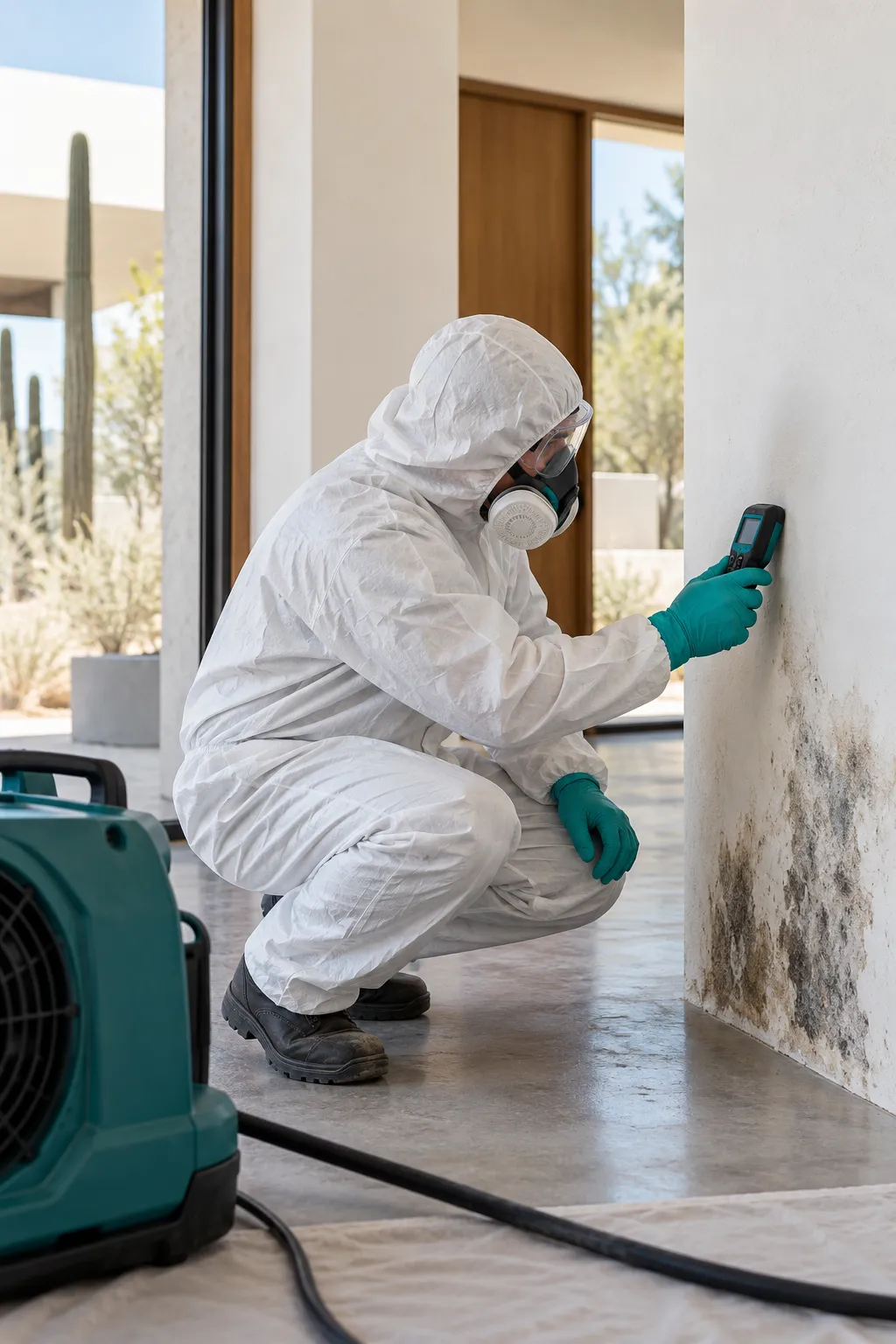
Replacement is a carpentry job. The damaged section gets cut out, the waste gets bagged, new board goes up, and the seams get taped, mudded, and painted. Nothing about the process finds the leak, and nothing about it cleans the air. It is the last step of a remediation, offered on its own.
That last-step status is the trap. The paper face of drywall is food for mold, and a new sheet is no exception. If the wall cavity behind the patch is still wet, or the plate the drywall sits on is still holding water, the new board absorbs that moisture from behind and the colony starts on the fresh paper within weeks. The classic failure is exactly that: drywall replaced over a wet plate, the paper backing is food, and the plate is still wet. The paint hides it for a season, then the stain blooms through.
§ 03 / 08
Mold remediation: what it actually is
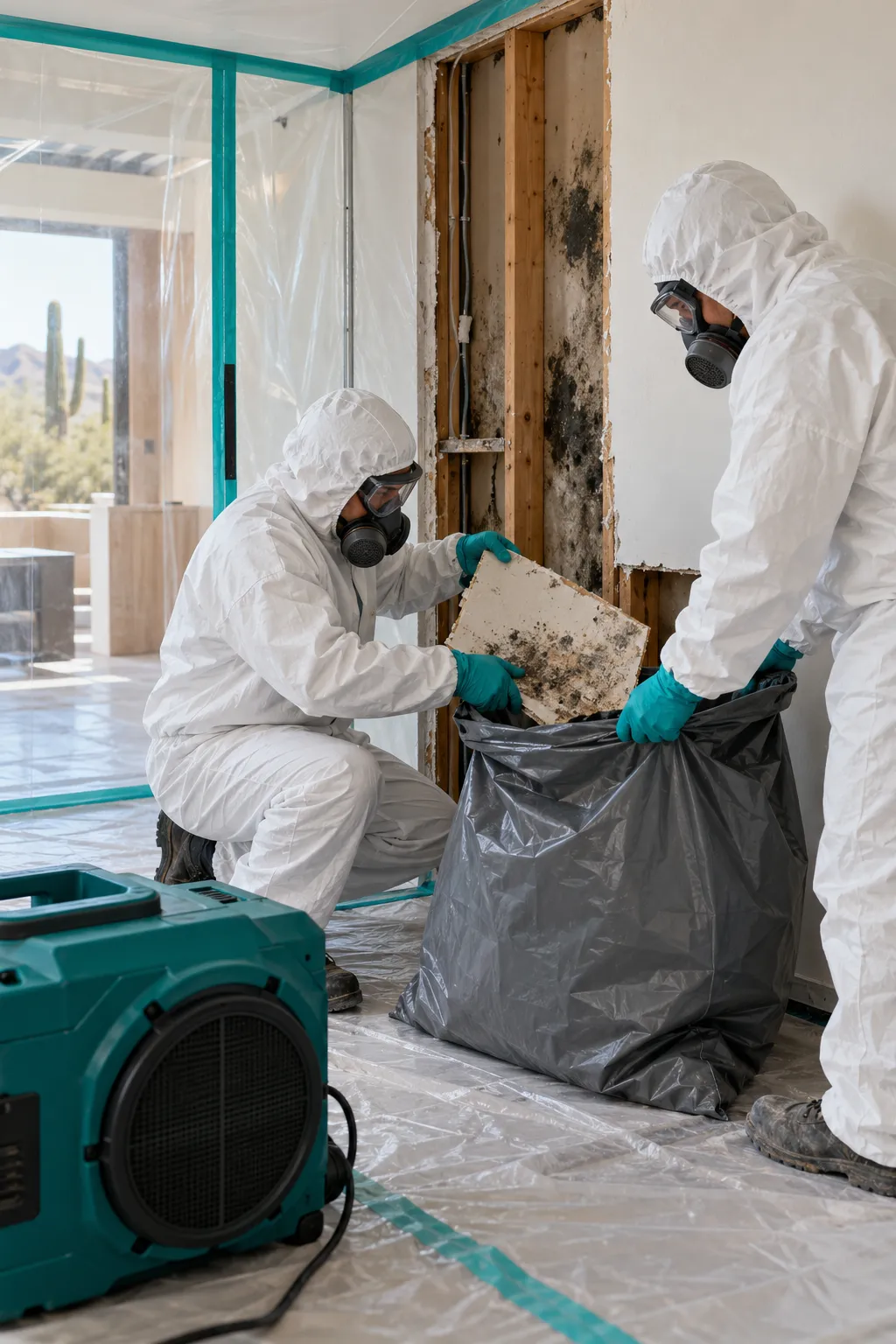
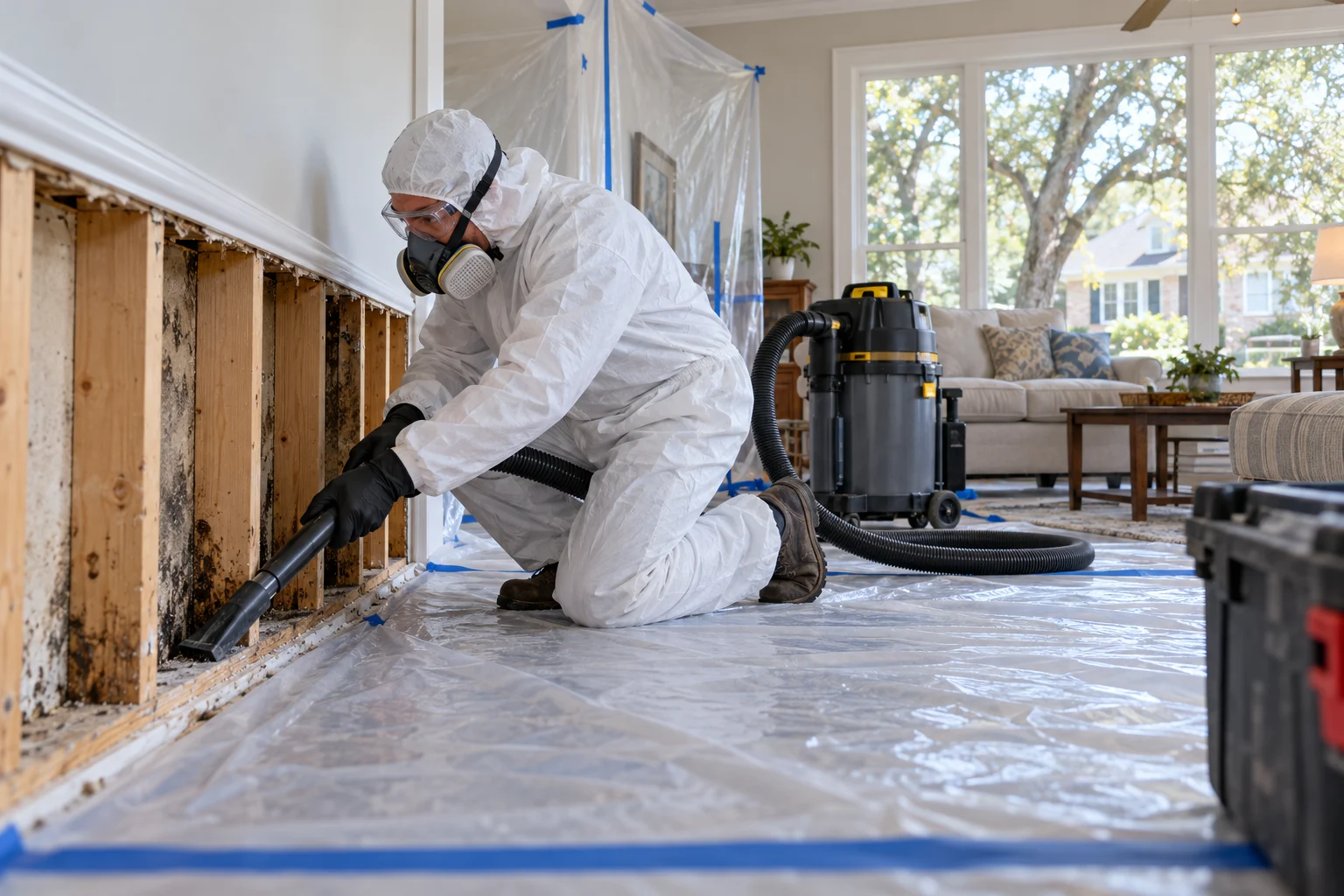
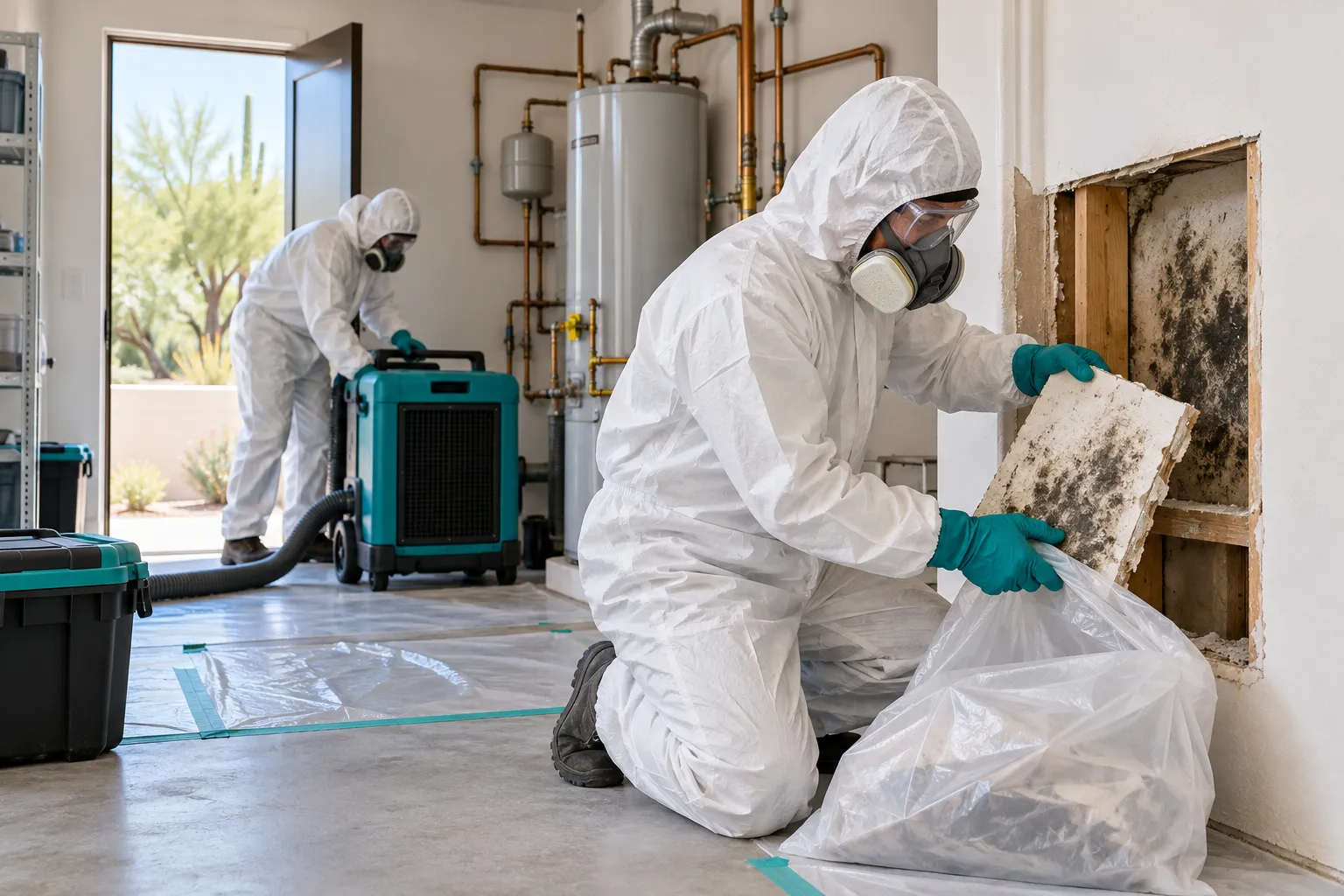
Remediation is the structured version of the same demolition. It starts with the water. The source gets found and stopped before anything is cut, because cutting into a wall while the leak is live is how you spread the problem. Then containment goes up, the air gets scrubbed, and the colonized material comes out, usually a margin past the visible growth so the cut lands in clean material.
The cavity gets dried to a measured standard, with a moisture meter on the framing, not a calendar. What can be saved gets cleaned. What cannot comes out. The job closes with a clearance check, air samples showing the indoor air back in line with the outside. Only then does rebuild begin, which is where replacement was always meant to sit: at the end, not in place of the rest. The removal vs remediation page covers why the order matters as much as the work.
§ 04 / 08
Where replacing drywall fails here
Huntersville's water problems are invisible from the room below them. A condensate line runs through a ceiling and drips onto the back of the drywall for weeks while the house sits closed. A homeowner cuts out the stained section, hangs new board, tapes and paints, and closes the house again. The line is still dripping, the new board is now the drip pan, and the stain returns before the next visit. The replacement was never the problem. The line was, and the AC and duct mold page explains that failure in detail.
Summer storm leaks fail replacement the same way. Water on a flat roof runs far from where it enters, so the stain on the bedroom ceiling often is not under the hole. Patching where the stain is, while the entry at the parapet is still open, just moves the stain over by a season. And the wet-plate failure shows up in slab homes too: drywall on an exterior wall, a slow supply-line leak at the base, the plate stays wet behind the new board, and the new paper is food before the paint cures. The slab detail matters here. A wall that sits on a slab with a slow leak at the base wets the bottom plate from below, and no amount of new drywall fixes a plate that stays wet. The water has to be stopped and the wood dried before the board goes up, in that order.
Line open now
Mold growing right now?
Describe what you see or smell. You do not need to diagnose anything yourself.
§ 05 / 08
Where remediation fails here
Remediation fails in Huntersville when the scope is real but the execution is not. Containment skipped to shave the number, so demolition spreads spores through a house that was clean everywhere except one ceiling. Drying stopped early, equipment pulled while the cavity still reads wet, and the new growth appears in week three. A test result handed over as the solution, with no source work behind it. And the financial version: quotes that swing wildly for the same room because one of them priced the full scope and one priced demo plus paint, both under the same name. Sometimes the failure is simpler than that. The right job gets quoted, and then the homeowner is handed a change order for the rebuild, because the quote never said whether paint was included. The quote walkthrough lines up what belongs in the scope so the two can be compared.
§ 06 / 08
What it costs and what drives the number
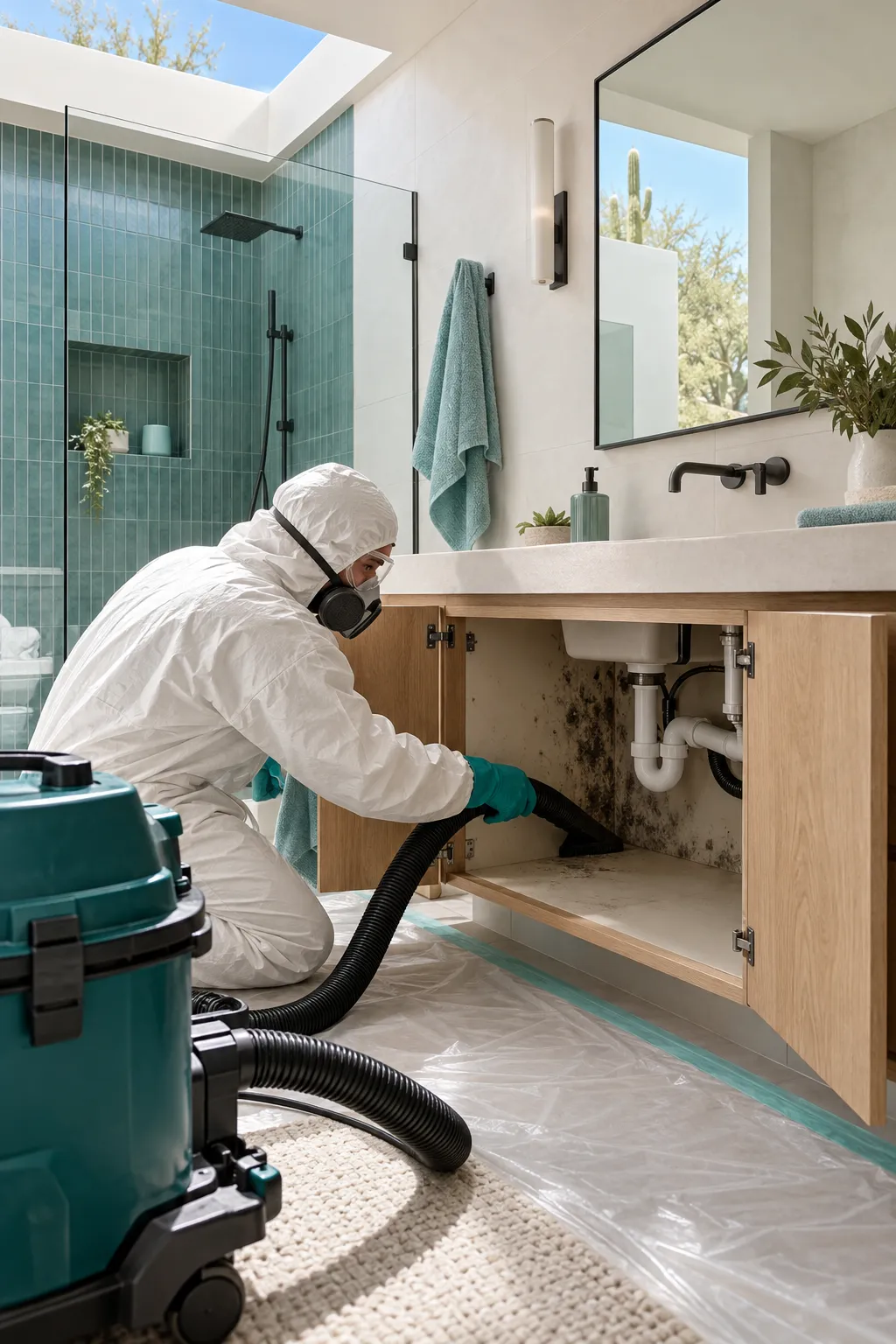
Replacement alone is the smaller number, because it is materials and a hand, and it varies with sheet count and ceiling height. Remediation adds containment, air scrubbing, drying, and clearance on top, and the number moves with every extra room and every day the water ran. The honest comparison is not the two totals. It is whether the cheaper number ends the problem or finances the next one. So the comparison to run is not replacement versus remediation at all. It is whether the number covers the water, because the water is the only line item that decides whether the job happens once. The pricing page shows how a scope is built line by line, so the difference is visible before the work starts.
§ 07 / 08
What good work looks like in Huntersville
- Sometimes replacement alone is enough. A small, clean cut with the source already fixed does not need a containment tent.
- The source gets named before anything is cut. If the quote cannot say where the water came from, the job is not ready.
- The full sequence applies when it is needed: source, containment, demo, drying, clearance, then rebuild.
- The rebuild stays out of the fog. You should know which part of the number is remediation and which part is paint.
§ 08 / 086 questions
Mold Remediation vs Replacing Drywall: your questions
01Can I just replace the drywall myself?
For a small, clean patch with the source already fixed, yes, it is carpentry. For anything with an active leak, a wet cavity, or growth that goes deeper than the surface, no.
02Is remediation always more expensive than replacement?
Usually, because it includes more line items: containment, drying, clearance. The question is whether the cheaper number buys an ending or a repeat.
03How much drywall has to come out?
It varies, and the rule is practical: everything visibly colonized, plus a margin into clean material, plus anything the moisture meter says is still wet.
04Does new drywall mold?
Yes, easily. The paper face is food, and if the cavity or the plate behind it is still wet, the new board absorbs that moisture and the colony starts fresh.
05What happens if containment is skipped?
Demolition releases spores into the air, and they settle through the house. Containment is what keeps a one-room problem from becoming a whole-house one.
06Do I need a clearance test after a replacement?
If the work was a real remediation, yes, the clearance test is how the job gets signed off. If it was a clean patch with a fixed source, the test is usually unnecessary.