
Signs of Mold in Your Home: When to Clean It and When to Call
Most mold problems in Huntersville homes announce themselves before you see anything: a smell, a returning stain, a floor that feels different underfoot. Know the signs worth acting on and the line between cleaning and a call to (980) 250-4059.
Published
Get a call back
Fill in the form or call (980) 250-4059. Calls are answered day and night.
§ 01 / 08
What is usually the first sign of mold?
A smell, not a spot. Mold growth gives off a musty, earthy odor, and it reads strongest in closed rooms, closets and cabinets where the air does not move. If your walk-in closet or guest bathroom smells like a basement every time you open the door, something behind the surface is staying wet.
Smell beats sight in another way, too. Growth can run inside a wall cavity or under a floor for weeks before anything shows on a surface you can see. By the time a stain appears, the material behind it has usually been damp for a while. Growth does not need a flood, only a wet run of days.
Trust the smell. It is cheap information, and it is often the reason people call.
§ 02 / 08
What does visible mold in a house look like?
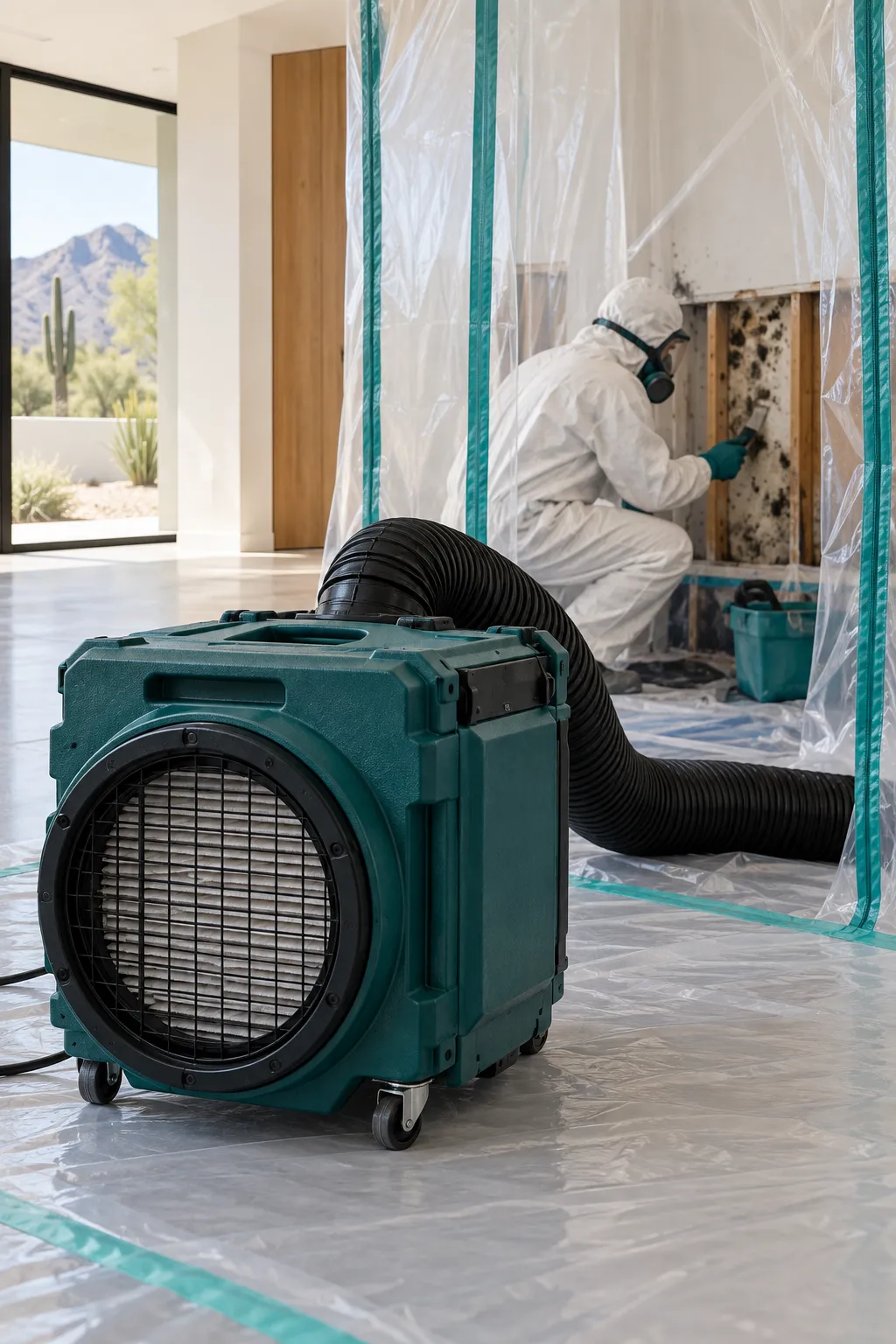
Visible growth is usually a patch, a speckled spread or a dark line along a seam, and it appears where water has been:
- Bathroom ceilings and upper walls, where shower humidity has nowhere to go.
- Window frames, sills and tracks, especially after summer storms push rain sideways.
- Baseboards and the bottom of drywall, after a leak that ran behind the wall. Look for swelling first, then staining.
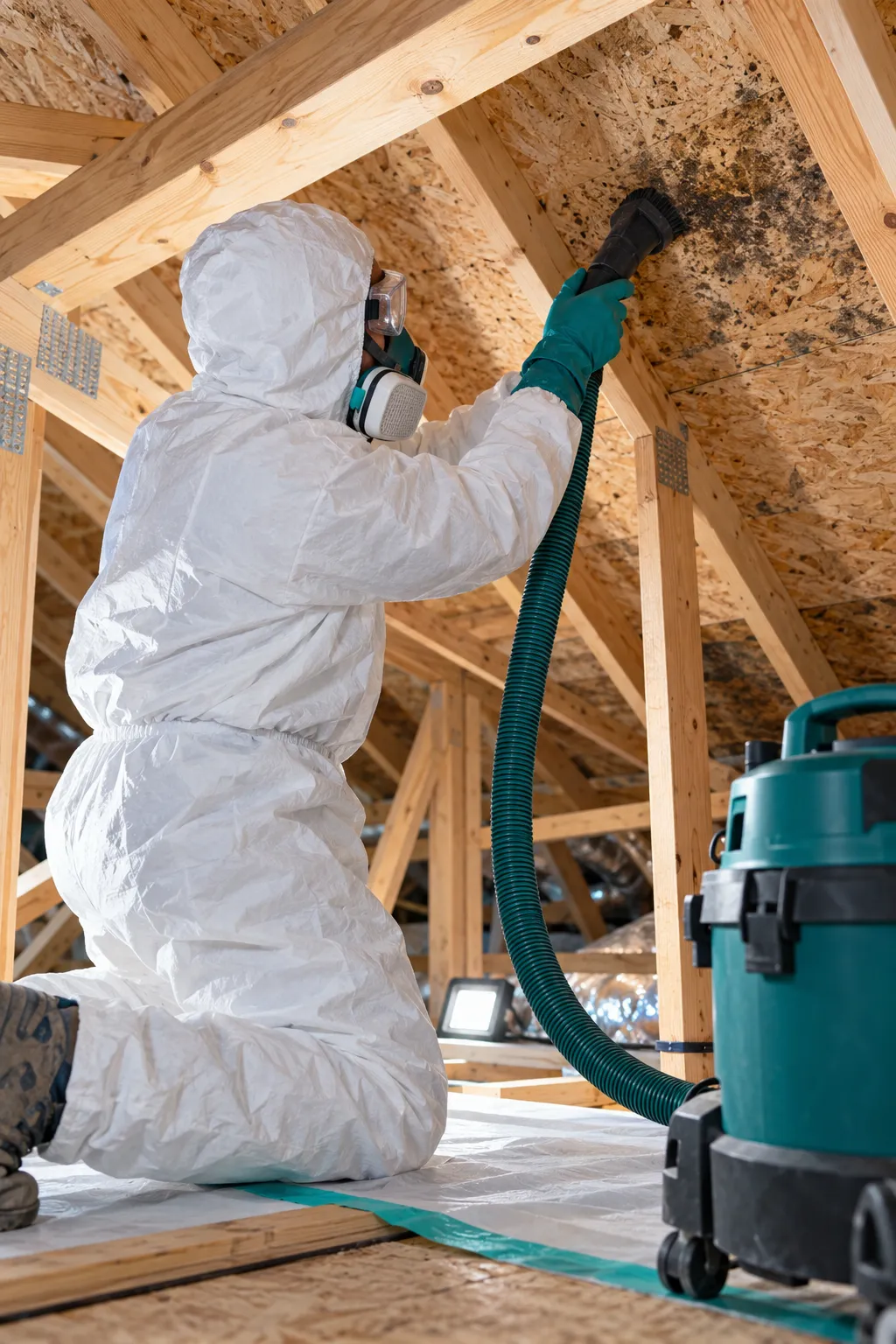
- Attic sheathing, where a roof leak shows as dark mottling on the underside of the roof deck.
- Under sinks, on the cabinet floor and the wall behind the plumbing.
Water stains without growth are still a warning. They mark the places mold will follow if the leak keeps running.
§ 03 / 08
What are the signs you cannot see?
Some signals never show up as a patch of growth at all:
- A stain that grows after each storm. That pattern points to an active roof or window leak, not a one-time event.
- Warped floors, or a soft spot underfoot. Water under a slab or inside a floor assembly has nowhere to drain.
- Bubbling or peeling paint. Paint lets go when the surface behind it stays damp.
- A water bill that jumps. The City of Huntersville's WaterSmart program includes leak alerts, but the bill is often the first clue.
- A musty smell that comes back after cleaning. The moisture never left.
In a house that sits closed for the season, signals like these can hide for weeks.
§ 04 / 08
Can I clean mold myself?
Size decides. The EPA (opens in a new tab) draws the line at about 10 square feet: under that, in most cases you can handle it yourself, especially on a hard surface like tile, glass or painted trim. Above it, or on porous materials like drywall and carpet, a professional job is the safer route.
Stop if the water came from sewage or outdoor flooding. That is not a cleaning job at any size.
If you do the work:
- Fix the water problem first, which the EPA lists as step one.
- Wear gloves, eye protection and a mask, and keep the room aired.
- Follow the product label, and never mix cleaning products.
- Do not run the HVAC while you work if the growth is anywhere near it.
- Throw out porous materials that stayed wet, like ceiling tiles and carpet.
Line open now
Mold growing right now?
Describe what you see or smell. You do not need to diagnose anything yourself.
§ 05 / 08
When should a professional handle it?
Call when any of these is true:
- The affected area is larger than about 10 square feet, where the EPA points to its remediation guidance.
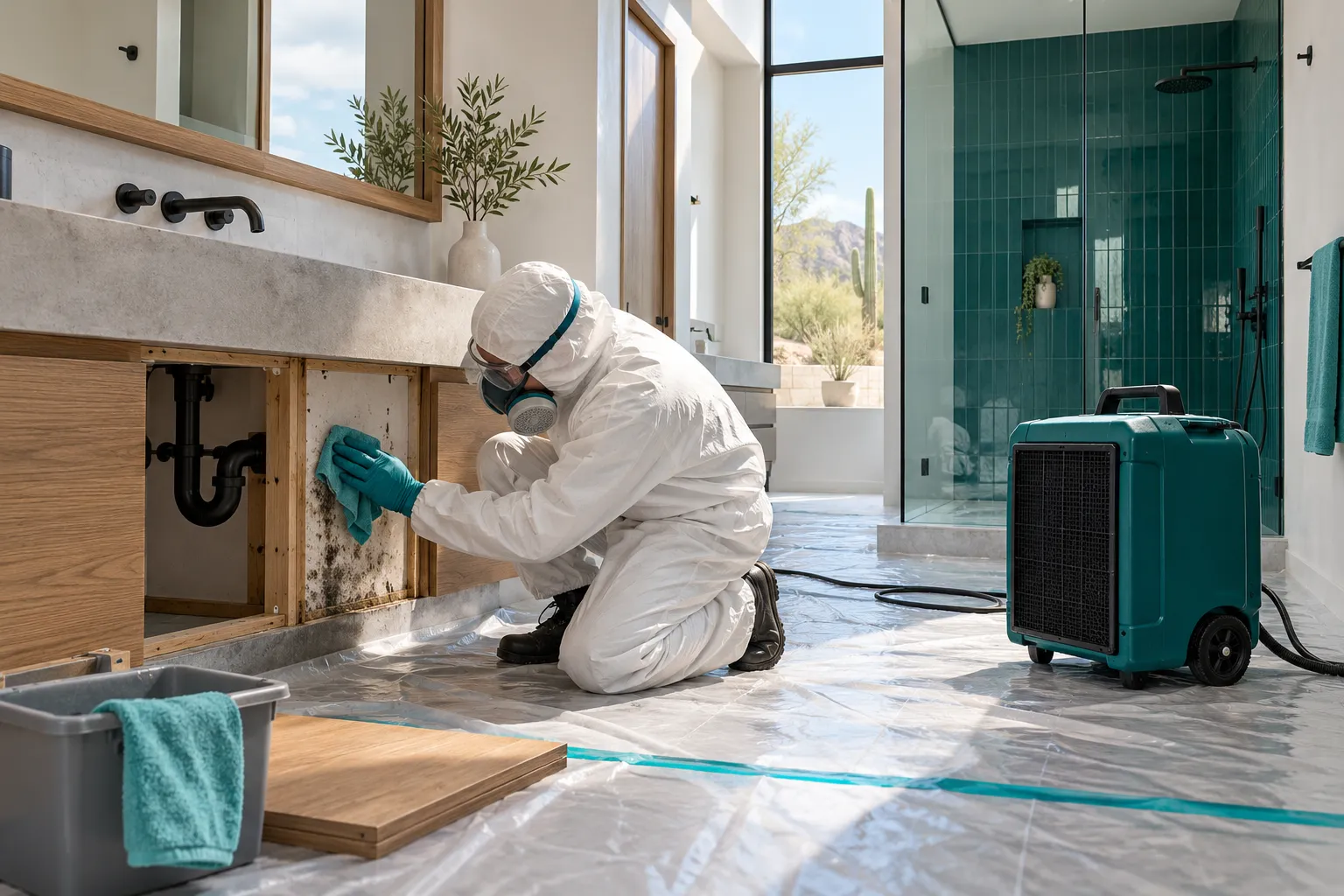
- The growth is in the HVAC system, inside a wall cavity or behind cabinetry, where the job involves cutting and containment.
- The water came from sewage or outdoor flooding.
- It came back after you cleaned it, which means the moisture source was never found.
- Someone in the house is sensitive. OSHA (opens in a new tab) lists nasal stuffiness, eye irritation and wheezing among mold exposure symptoms.
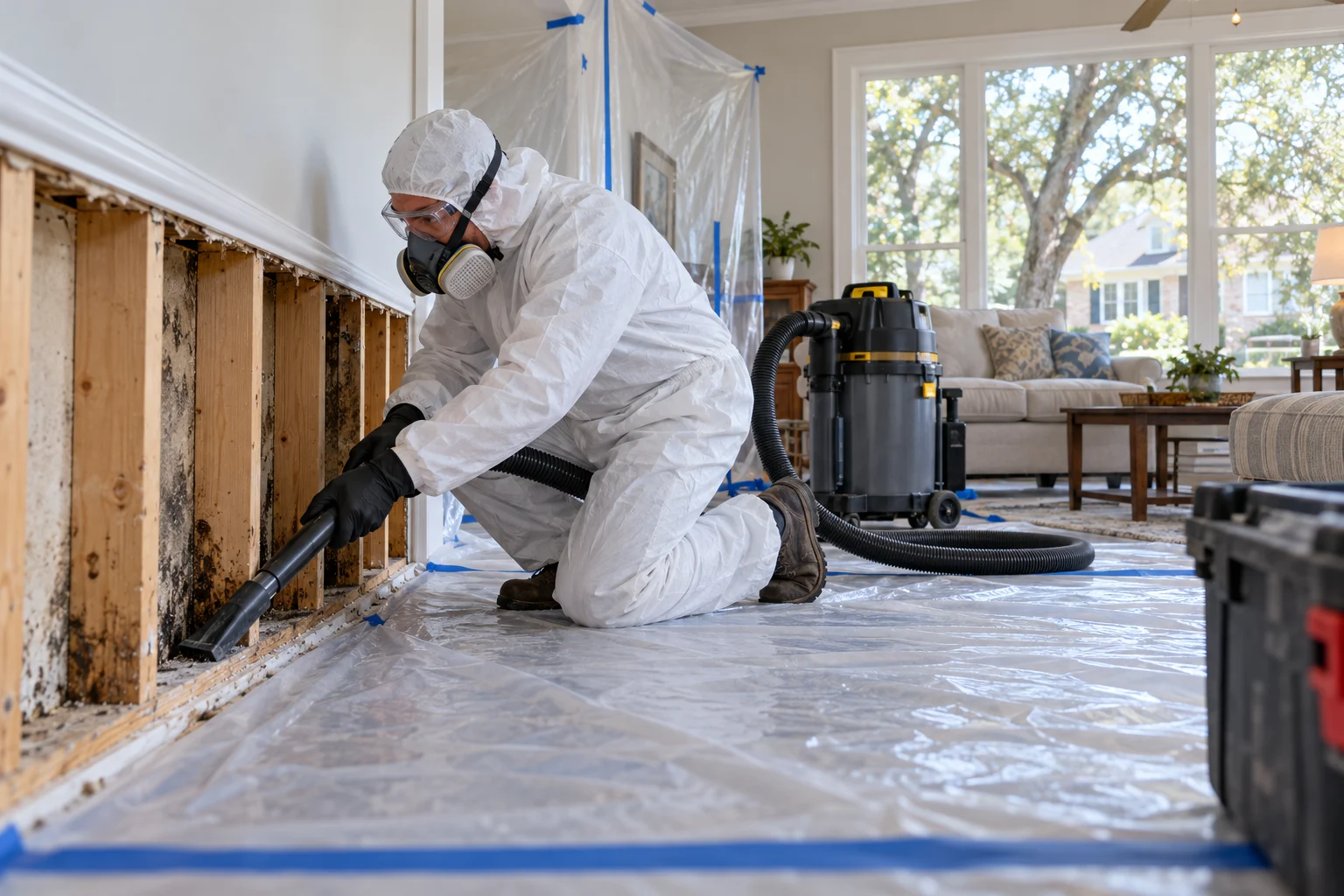
The scope matters as much as the size, and a written plan for a larger job names containment and drying.
§ 06 / 08
What should I do while I decide?
Leave it alone, and keep it dry. Disturbing growth stirs particles into the air, so keep kids and pets out of the area and do not brush, scrub or peel at it while you think it over.
Keep the room aired and dry. Run the AC or a fan to move air, close windows when rain is coming, and fix small sources you can, like a dripping valve. If a leak is still active, the clock is the EPA's: water-damaged areas and items should be dried within 24 to 48 hours (opens in a new tab) to prevent mold growth.
Photograph everything. Take wide and close shots, include something for scale, and note dates. If a claim follows, that record is where the review starts.
§ 07 / 085 questions
Questions people ask
01Can mold grow in a house that never flooded?
Yes. AC condensate overflows, a dripping supply line and a slow trap leak all wet materials without a flood. Growth often starts with a small leak that ran for weeks.
02Does a musty smell always mean mold?
Not always, but treat it as a working assumption until you know otherwise. If the smell returns after cleaning, moisture is still arriving, and a second cleaning will not settle it.
03Is it safe to stay in the house while mold is present?
If you think mold is making someone sick, talk to a doctor. Until the source is fixed, keep the area aired, avoid disturbing the growth, and keep anyone sensitive out of the room.
04Should I test before I clean a small patch?
For a patch under about 10 square feet, testing usually is not needed: remove it and fix the water. Testing matters when you are selling or when a health concern is involved.
05What if the mold comes back after I clean it?
That means the moisture is still there, and cleaning only addresses the surface. Find the water, whether that takes a plumber, an attic check or a moisture inspection. Fix it, then clean.
§ 08 / 08Keep reading
- Mold inspection and testing: how the source gets found.
- Mold remediation: containment, removal and drying.
- Why mold grows in Huntersville homes: the 5 ways water gets in.
- Black mold facts: what the name gets right and wrong.
- Does homeowners insurance cover mold?: what North Carolina policies cover.
- Mold removal cost in Huntersville: published ranges and drivers.