
DIY vs Professional Mold Removal in Huntersville, NC
You can clean mildew off caulk yourself. You cannot remove a colony from inside drywall yourself, and in Huntersville the gap between the two is wider than elsewhere, because the worst mold grows in houses nobody is in.
Get a call back
Fill in the form or call (980) 250-4059. Calls are answered day and night.
§ 01 / 08
The short answer
Do it yourself when the growth is on a hard surface, the water is already stopped, and the patch is small. Bring in a professional when the growth is in drywall or wood, when there is an active leak, or when the house smells. The line is not about effort. It is about containment, drying, and whether you can see everything you need to see.
What your house needs depends on the wall, the source, and how long the water has been running.
§ 02 / 08
DIY mold cleanup: what it actually is
DIY cleanup is a wipe and a hope. You scrub the visible patch with a household cleaner, dry the surface, and maybe run a store test kit to see what you are dealing with. On a hard surface with the water stopped, that is genuinely the whole job, and paying someone to do it would be a waste.
The hope is the weak part. You cannot see inside a wall cavity from the room. You cannot meter the moisture in a stud bay. You cannot contain a demolition you are not doing. A store test kit will tell you that spores are present somewhere, but it will not tell you where the water is, and the water is the actual problem. The surface patch you can see is rarely the whole colony. It is the part that made it to the outside. The bleach vs vinegar page shows how far the wipe itself gets you, which is not far.
§ 03 / 08
Professional mold work: what it actually is
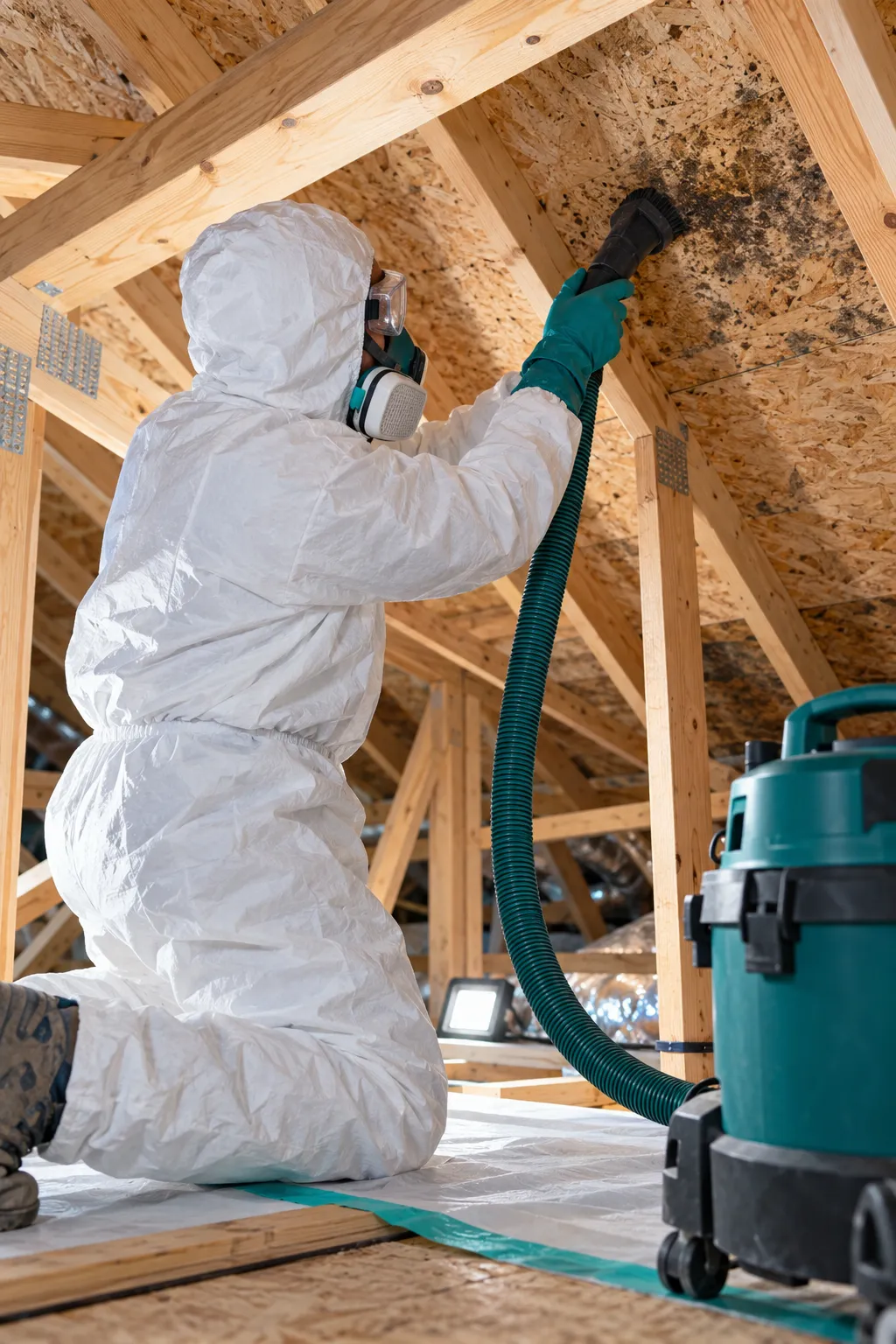
A real professional job starts with the water. The first hour is spent finding the source: a condensate line in a ceiling, a supply-line leak behind a vanity, a summer storm leak at a parapet. Then the scope gets written, and only then does the physical work start.
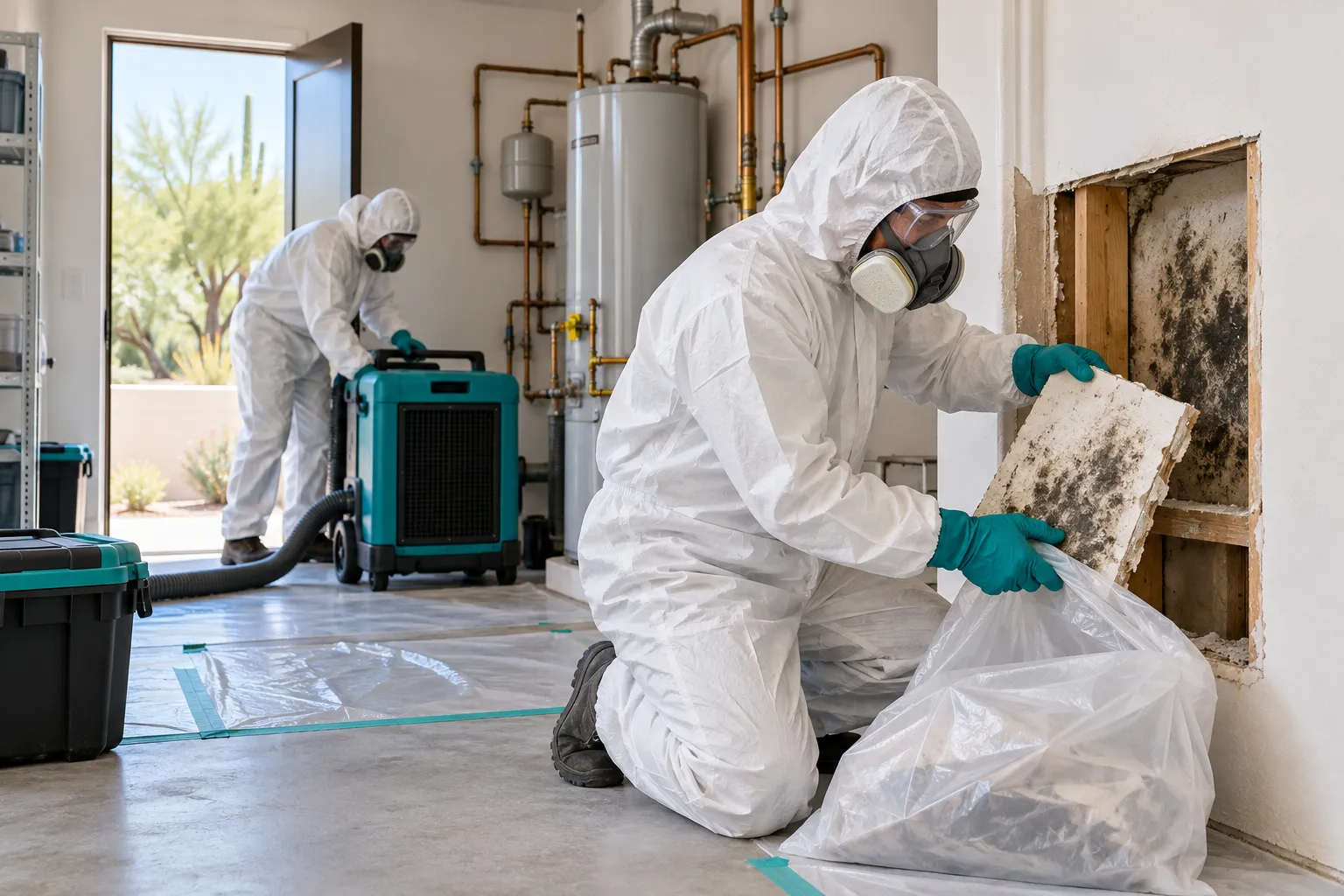
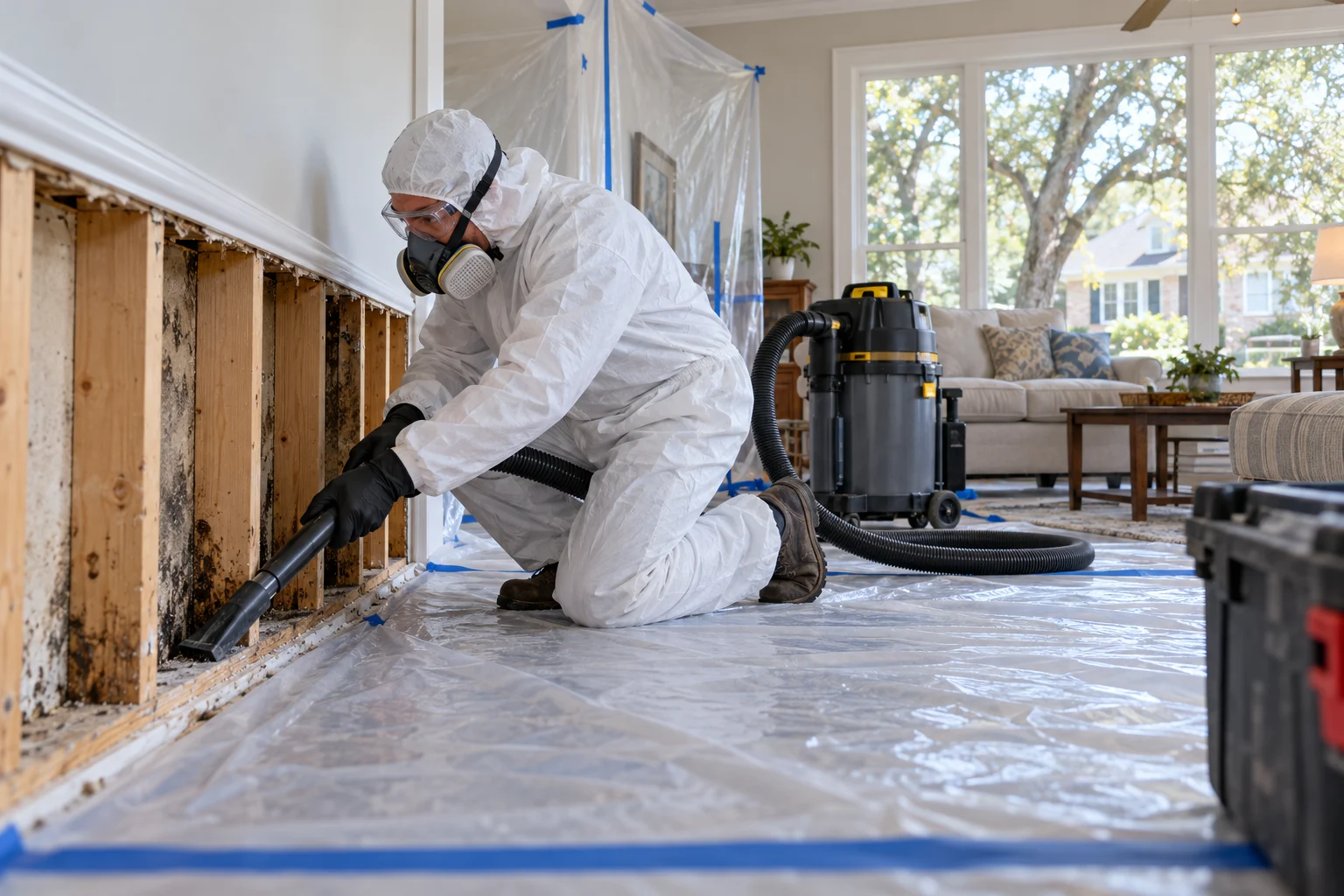
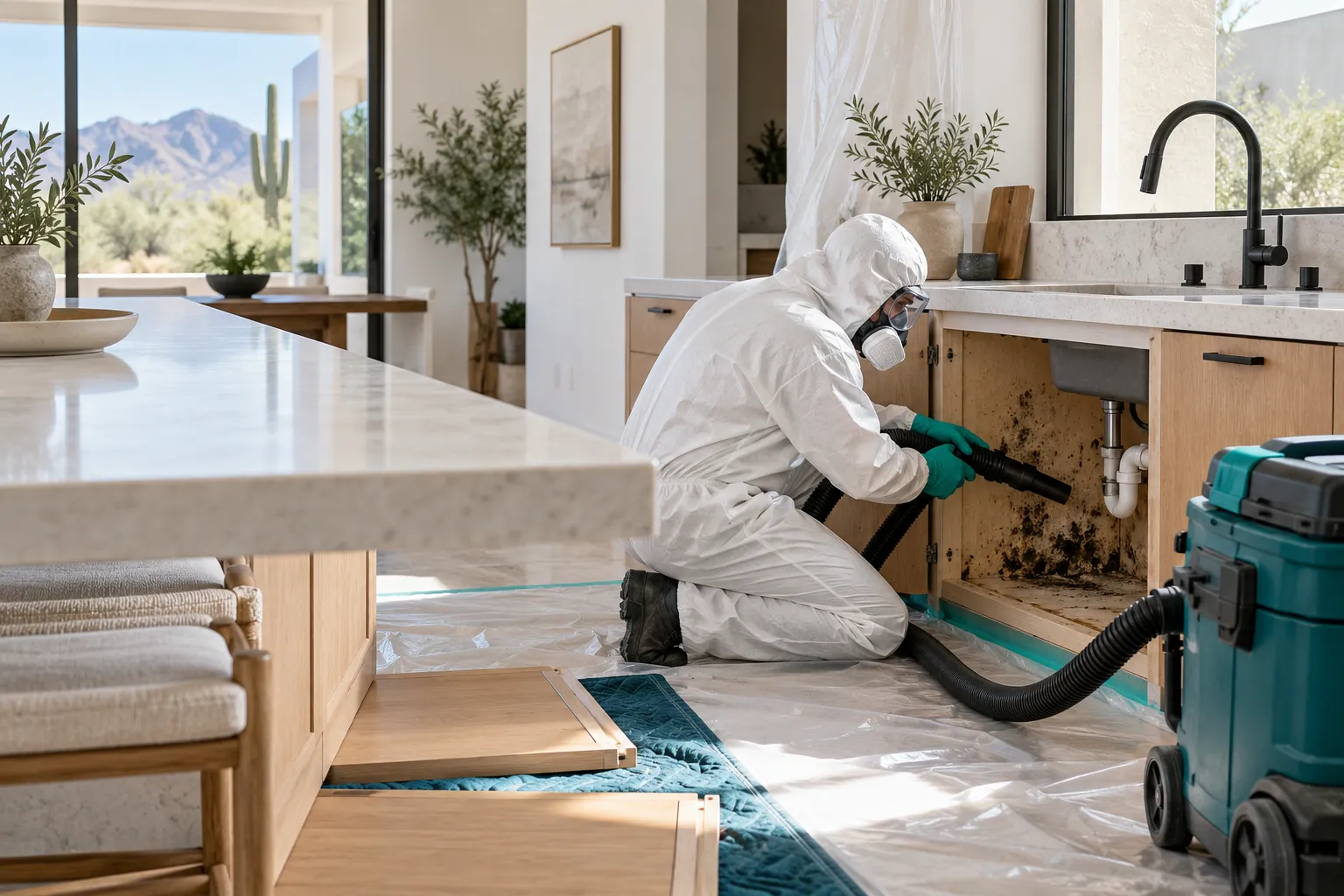
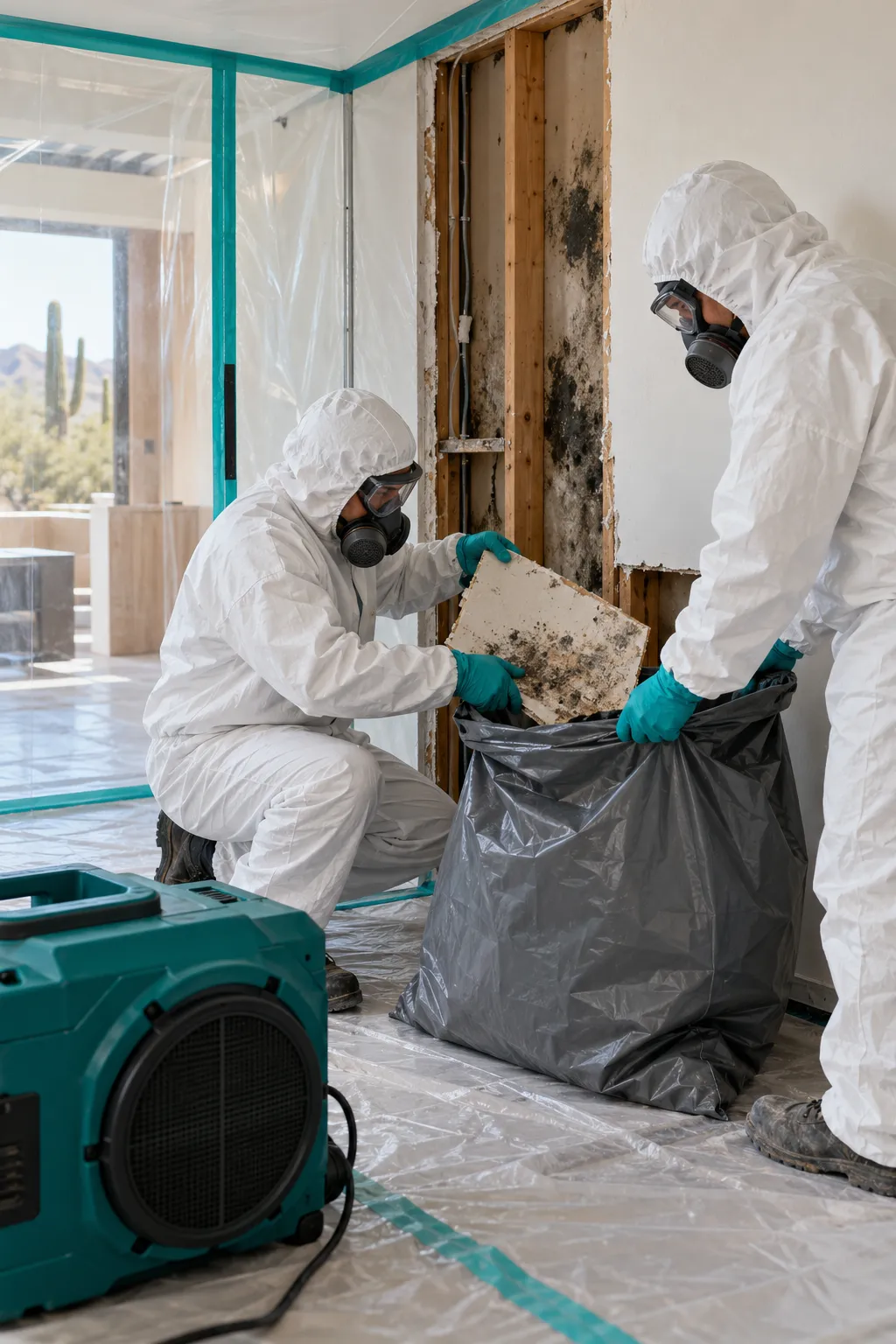
The work itself is structured. Containment goes up so demolition does not spread spores through the rest of the house. The air gets scrubbed while colonized material comes out. Framing gets dried to a measured standard with a moisture meter, not a schedule. The job closes with a clearance check, air samples that show the indoor spore counts match the outside. None of that is possible with a bucket and a mask, which is the point: professional work is not a stronger version of DIY. It is a different job, and the mold inspection and testing page explains the first part of it.
§ 04 / 08
Where DIY fails here
Huntersville's mold problems are built to beat DIY, because they happen where nobody is watching. Second homes close in May and reopen in October. A condensate line drips in a ceiling all summer. A summer storm storm ponds on a flat roof and seeps at a parapet. The homeowner discovers the problem months after it started, which means the colony is established in the material, not sitting on the paint.
That is the house where DIY backfires. The visible patch gets scrubbed, and scrubbing or sanding an open colony in a closed house just moves spores through the air, which is exactly the containment failure professionals are hired to prevent. The patch returns on the next drip. The homeowner has now paid for products, spent two weekends, and lost the months between visits. The lost months are the hidden cost. In a house that sits closed, a failed DIY attempt means the problem gets another summer before anyone looks at it again, and a summer is more than enough time for a colony to double its territory. DIY also cannot address what is not visible, and in a ceiling cavity that is where most of the problem lives. If the growth is in drywall, see the remediation vs replacing drywall comparison before you cut anything.
Line open now
Mold growing right now?
Describe what you see or smell. You do not need to diagnose anything yourself.
§ 05 / 08
Where the professional route fails here
Hiring a professional does not buy a good job on its own. Homeowners in Huntersville report remediation quotes that swing wildly for the same room, and they cannot tell what is being priced. Some scopes are real and some are theater: a wipe-down and paint sold as remediation, a test result sold as the solution, containment skipped to shave the number. A test result is not a fix, and a quote without a named moisture source is not a scope.
The defense is reading the quote line by line. The quote walkthrough shows exactly which items belong in a real scope, and the pricing page explains how they stack up. The professional route fails when the homeowner hires the first name on a search page and never asks what the containment line item costs or whether clearance is included.
§ 06 / 08
What it costs and what drives the number
DIY costs materials and your time, and it is cheap right up until it fails. At that point it costs the professional job anyway, plus whatever grew in the meantime. The professional number is a range that moves with square footage, ceiling height, and how much containment the house requires. What drives it is not the brand of the crew. It is the amount of material that comes out and how long the water ran before someone saw it. In a closed-up second home, how long is usually the whole summer.
§ 07 / 08
What good work looks like in Huntersville
- Sometimes DIY is the right call. Caulk mildew with the fan fixed is a sponge job.
- Quotes should be readable. Scope items are named, so two quotes can be compared against each other instead of against a gut feeling.
- The source comes before the stain. The water question gets answered before the work question.
- The full job runs containment to clearance, for the Huntersville conditions that actually cause the problem here.
§ 08 / 086 questions
DIY vs Professional Mold Removal: your questions
01Is it safe to clean mold myself?
For a small film on a hard surface, with gloves and ventilation, yes. For growth in drywall or wood, no: the colony is inside the material, and disturbing it releases spores into the room.
02When does DIY become a bad idea?
Active leak, drywall or wood involvement, a musty smell that does not go away, or a patch larger than a dinner plate. Any of those is a job, not a chore.
03Do store mold test kits work?
They tell you spores are in the air, which you probably already knew. They do not tell you where the water is or how far the colony runs, which is what you actually need to know.
04Will my insurance pay for professional work?
It depends on the policy and what caused the water. Ask before the work starts, and get the scope in writing so the carrier can see what is being done.
05How long does a professional job take?
It varies with the scope. A small cut-and-patch is days. A containment job with drying and clearance runs longer. The quote should say, not hint.
06What should I ask before hiring anyone?
Three questions: where is the water coming from, is containment included, and is there a clearance test at the end. If the answers are vague, keep looking.