
Black Mold: What the Name Gets Right and Wrong
Black mold is a nickname, not a species, and the difference matters when you are looking at a dark patch. Call (980) 250-4059 any time.
Published
Get a call back
Fill in the form or call (980) 250-4059. Calls are answered day and night.
§ 01 / 08
What do people mean by black mold?
Most of the time, the phrase means Stachybotrys chartarum, a greenish-black mold that grows on wet building materials, usually drywall, gypsum board and paper. It is not rare, and it is not one thing: many molds grow dark, and several look black when wet.
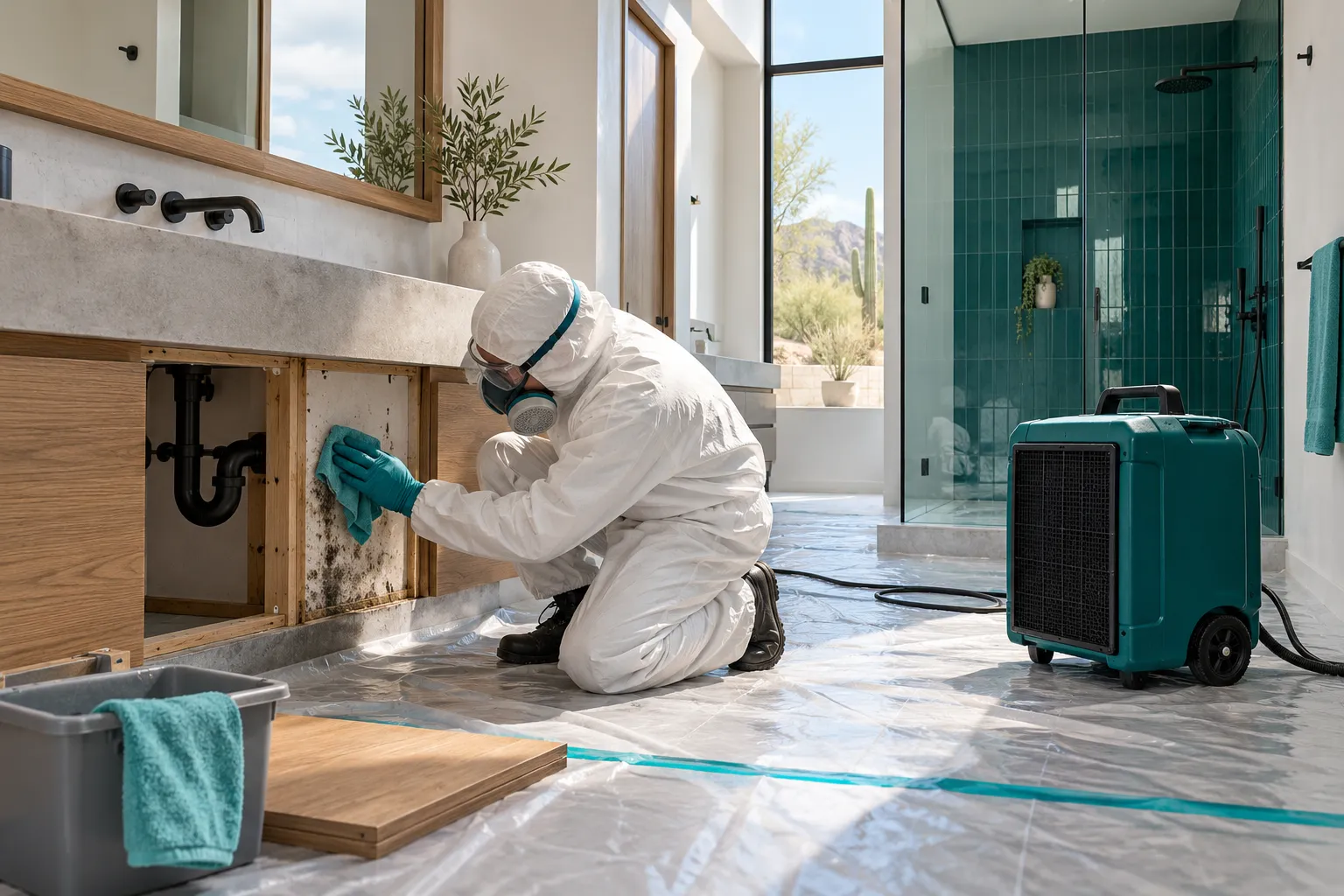
The name comes from the color, and color tells you almost nothing about the type of mold. Stachybotrys needs constant moisture, the kind a slow leak or a long-running roof leak provides. A splash on a bathroom wall that dries overnight rarely produces it. A supply line dripping inside a wall for weeks can.
What matters is not the name. It is that the material stayed wet long enough to grow something, which is a fixable problem.
§ 02 / 08
Why is color a bad test?
Because you cannot identify mold by looking at it. Many molds are dark, and plenty of non-mold things look black: soot around a vent, old water staining, dirt in a window track. 2 patches that look identical can be different species, and the quiet one can be the one that matters.
The only way to know the species is lab testing. A sample goes from the surface or the air to a lab, and the report names what was there. Testing answers real questions, including what is in the air when a sale or a health concern makes the answer matter.
It does not change the fix. The growth still came from water, and the water still has to stop.
§ 03 / 08
What does the science say about risk?
The CDC says all molds should be treated the same with respect to health risks and removal. Growth is growth: remove it and fix the moisture behind it. The difference sits in people, not in species. The EPA notes that mold can cause allergic reactions in some people, and OSHA (opens in a new tab) lists nasal stuffiness, eye irritation and wheezing as exposure symptoms.
Some people react more than others, including people with asthma or allergies, and a reaction is a reason to act sooner, not to panic. Health questions belong with a doctor. If you think mold is making someone sick, talk to a doctor before planning the cleanup.
§ 04 / 08
Why does it grow where it grows?
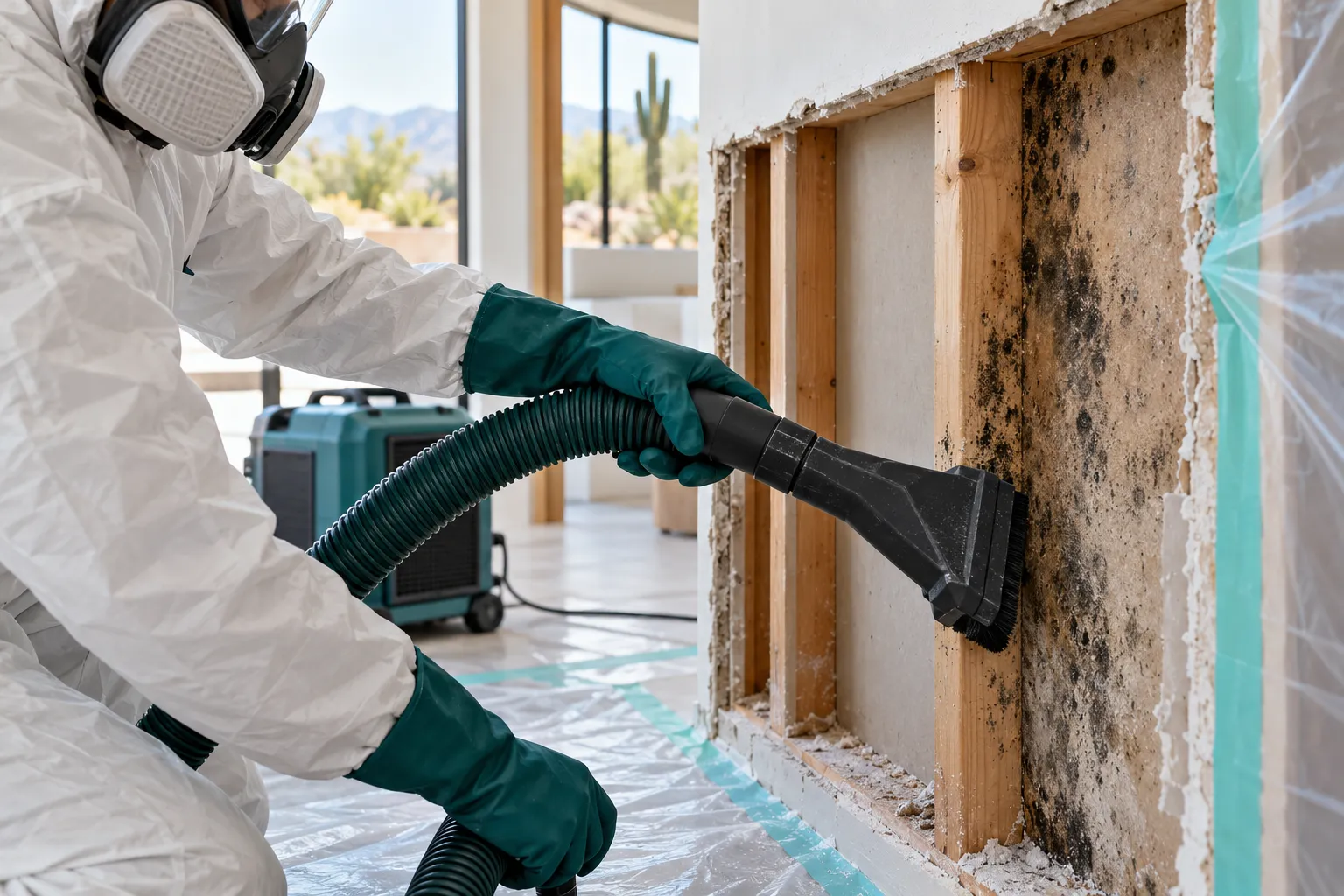
Because some materials hold water and stay wet after the surface dries. Drywall and gypsum board are paper-faced and porous, so a leak spreads sideways through the sheet and sits inside it. Wood framing wicks moisture along the grain, and the surface can feel dry while the inside is not.
The EPA's guidance (opens in a new tab) is to control moisture to control mold, and to dry water-damaged areas and items within 24 to 48 hours to prevent mold growth. Absorbent materials like carpet and ceiling tiles may have to be thrown away once moldy. The fix is removal, not a stronger cleaner.
A wall that gets wet once and dries is fine. A wall that gets wet every time it rains is not.
Line open now
Mold growing right now?
Describe what you see or smell. You do not need to diagnose anything yourself.
§ 05 / 08
What actually fixes it?
Removing the mold and fixing the water, in that order. The EPA is clear (opens in a new tab) that killing mold is not enough: it has to be removed, and the water problem fixed first. A spray that fades the surface leaves dead particles and the food source behind, and the growth returns.
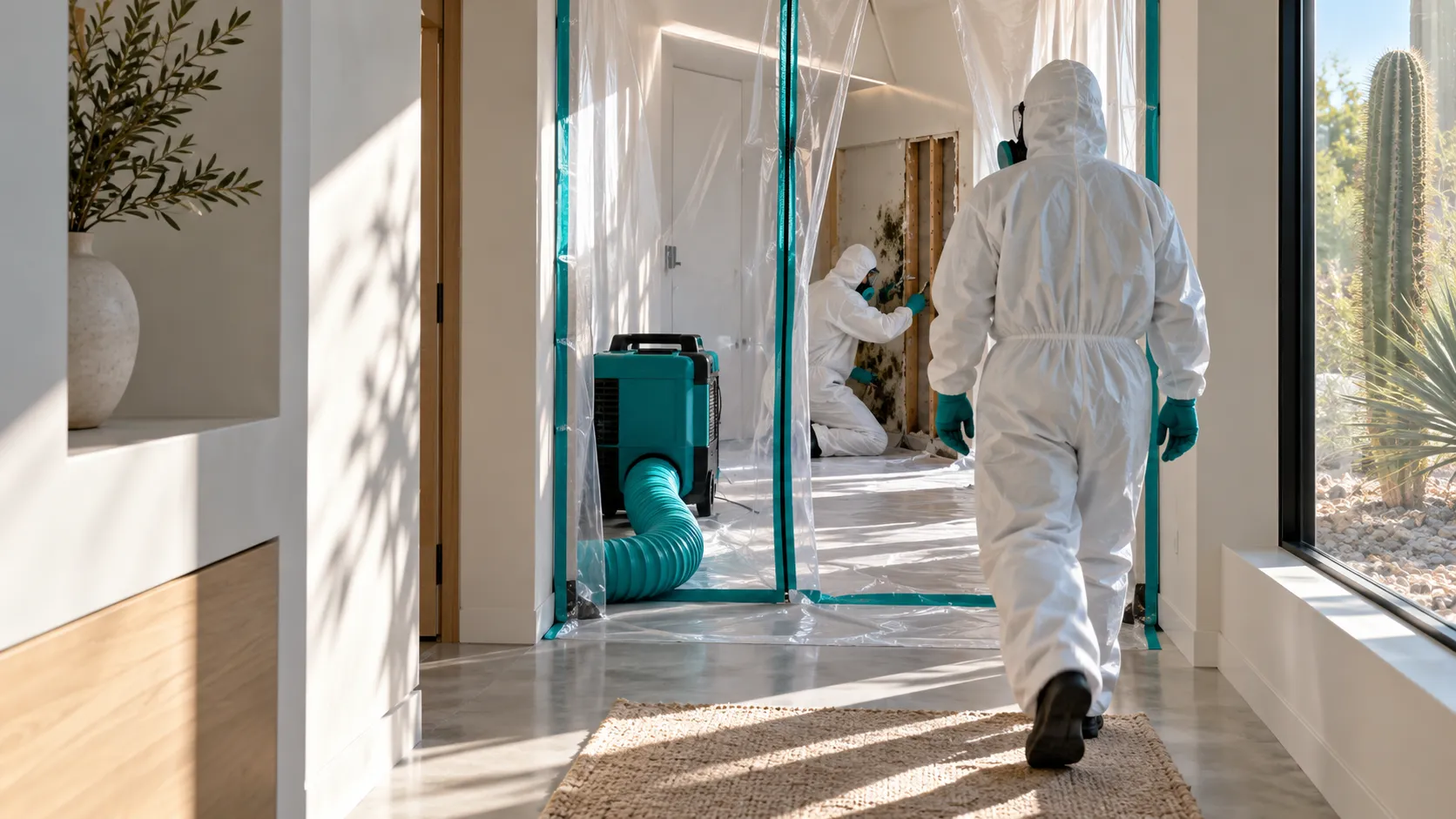
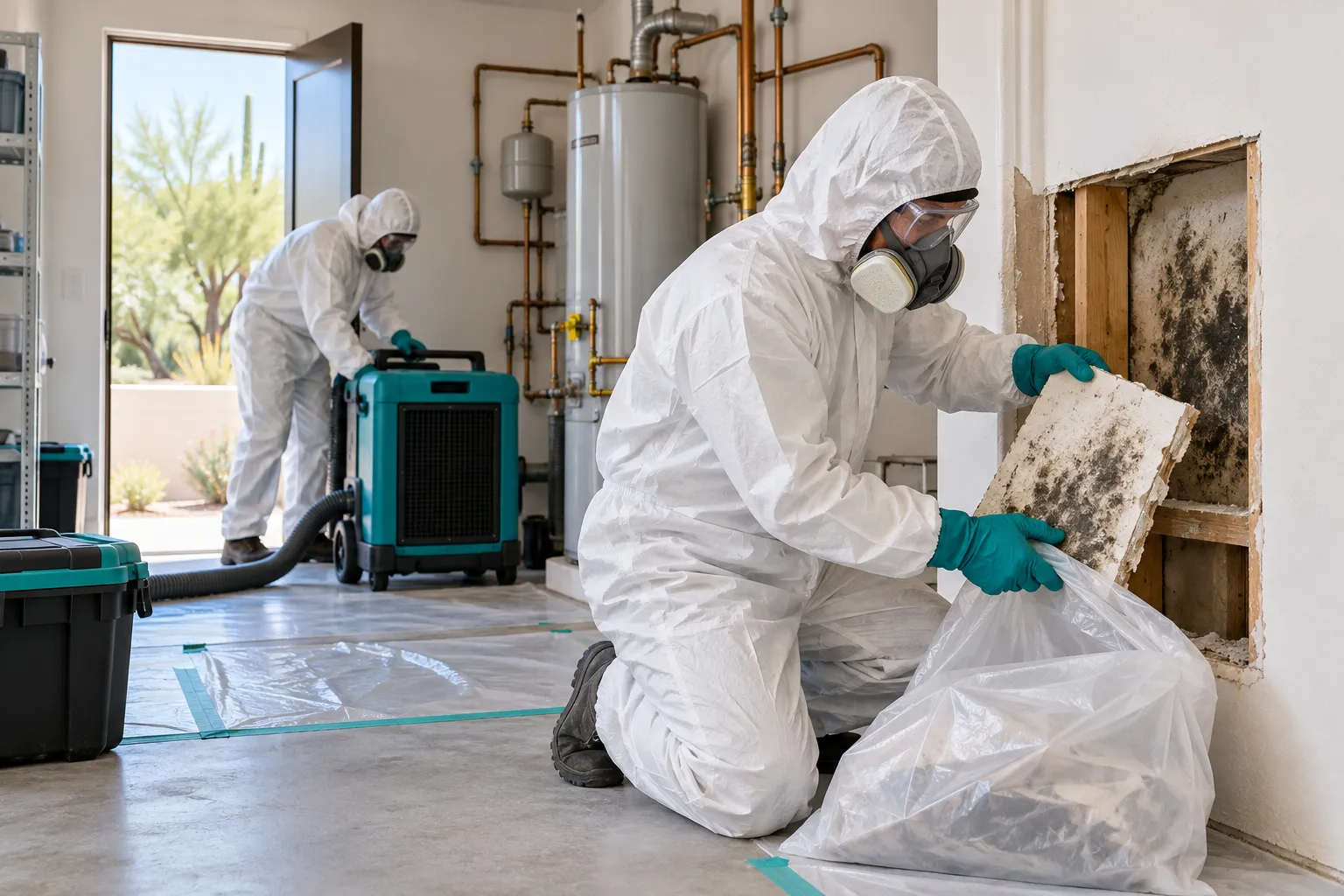
That means 4 steps: find the moisture source, correct it, remove the affected material, and dry the area before it is closed back up. Porous materials that grew mold usually come out. Most of the real work is removal and moisture control, not spraying, which is why a proper job brings in containment and drying.
An inspection that finds the water source helps keep the growth from coming back.
§ 06 / 08
When should I call someone?
Call when any of these is true:
- The growth covers more than about 10 square feet, where the EPA points to its remediation guidance.
- It is in the HVAC system or inside a wall cavity, where removal means cutting, containment and air handling.
- It came back after cleaning. Something still feeds it.
- Anyone in the house is sensitive, or you are unsure what you are looking at.
- The water came from sewage or outdoor flooding.
Whatever the size, the water source has to be part of the plan.
§ 07 / 085 questions
Questions people ask
01Is black mold more dangerous than other mold?
The CDC says all molds should be treated the same way: remove the growth, fix the moisture. Sensitivity varies from person to person. If mold is making someone sick, talk to a doctor.
02How can I tell if it is black mold?
You cannot tell by looking, and a photo does not settle it. Lab testing is the only way to identify it. Either way, the plan is the same: stop the water, remove the growth.
03Does bleach kill black mold?
It can fade the surface, which is not the same as removing the growth. The EPA says killing mold is not enough, because dead mold still has to be removed.
04Is black mold common in Huntersville homes?
Dark molds can show up after roof leaks, slow plumbing leaks and AC drain overflows. Attic sheathing, drywall and window frames are common spots. Moisture history matters more than the address.
05Should I test before hiring someone?
Testing tells you what species is present and whether spores are in the air. It makes sense when a sale or a health concern makes the answer matter, and it comes before removal.
§ 08 / 08Keep reading